Spencer Finch at James Cohan Gallery

Spencer Finch at James Cohan

The title of Spencer Finch’s show “My business is circumference” immediately lured me into the James Cohen gallery. The phrase is a quote from a letter Emily Dickinson wrote to Thomas Wentworth Higginson.

16-40-01
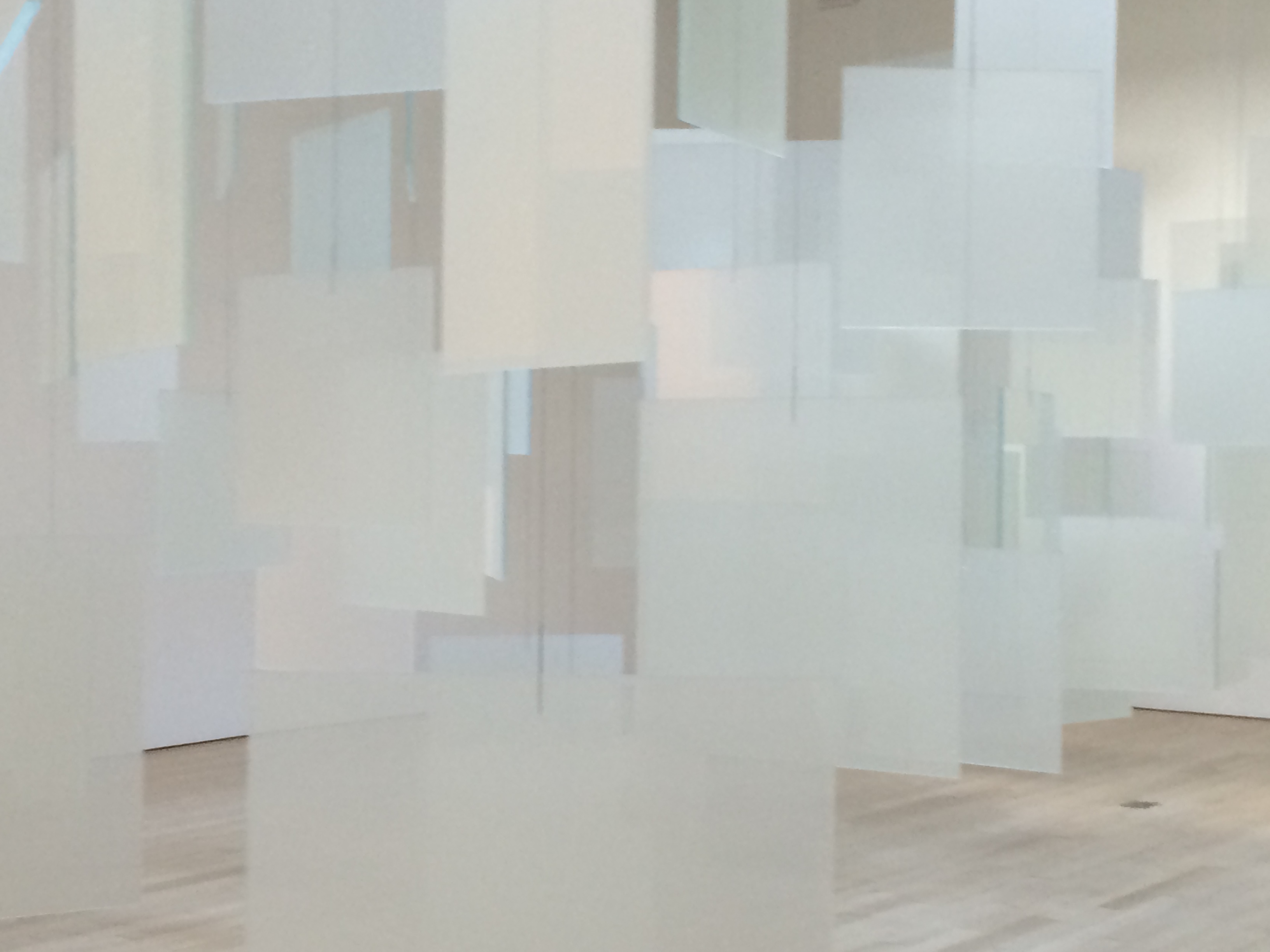
Once inside, I was mesmerized by the installation “Thank You, Fog” that is comprised of 85 glass panels suspended from aircraft cable in a room with grey walls. The square panels gently sway and rotate with the slight air movement in the space. The panels have various degrees of opacity and are hung at different heights and intervals.  Looking into the fog, each vantage place through out the room offers a unique view.
16-40-02

Spence Finch – “Thank You, Fog” – 2016 – Installation
Pictures courtesy of the gallery and the artist

Finch’s creative practice utilizes precise tools of measure to explore natural phenomena and then creates art to express the experience. The mathematics of measuring weather for this installation required the use of light meters and anemometers.  “Thank You, Fog” juxtaposes the ephemeral qualities of fog and mist with the geometric rigidity of the square planes of glass.

Susan Happersett
Casey Reas at bitforms gallery

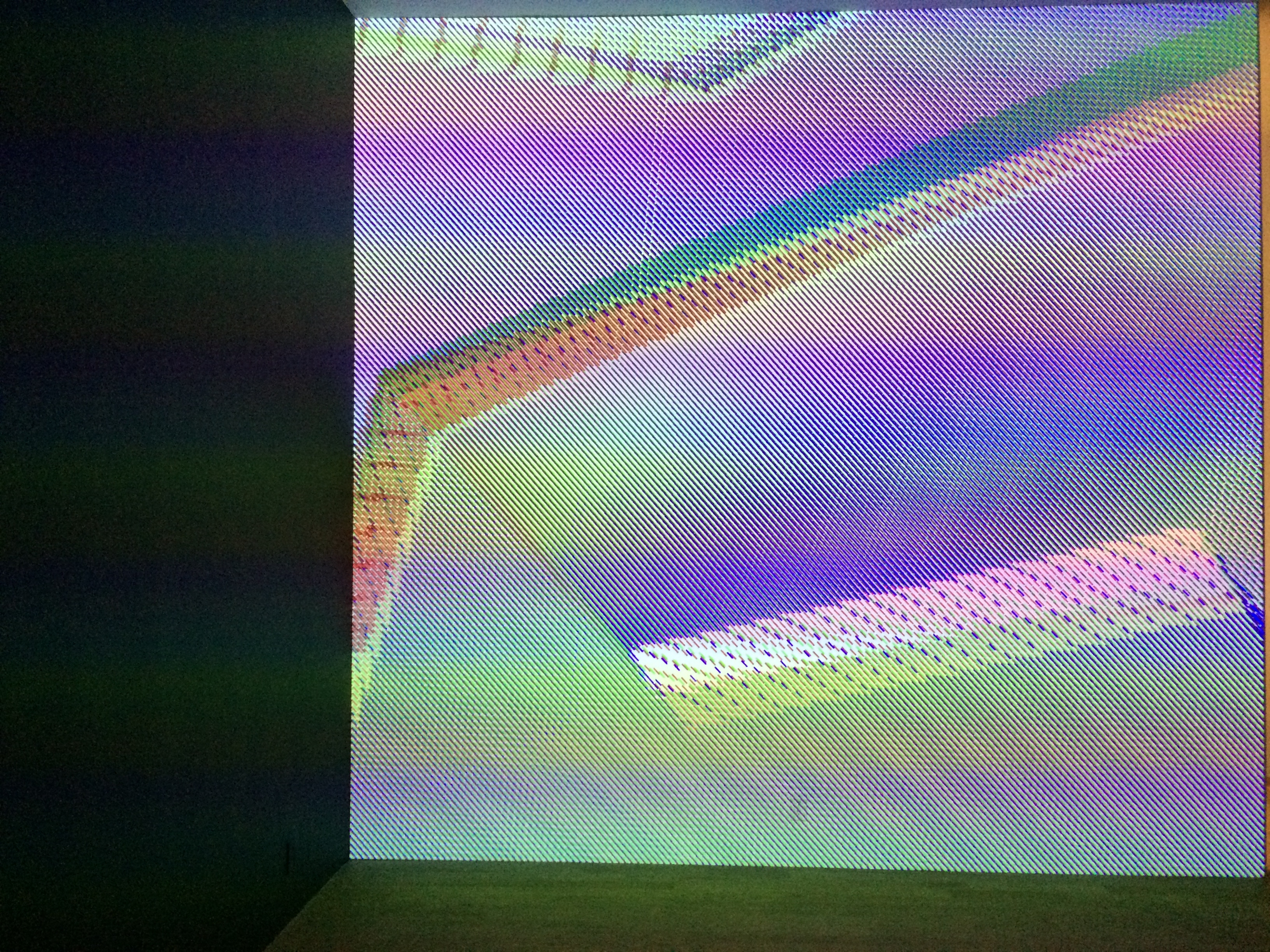
“There’s No Distance” is Reas’ fourth solo show at bitform gallery. On display are the artist’s new software-generated “Still Life”series videos.

16-34-01

“Still Life (RGB-AV A)” (gallery view), 2016
Picture courtesy of the gallery and the artist

The work in this series is based on the decomposition of a platonic solid using custom software to create an ever changing image of iterations. Reas has collapsed or flattened the multiple planes of a 3-D object allowing them to be visible on the screen at the same moment in time. These works are meant to be seen as performances, with the exhibition space and sound being integral to the work. Derived through a set of instructions or rules, the software adds a time-based element that changes the processes and continues to create new iterations. The subject matter for this series is pure geometry, but the viewer experiences the analysis of the shapes through the exploration by the computer system.

Susan Happersett

Sol Lewitt at Paula Cooper Gallery

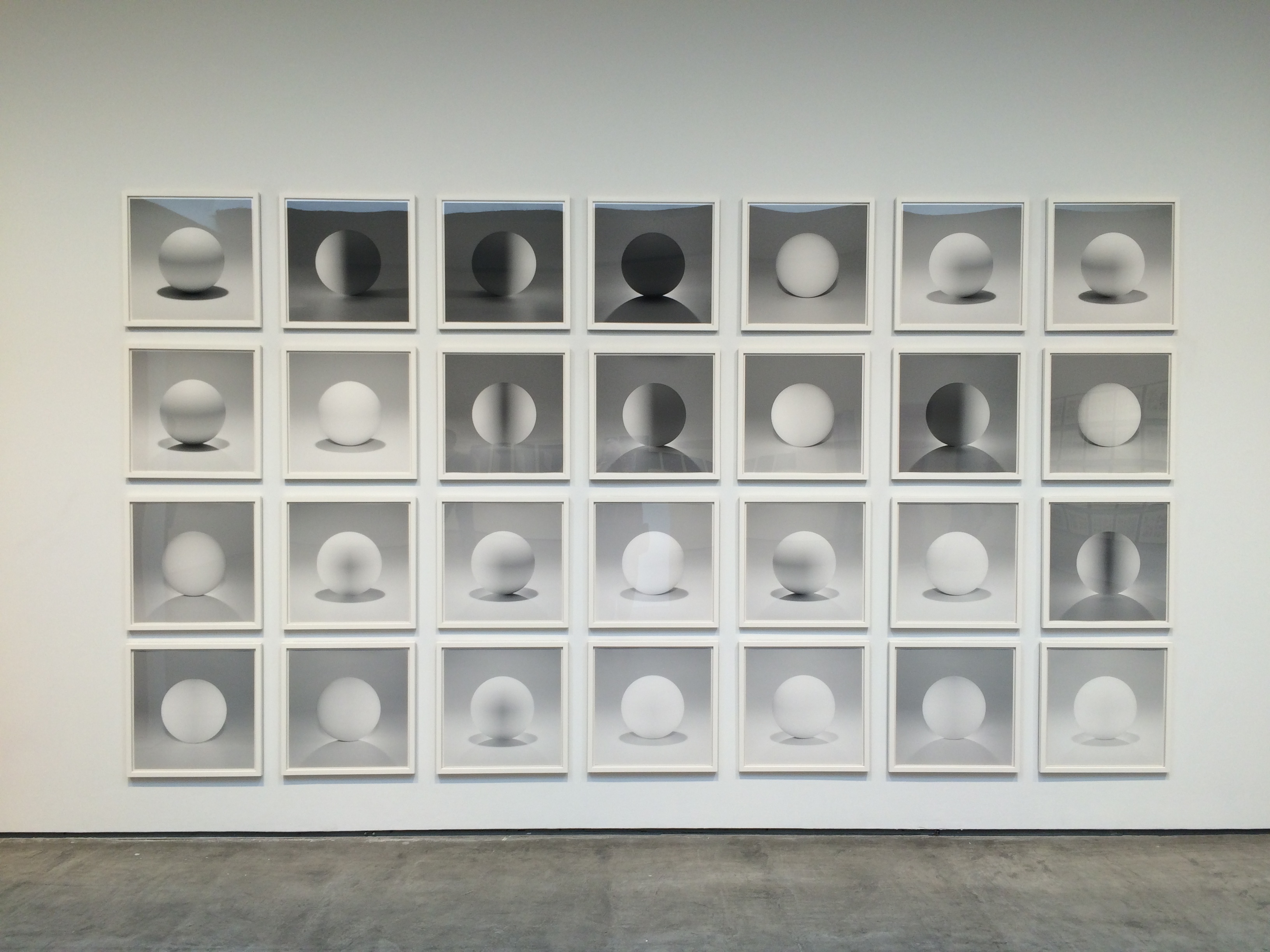
Paula Cooper is currently presenting a wide range of the work of Sol Lewitt at all three of their Chelsea galleries, as well as at the book store 192 Books on Tenth avenue. Wall drawing and sculptures are included in this excellent homage to the artist, but I am going to focus on a photographic work from 2004: “A Sphere lit from the top, four sides, and all of their combinations”

16-32-01

Sol Lewitt – “A Sphere lit from the top, four sides, and all of their combinations” – 2014
Picture courtesy of Paula Cooper Gallery

This series of 28 photographs explores 2-D images of a 3-D sphere. It looks at how the figure changes in space based on how it is lit. A circle possesses infinite lines of reflective symmetry, diameters, and has an infinite order of rotational symmetry in 2-D space. Spheres take these symmetrical properties into 3 dimensions. Lewitt’s use of light from six vantage points reveals the myriad of visual possibilities in portraying what seems to be the purest and simplest of geometric solids. Although the subject of each photograph remains constant, all pictures have a different energy and personality.

I feel that photography is a fertile medium for mathematical art, especially serial work. It allows an artist to explore a geometric theme through different vantage points and permutations.

Susan Happersett

Exhibitions 2d, Marfa, Texas

For the past month I have been traveling throughout the USA and one of the most interesting destinations has been Marfa, Texas. This small West Texas town is a haven for Minimal and Conceptual Art. The gallery Exhibitions 2d has a lot of mathematically art work on display. Two artists represented by the gallery – Gloria Graham and John Robert Craft – were of particular interest.

16-16-01

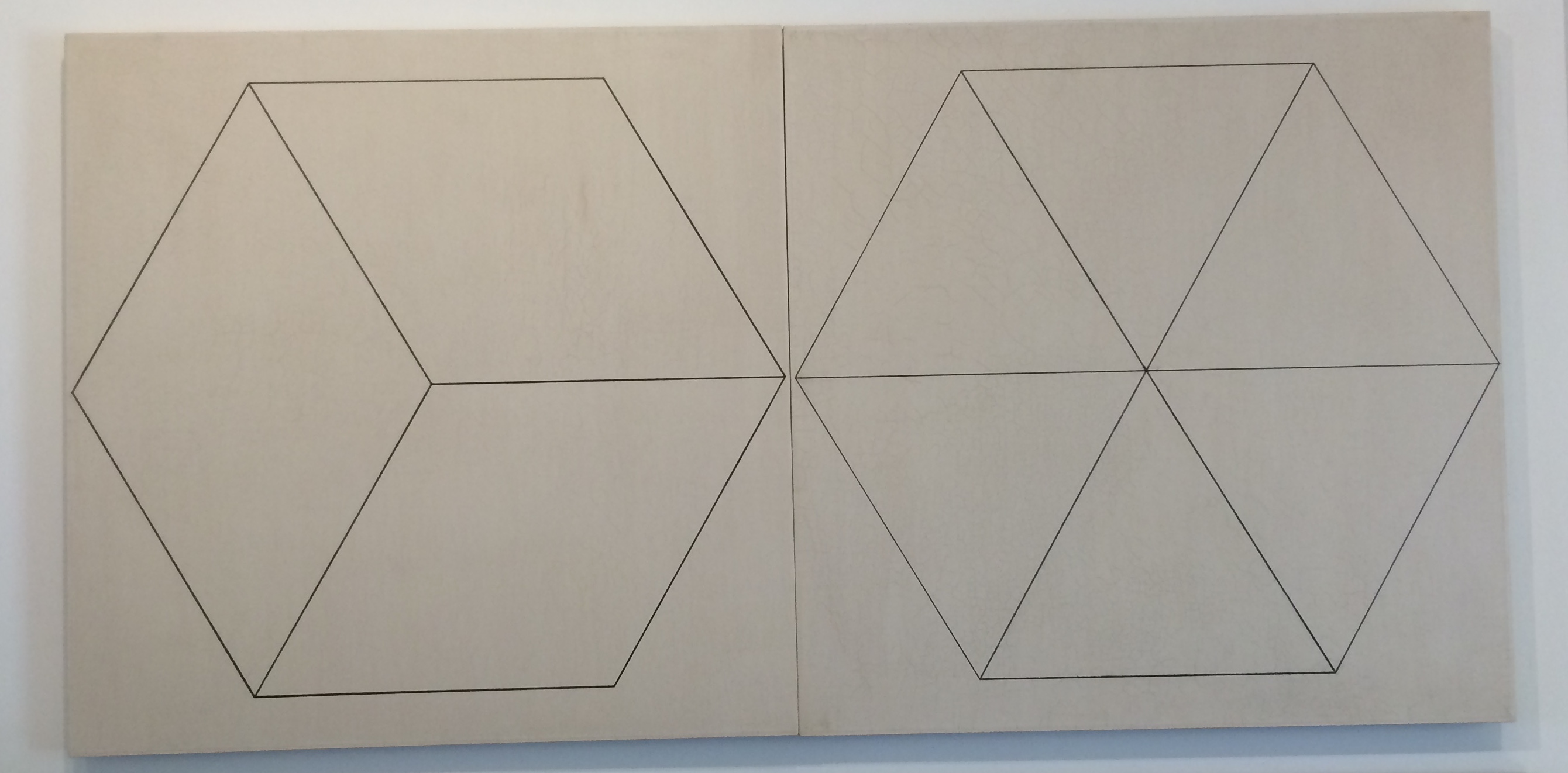
Gloria Graham – “NaCl H2O Salt Water” – 1994
graphite, kaolin, canvas on two wood panels
Picture courtesy of the gallery

Graham’s geometric paintings are based on the patterns found in the atomic structures of natural elements.  “NaCl H2O Salt Water” features two crystal-like forms, both regular hexagons. The hexagon on the left is divided into three congruent rhumbi.  The hexagon on the right is divided into six equilateral triangles. The addition of the three extra line segments to divide the rhumbi into triangles changes the hexagon dramatically. The symmetry goes from order 3 rotational symmetry to order 6. The perception of the possible 3-D form goes from a cube to a faceted diamond shape with 6 facets on top. Graham’s painting process for this work involves a layer of kaolin (a clay-like mineral) applied to canvas stretched over wood. The lines are drawn into this base. Through the drying process tiny cracks in the surface have formed. This gives the work a complex physicality that alludes to the natural environmental inspiration for the painting.


16-16-02

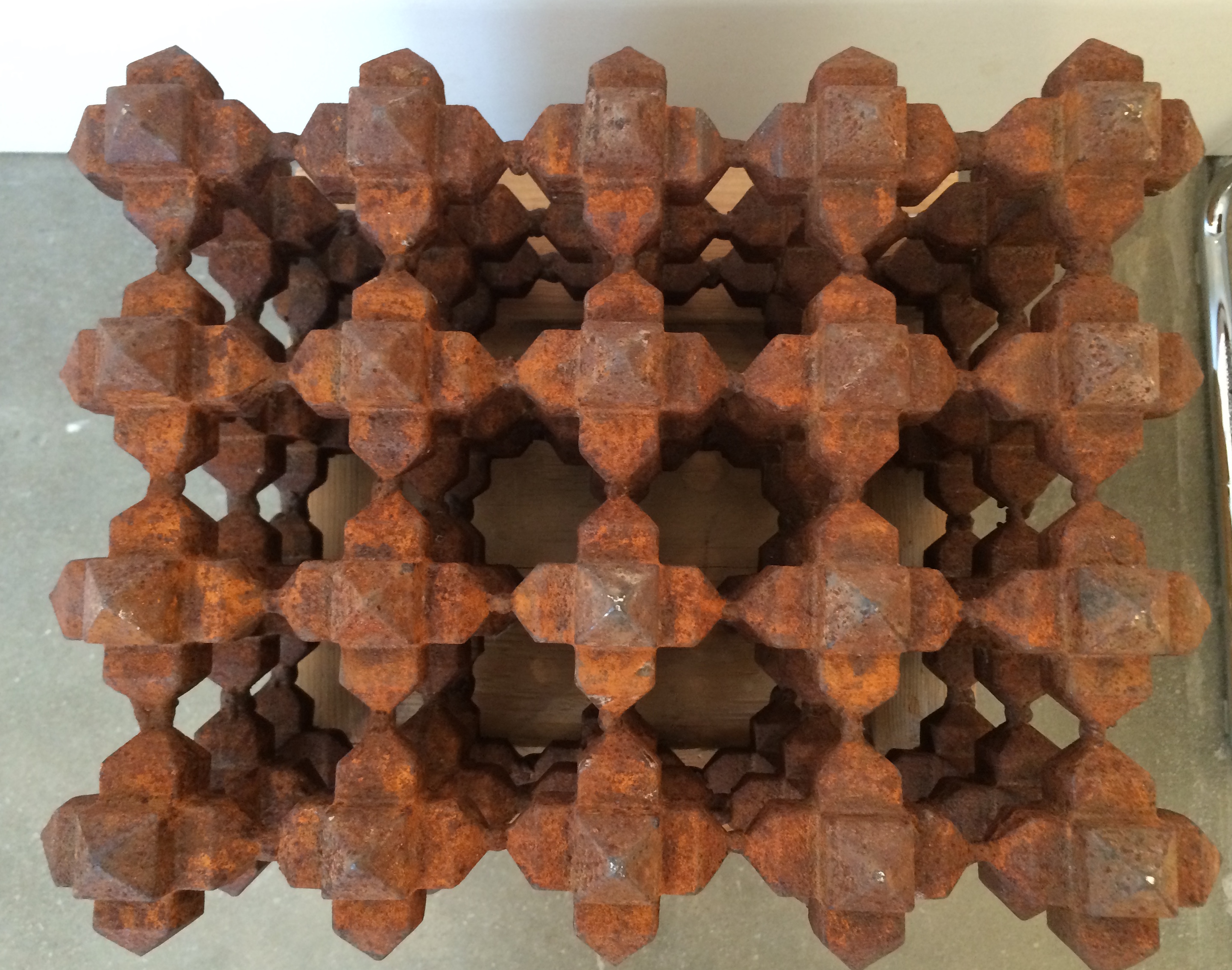
John Robert Craft
Cast iron
Picture courtesy of the gallery

Craft’s cast iron sculptures are related to his life as a Texas rancher. They are solid and heavy, and have a rustic patina. Their rough physicality is juxtaposed to their intricate geometric forms. This work is made up of 60 basic elements stacked into a 4 by 5 by 3 rectangular solid. Each of the elements is a type of double cruciform with a pyramid set on each of the six ends. This forms negative spaces with 16-sided regular polygon shaped windows. Craft’s work presents complex 3-D repetitive tiling-like formations, while retaining the physical realities of the artist’s ranch experience.

Susan Happersett

Anish Kapoor at the Peabody Essex Museum

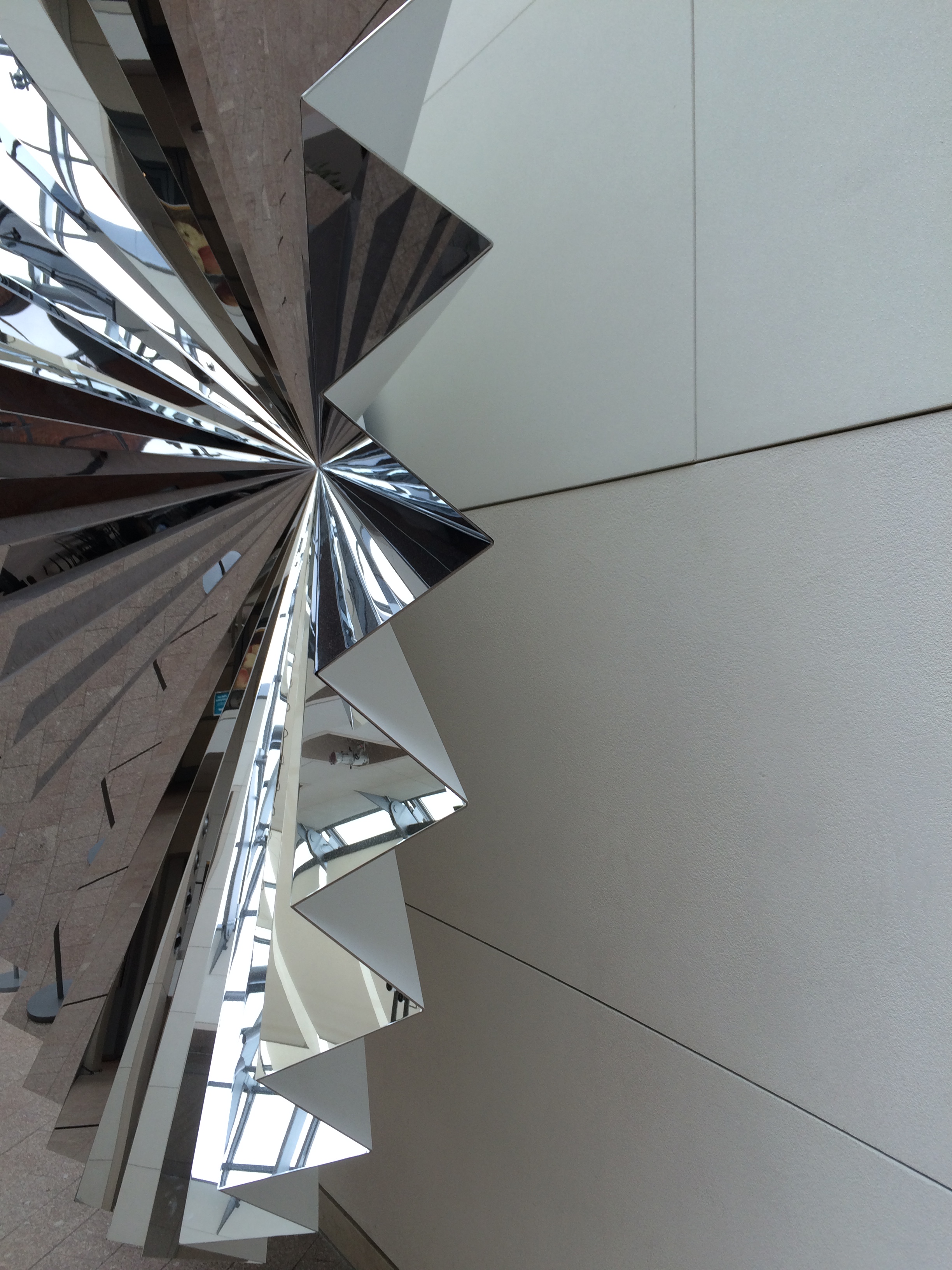
Anish Kapoor’s wall sculpture “Halo”  is currently on display in the atrium of the Peabody Essex Museum in Salem, Massachusetts.

16-15-1
The stainless steel construction from 2006 is a concave disc with accordion type folds.The narrow circular sections come together in 90 degree pleated folds.

16-15-2
Although the stainless steel has a mirror reflective finish, when you stand in front of  “Halo” you do not see your reflection. The angles of the mirrored sections face away from the viewer.
Kapoor demonstrates interesting phenomena of concave surfaces, as well as the principles of folding within a circle.

Susan Happersett

Lori Ellison at McKenzie Fine Art

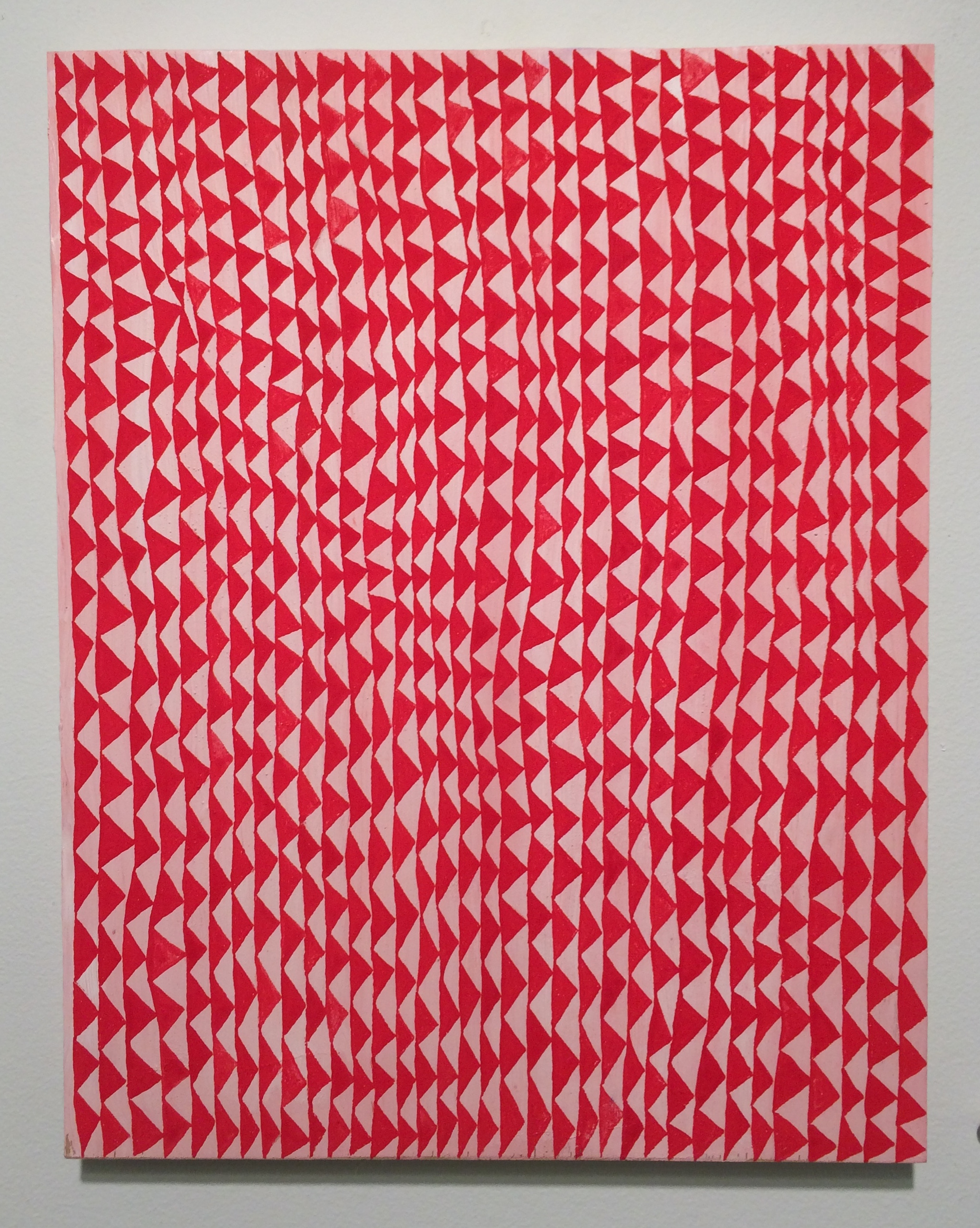
The use of repetitive geometric patterns is a prevalent theme in abstract art. Lori Ellison’s paintings and drawings celebrate the hand of the artist, featuring a lyrical, hand drawn quality. Through the use of basic geometric shapes Ellison created lively compositions that hum, buzz and pulsate. The current exhibition at the McKenzie Fine Art gallery include small scale paintings on wood panels and drawings on notebook paper. All of this ambitious work was completed the year or so before the artist’s death in 2015.

16-03-01
This gouache on wood panel from 2015 measures 14 x 11 inches. Its compact format holds a profusion of triangles. The almost parallel columns of almost isosceles triangles are packed tightly on the plane. Alternating the the red and pink shapes, all of the red triangles seem to point right and all pink ones point left. This forms an interesting dialogue between positive and negative space.

16-03-02
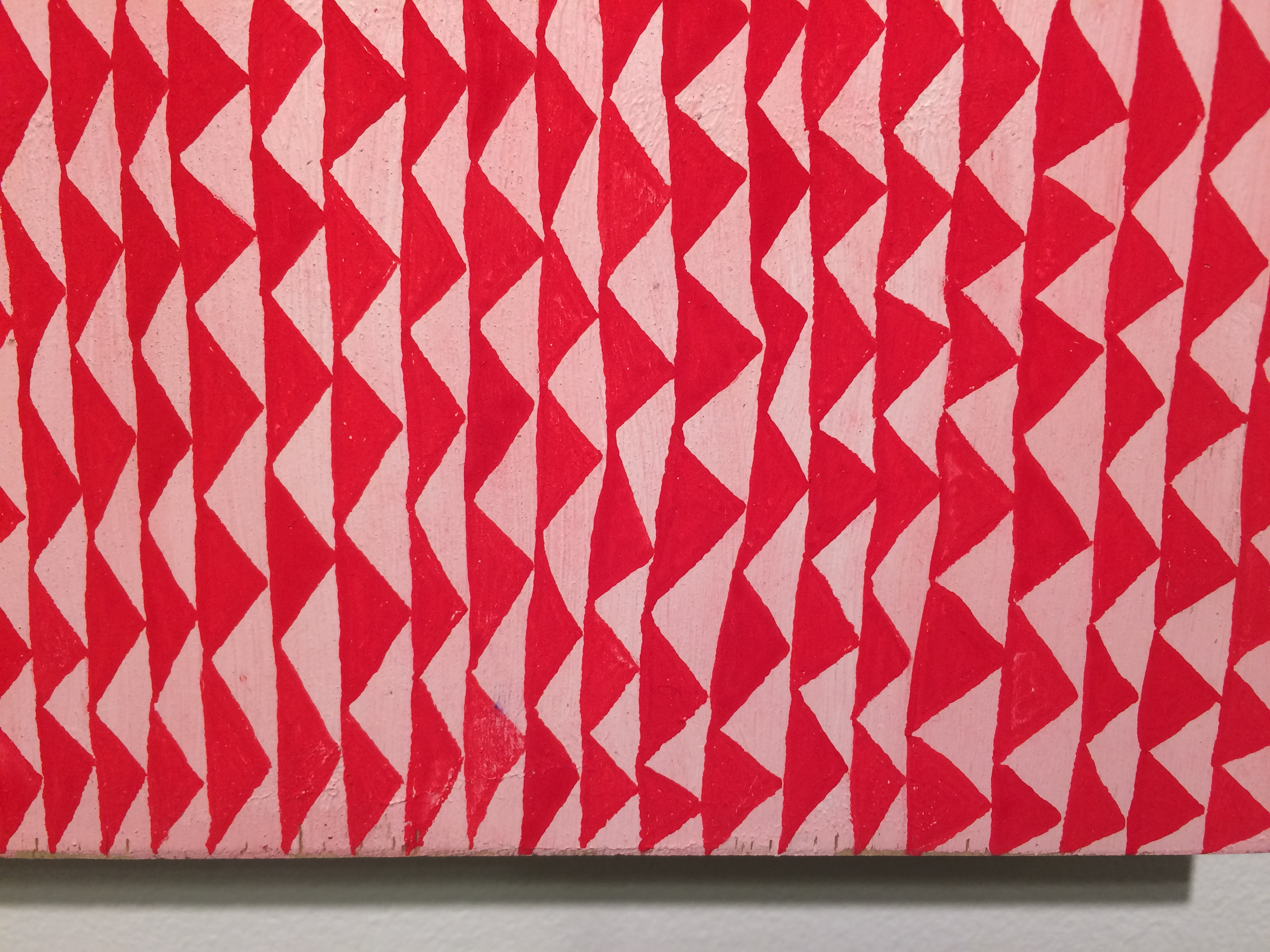
In this close up of the same panel we can see more clearly that this work is not about the accurate measurement of pure clean geometry. It is some ways more complicated, more human. This is definitely a painting about lines, triangles, positive and negative, but it is also about the artist. The personal scale makes the viewer stand close to the work and be drawn into the patterning. Art can be about mathematics with out having to use a ruler or striving for perfection.

Susan Happersett

Pino Manos at Unix Gallery

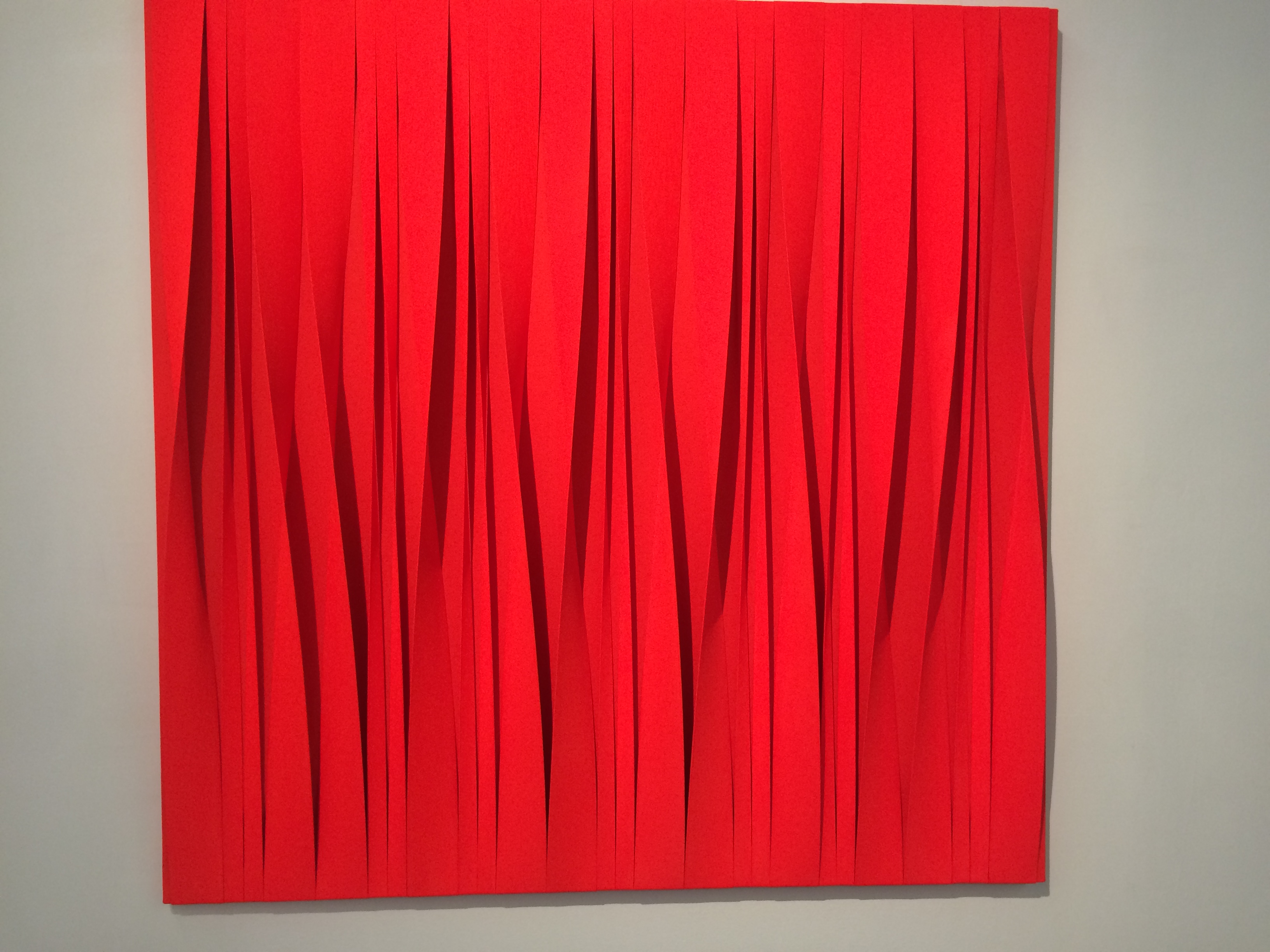
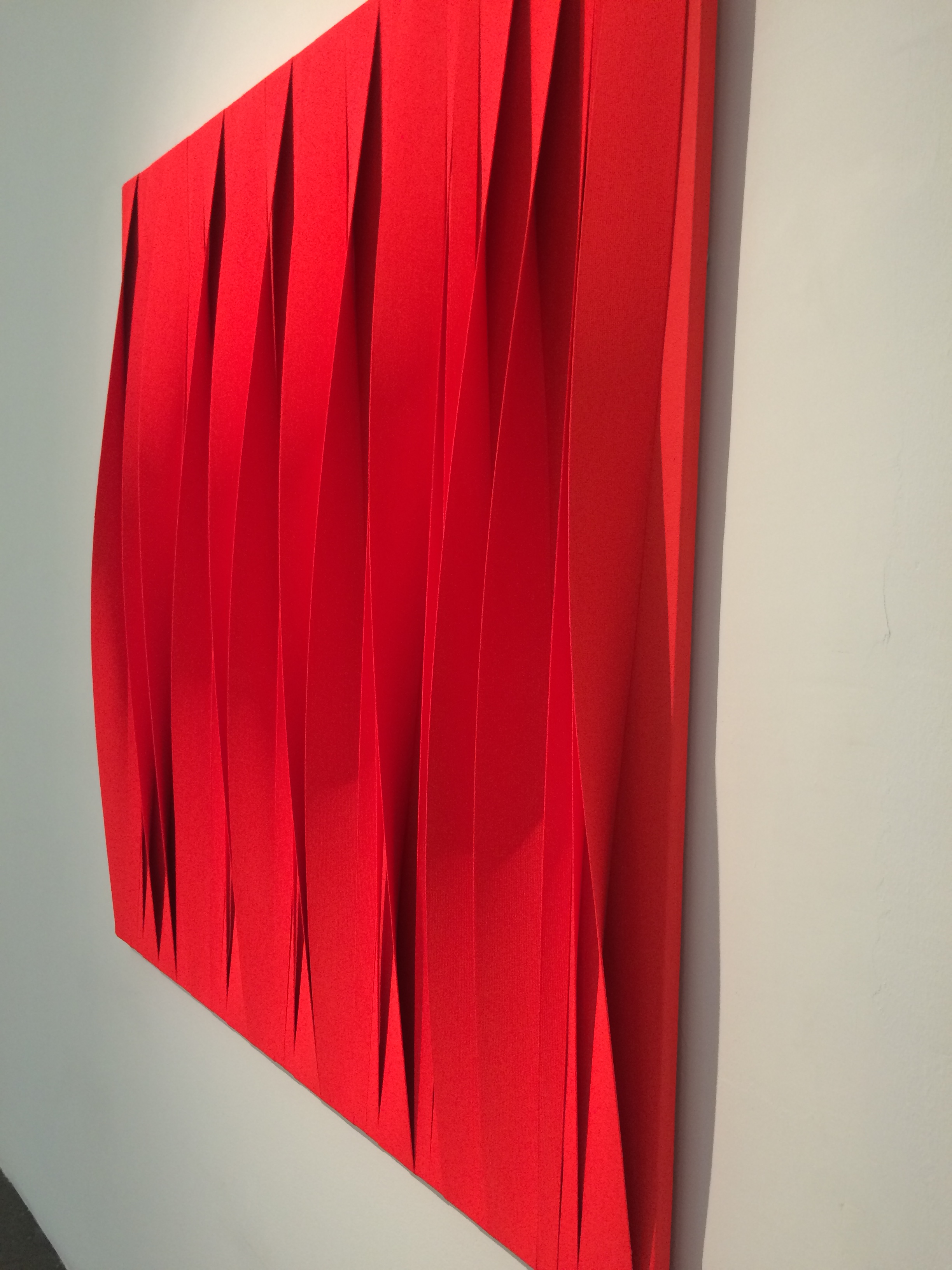
Pino Manos’ solo show titled “Synchronicity” is currently on view at the Unix Gallery. His Monochrome paintings feature vertical strips of canvas layered over the stretched canvases, creating three dimensional works that come off the wall. The strips are of varying widths and have a twist. This act of twisting the canvas creates shadows. The work appears to have lighter and darker sections but the works are all actually the same exact tone and shade allover. By changing the width of the strips the twists also vary. The thinner the strip, the more of the strip stays closer to the vertical lines.

15-47-1

In this red canvas the direction of the twist is not uniform resulting in lines that seem to cross. A side way view reveals the both the width of the strips and the vertical length of the each twist.

15-47-2

Involved in the Rigorismo movement in Italy, Pino has created a new type of geometric space on canvas by challenging our preconceived ideas about painting.

Susan Happersett

Math at the E/AB Fair

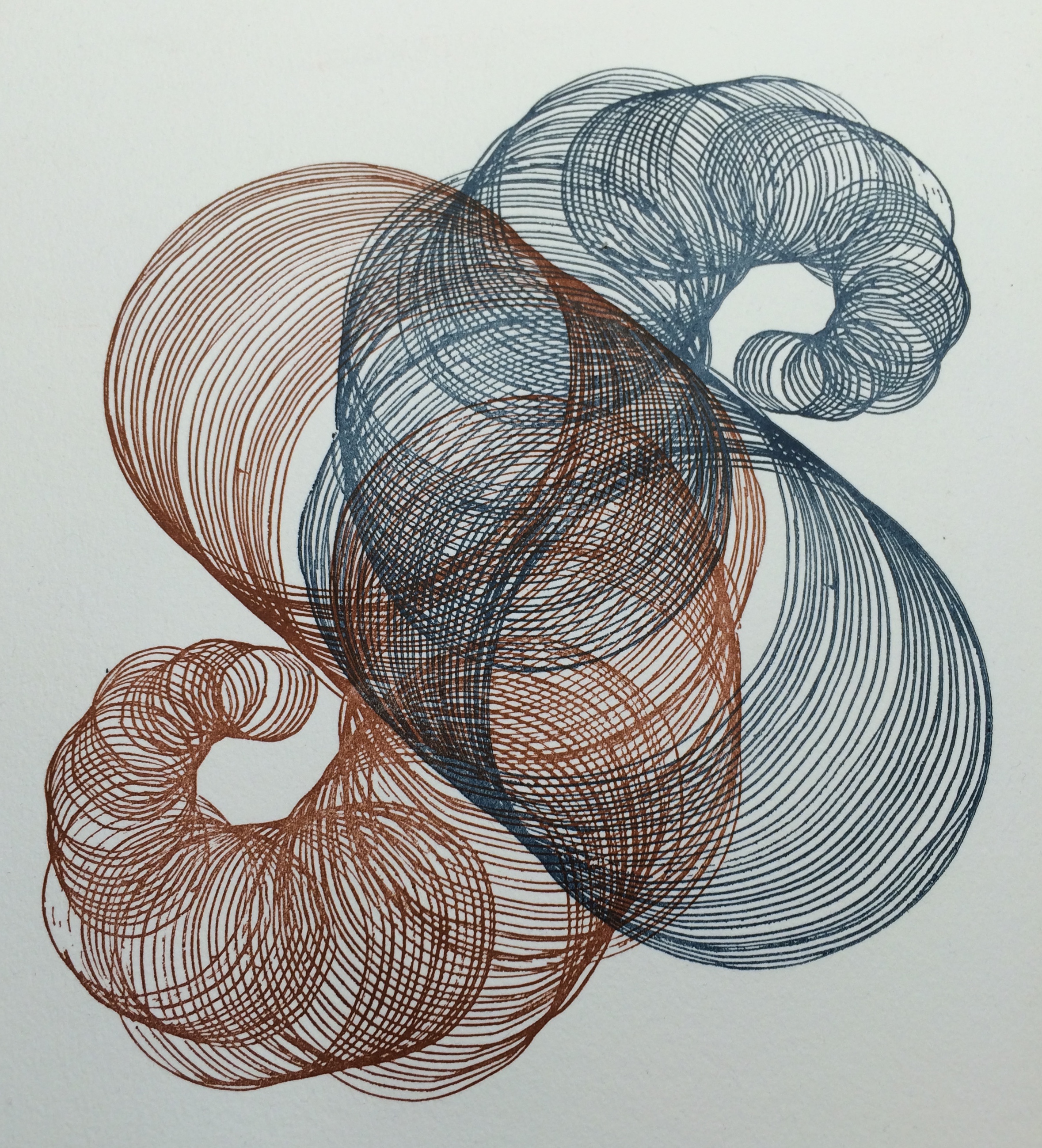
This week there are numerous art fairs in NYC that emphasize prints and artist’s books. I am participating in the E/AB fair with the letterpress publisher Purgatory Pie Press. We are exhibiting the first of series of three prints based on my Fibonacci Spiral drawings.

15-46-1

“Fibonacci Spiral 1” – 2015

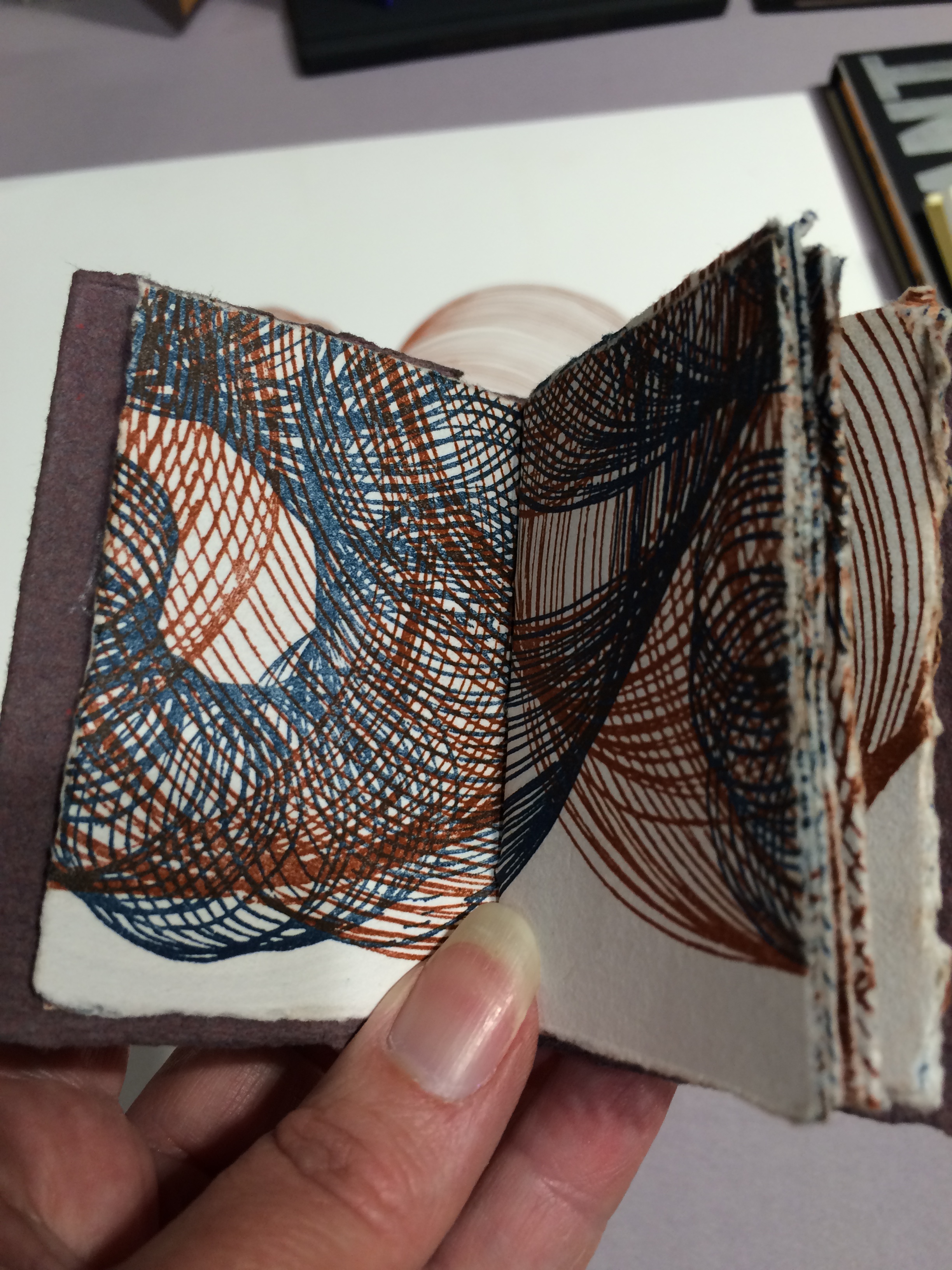
Using an algorithmic process of folding and tearing double-sided prints, we have made an edition of a book called “Galactic Collision, Fibonacci Spiral”. This book breaks up the spiral patterns into small segments of the curves.

15-46-2

“Galactic Collision” – 2015

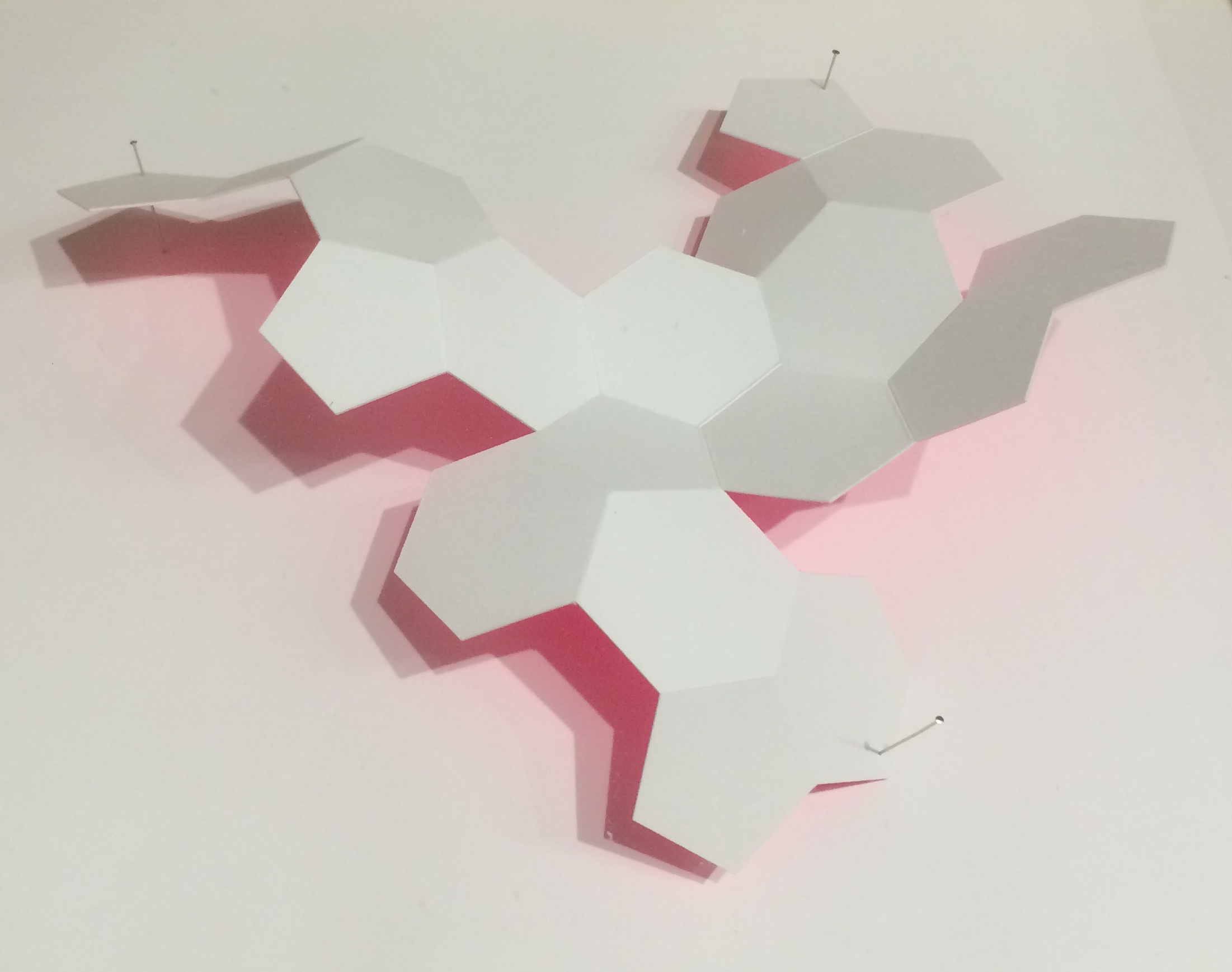
Bernard Chauveau Editeur brought some very interesting work from Paris including “Mineral Skin”,  a limited edition cut and folded paper sculpture by Arik Levy.

15-46-3

Mineral Skin – 2013

“Mineral Skin” is a single sheet of paper that has been cut and folded to create a surface of pentagons and hexagons.

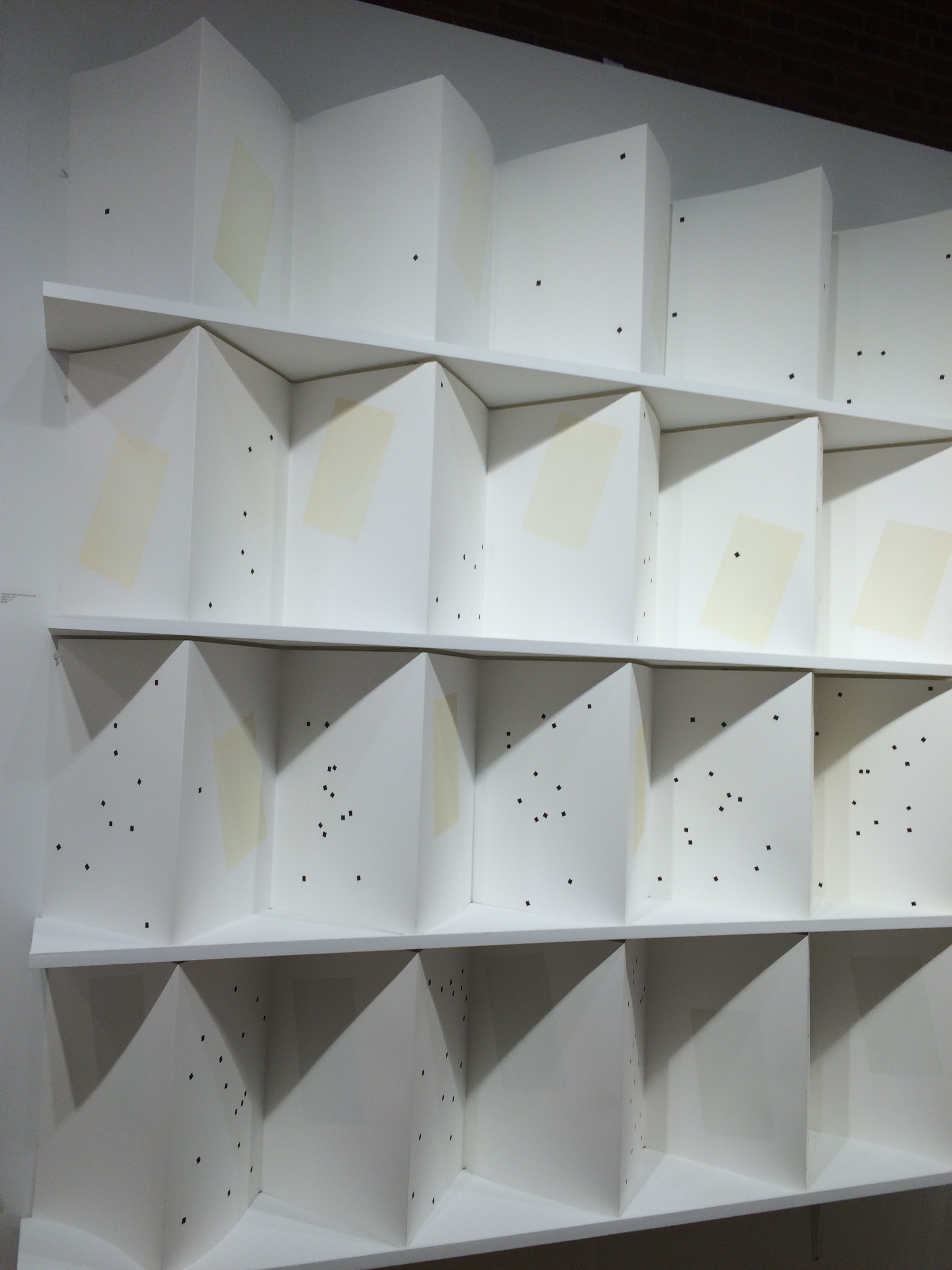
At the Wingatestudio booth Sebastian Black’s large scale accordion books are on display .

15-46-4

“Period Piece, Simple Sequence” 2014-2015

“Period Piece, Simple Sequence” is a series of two sets of counting books. The first starts with one randomly placed black square on the first page. Each subsequent page has one more square, up to ten squares. The second set begins at eleven square marks and continues up to twenty.

There is a very diverse collection of work at the E/AB fair and I was quite pleased to find some work with mathematical themes.

Susan Happersett

Josiah McElheny at Andrea Rosen Gallery

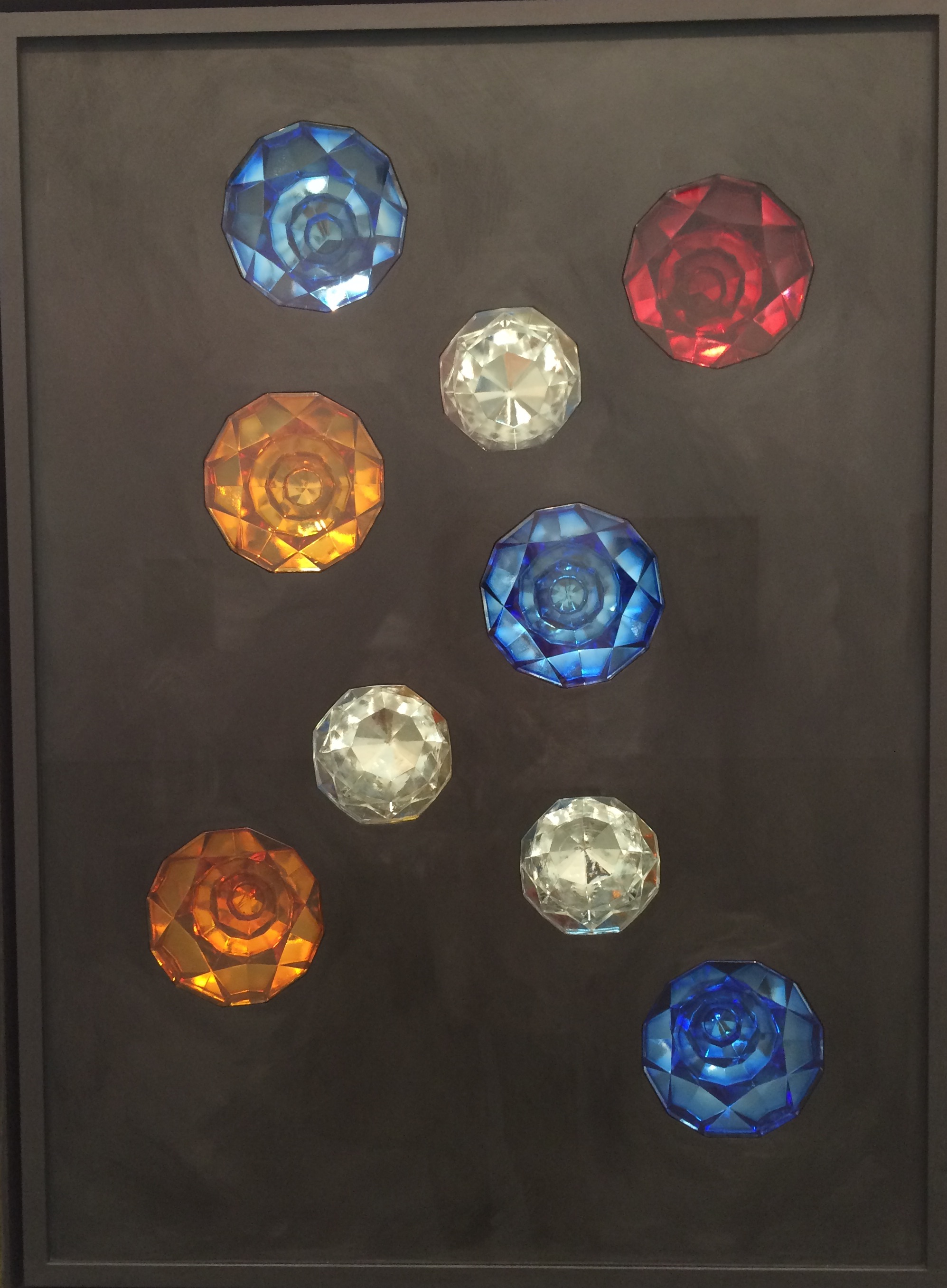
The mathematics used in the study of crystallography relies heavily on geometry. Josiah McElheny’s “Crystalline Prism Painting” series – on view at Andrea Rosen Gallery – offers a unique expression of the visual qualities of crystal forms.

15-42-1

Josiah McElheny – “Crystalline Prism Painting III” – 2015

The painting in this series are a type of shadow boxes with a smooth glass over the 3-D press-molded polished glass crystals. This construction offers a foreground, the glass, a middle ground, the crystal sculpture elements, and as a background the black painted board. The glass crystals are both the subject of the artwork, as well as the physical material or medium of the work. Out of the frame they would be beautiful objects but by displaying them on a black background and hanging them on the wall the artist invites the viewer to look at them more closely. McElheny’s work showcases the geometries and symmetries of crystals.

Susan Happersett

McArthur Binion at Galerie Lelong

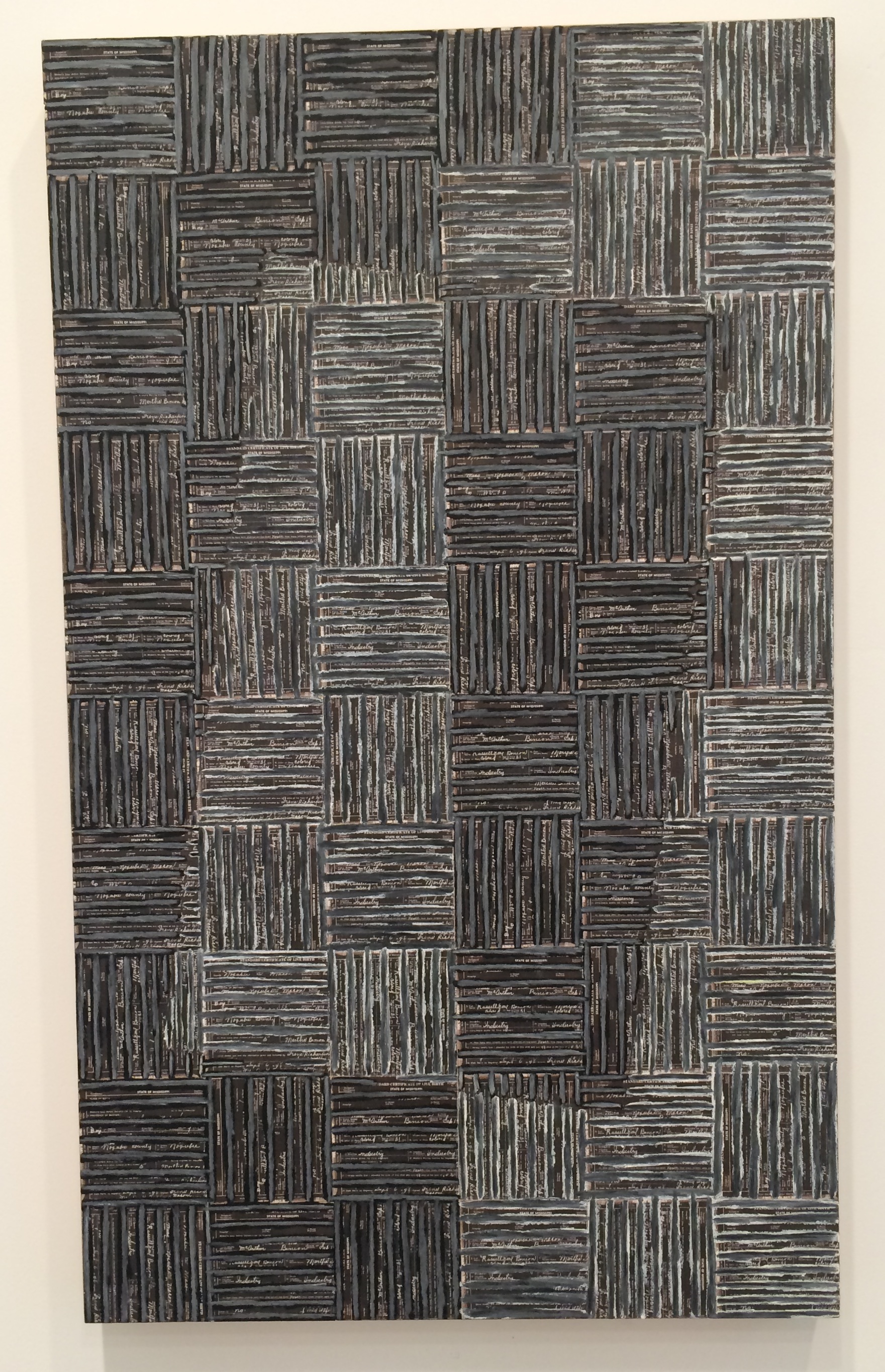
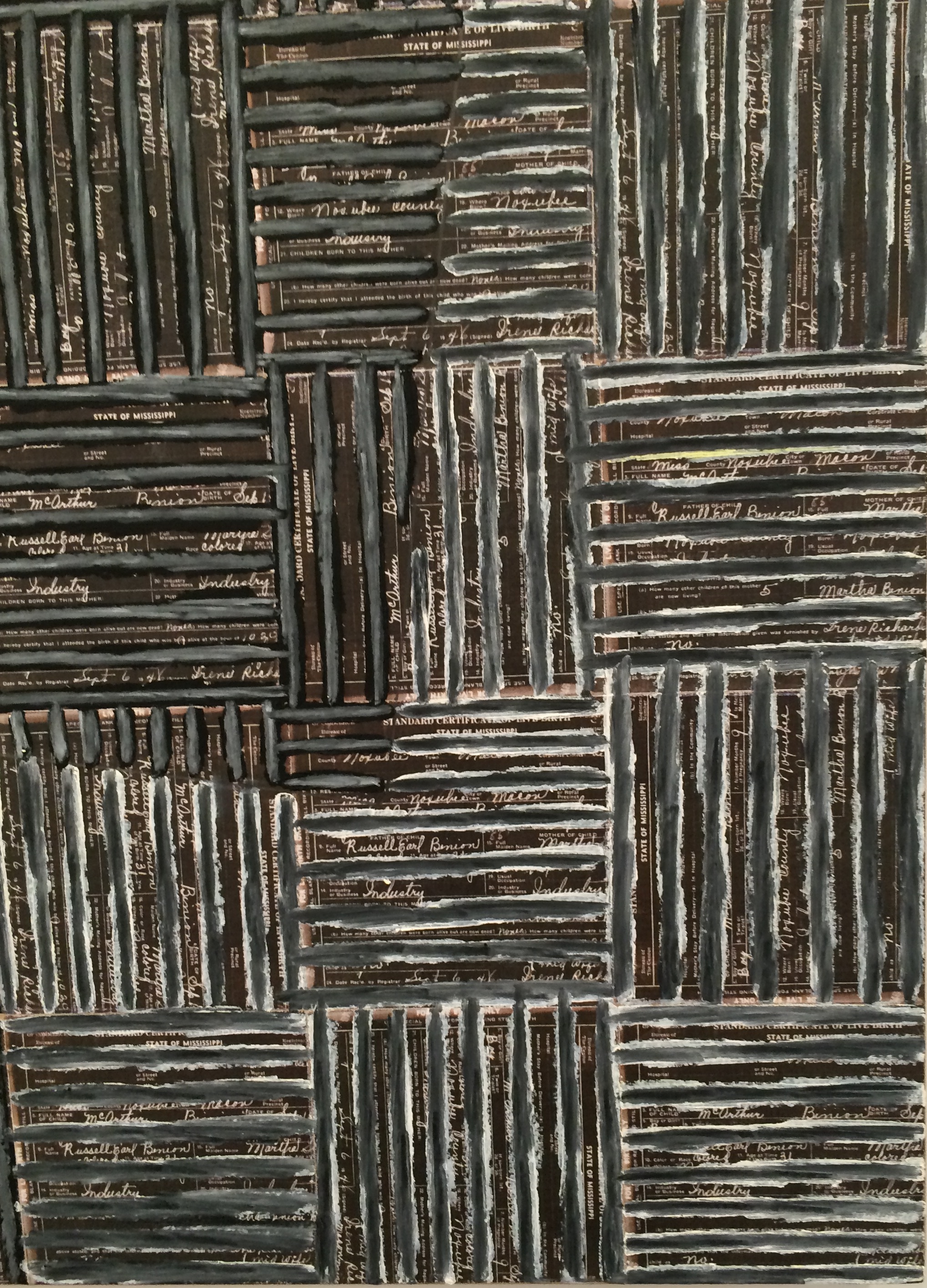
McArthur Binion has an esteemed history working in the realm of abstract art. The exhibition “Re:Mind” at Galerie Lelong features his new work. The artist uses copies of personal documentation, birth certificate, address books, and cuts them down into equal length strips. He mines the textual information from his past. He arranges the strips into vertical and horizontal patterns to create alternating squares within a grid. This becomes the underlying surface over which Binion applies layers of paint stick strokes.

15-40-1

“dna: sketch: XI”, 2015 oil stick and paper on board


15-40-2

close up of “dna: sketch: XI”, 2015

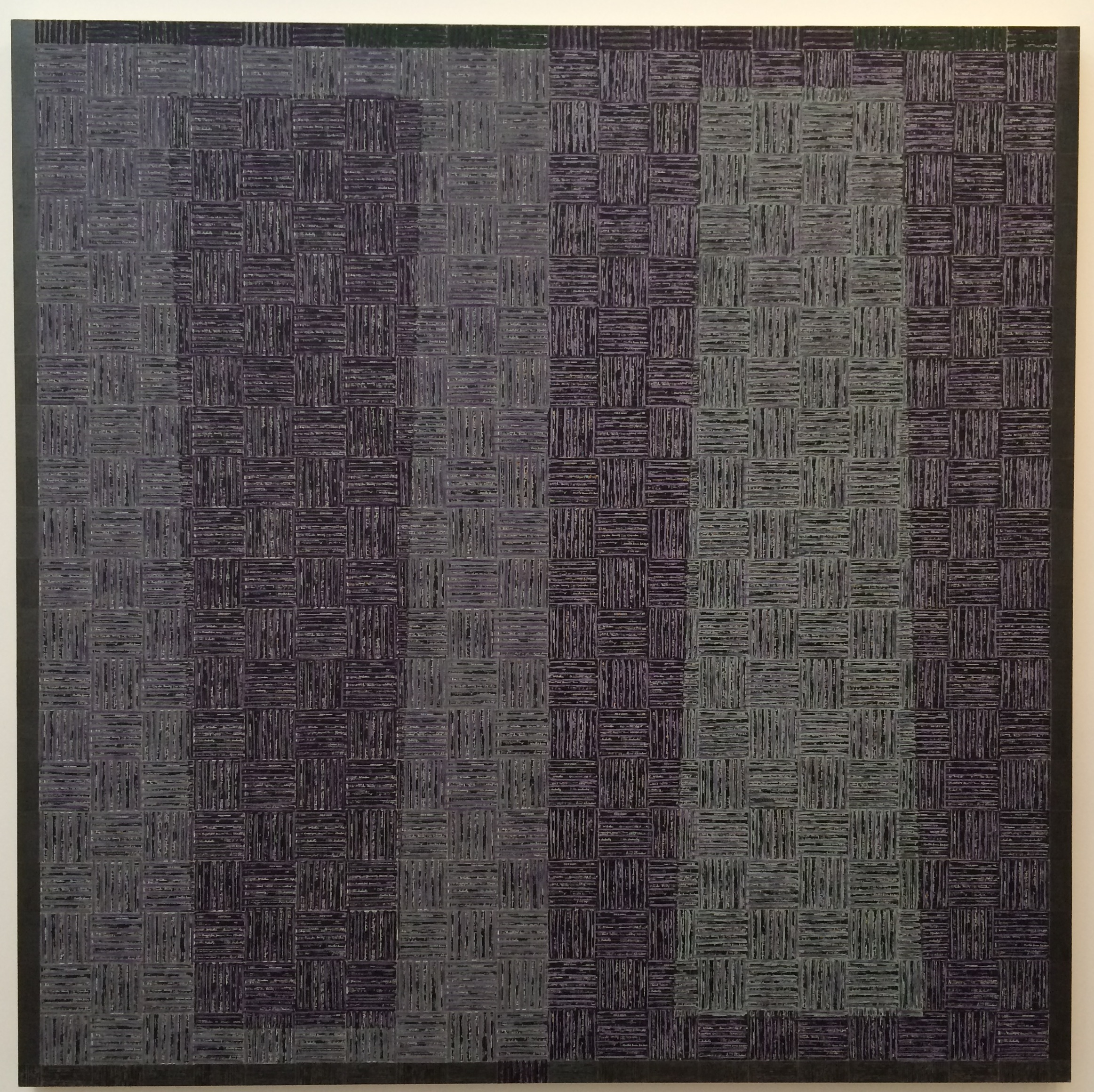
In the work “dna: sketch: XI” Binion has included geometric elements beyond the use of vertical and horizontal parallel lines. There is an angled rectangular figure.  He has divided the work in half along the vertical center line. The left half of the painting has a darker toned back ground and the rectangle is lighter. On the right side of the painting this is reversed. This use of light and dark splits the rectangles into two trapezoids giving the work another mathematical element with order 2 rotational symmetry.

15-40-3

“DNA: Black Painting: VI”, 2015, Oil paint stick,graphite, and paper on board

“DNA: Black: VI” also features two trapezoids rotated 180 degree,s but this time they are each centered on their own side of the canvas, with clearer definitions of fore ground and back ground.

McArthur Binion has taken the tenets of 20th century abstract (especially Minimalist) painting and broadened the theme of his work through the use of an underlying grid of personal history.

Susan Happersett