Delirious at The MET Breuer: “Excess”

The MET Breuer’s current exhibition Delirious includes about two dozen art works that are related to Mathematics. The Section of the show titled “Excess” features work that involves repetitive series.
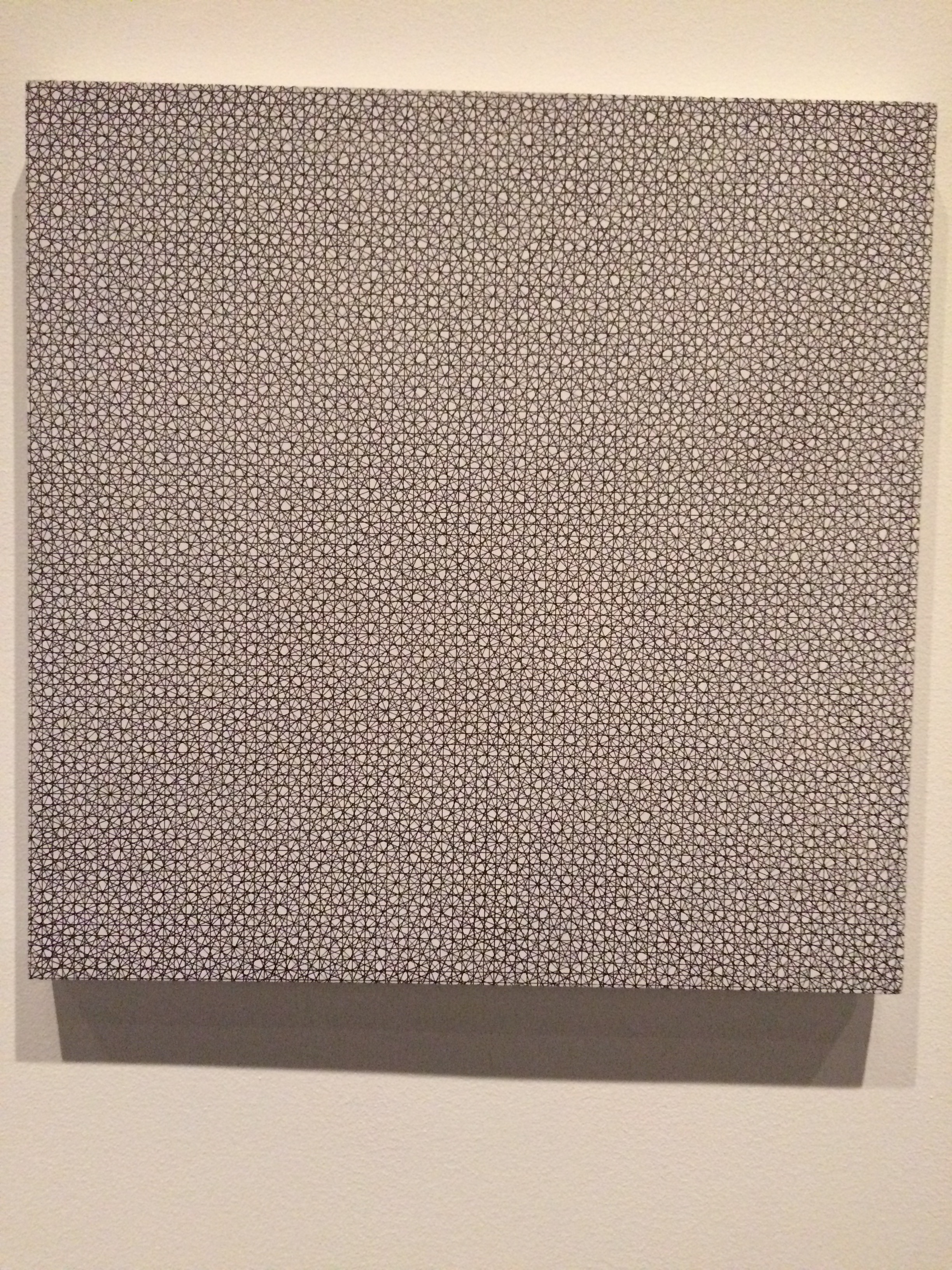
Here is Francois Morellet’s rule based painting “4 Grids 0° – 22.5° – 45° – 67.5°”  from 1958. Morellet has layered a series of four square grids rotated by the prescribed number of degrees. Like an interference pattern, the white sections pop in the intricate web of black lines.
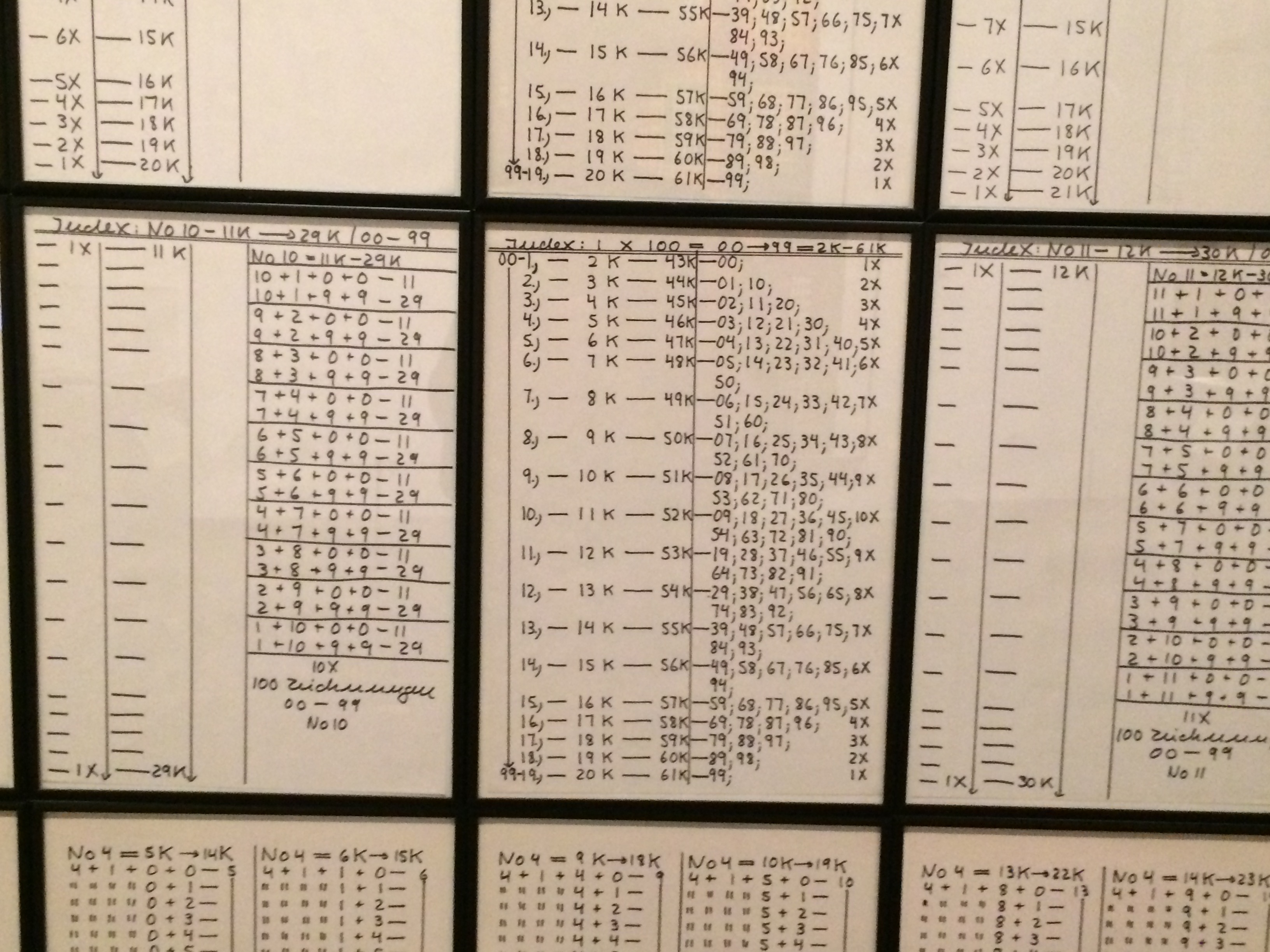
Hanna Darboven manipulates the digits in calendar dates in her serial drawing “00-99=No1-2K-20K” from 1969-70:
Darboven’s work involves the repetition of predetermined arithmetic operations. To me it functions as a type of visual number poetry.
Delirious is really an amazing exhibit. I have only offered a brief sampling of the work on display. There is even a showcase with some of Sol Lewitt’s note books! If you are in NYC in the next few months I strongly recommend taking some time to have a look. If you can not make it to the museum, there are some images on their website and they have published a nice catalog.
Susan Happersett
Delirious – Vertigo at the MET Breuer

When I heard the title “Delirious” of the current exhibition at the MET Breuer I did not immediately think Math Art. This show explores art from the 1950-1980 period that was in reaction to the tumultuous time after WWII. It includes a broad range of styles and themes. Two sections in particular feature work with mathematical implications :”Vertigo” and “Excess”. The introductory wall signage even mentions the artists’ use of mathematics and geometry.
There were so many pieces in this show that I would like to discuss that I will talk about it in two blog posts
One of the sections in the show is called “Vertigo”. Displayed in this area is work that warps the viewer’s perspective of space.
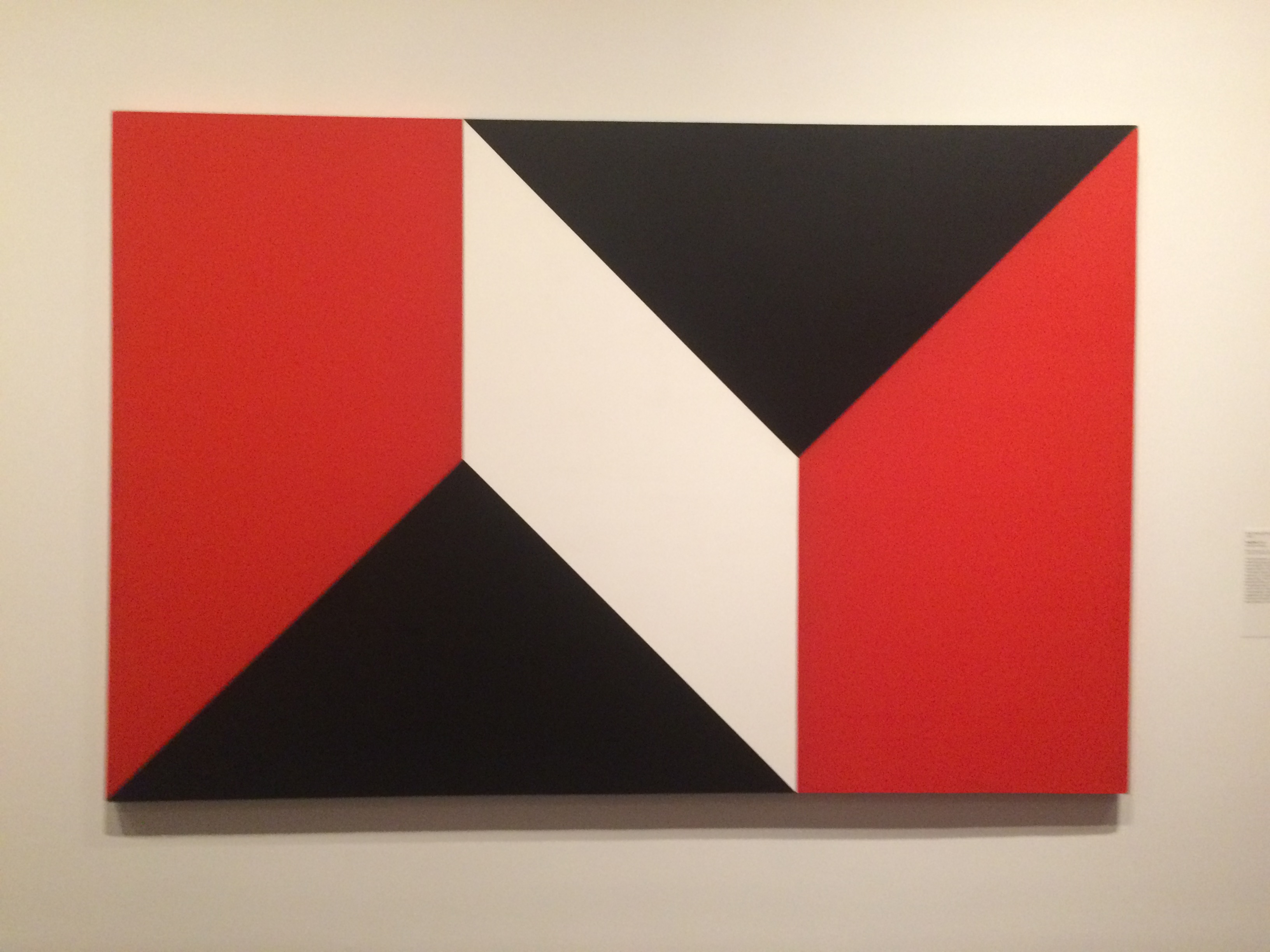
The 1965 painting  “Snap Roll” by Dean Fleming uses flat isosceles triangles, trapezoids, and a single central parallelogram to produce the illusion of a 3-D form simultaneously pushing out of the plane of the canvas, and retreating into the same plane. This disorienting phenomenon disputes Euclidean Geometry.
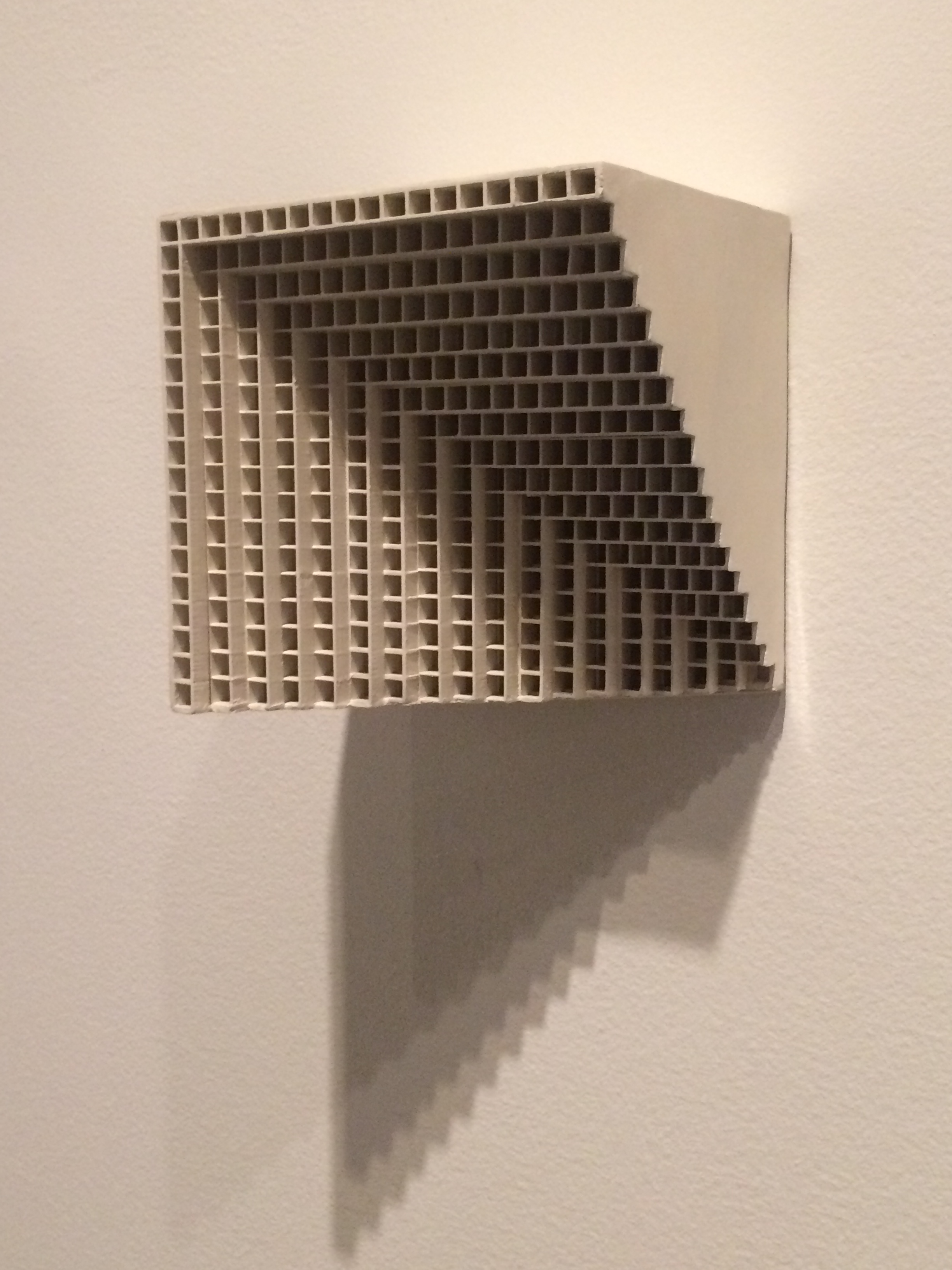
Robert Smithson’s Untitled (Model) from 1967 consists of a square grid of plastic panels. Carving away layers to reveal a diagonal step pattern, Smithson creates reflective symmetry. Although all of the ends of the elements retain their square shape along each column and row, the openings appear to stretch and warp. This sculpture questions the way space changes when we go from a 2-D flat plane into 3-D object.
There were just so many wonderful examples of mathematically inspired art in this exhibit, it is hard to do it justice in a blog format. Next time I will write about the section titled “Excess”.
Susan Happersett
Mario Merz in Arte Povera at Hausser & Wirth

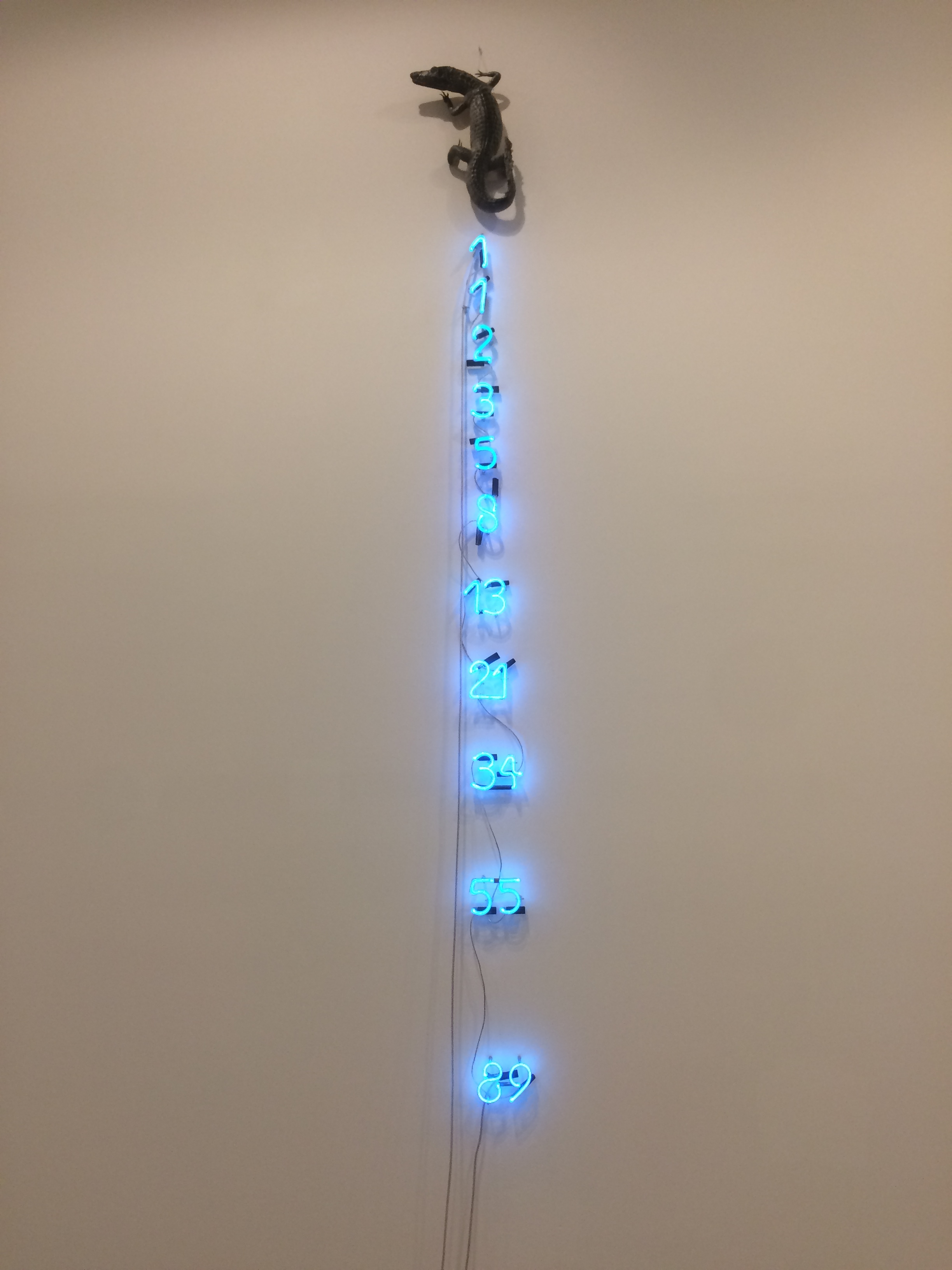
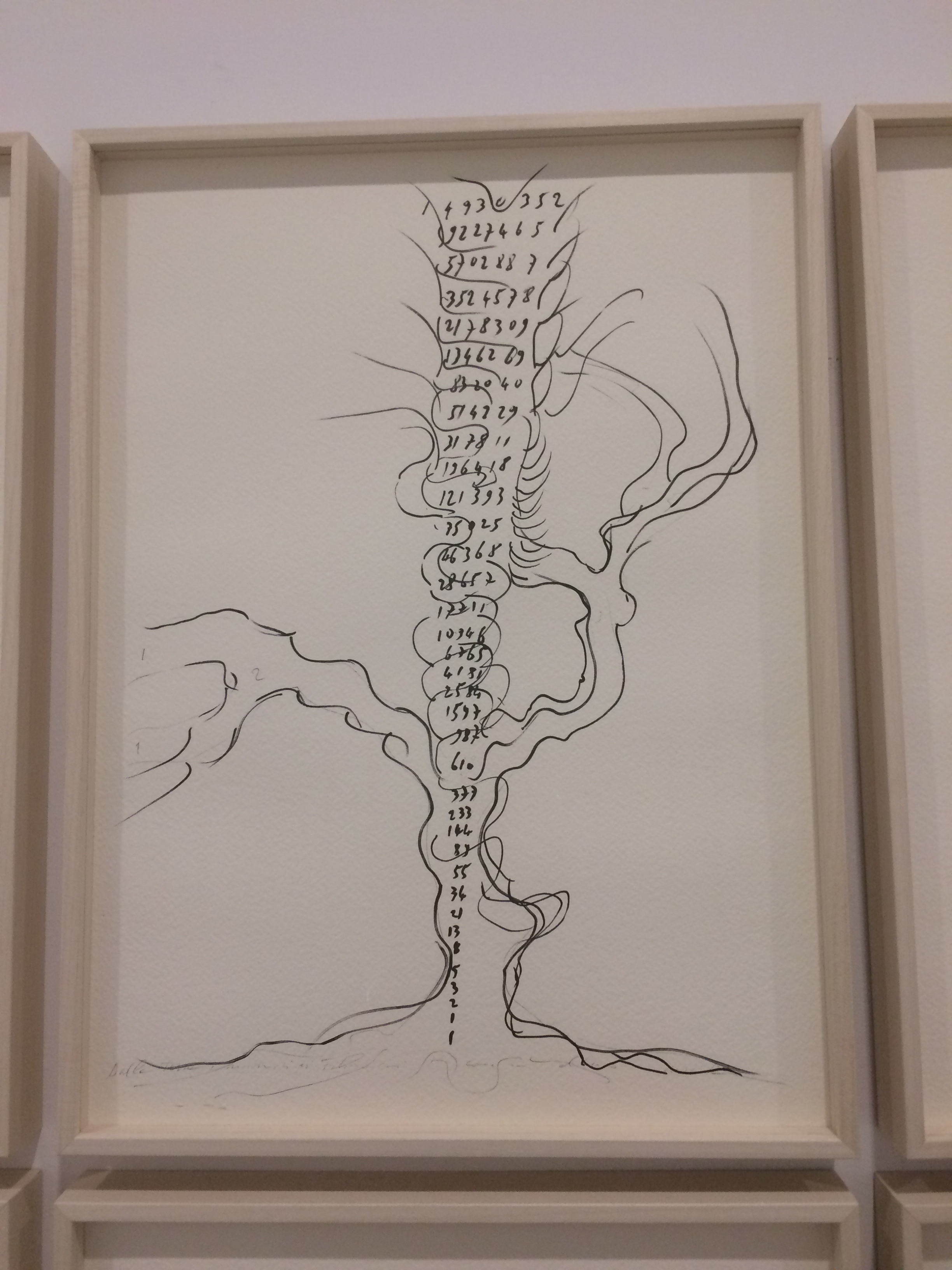
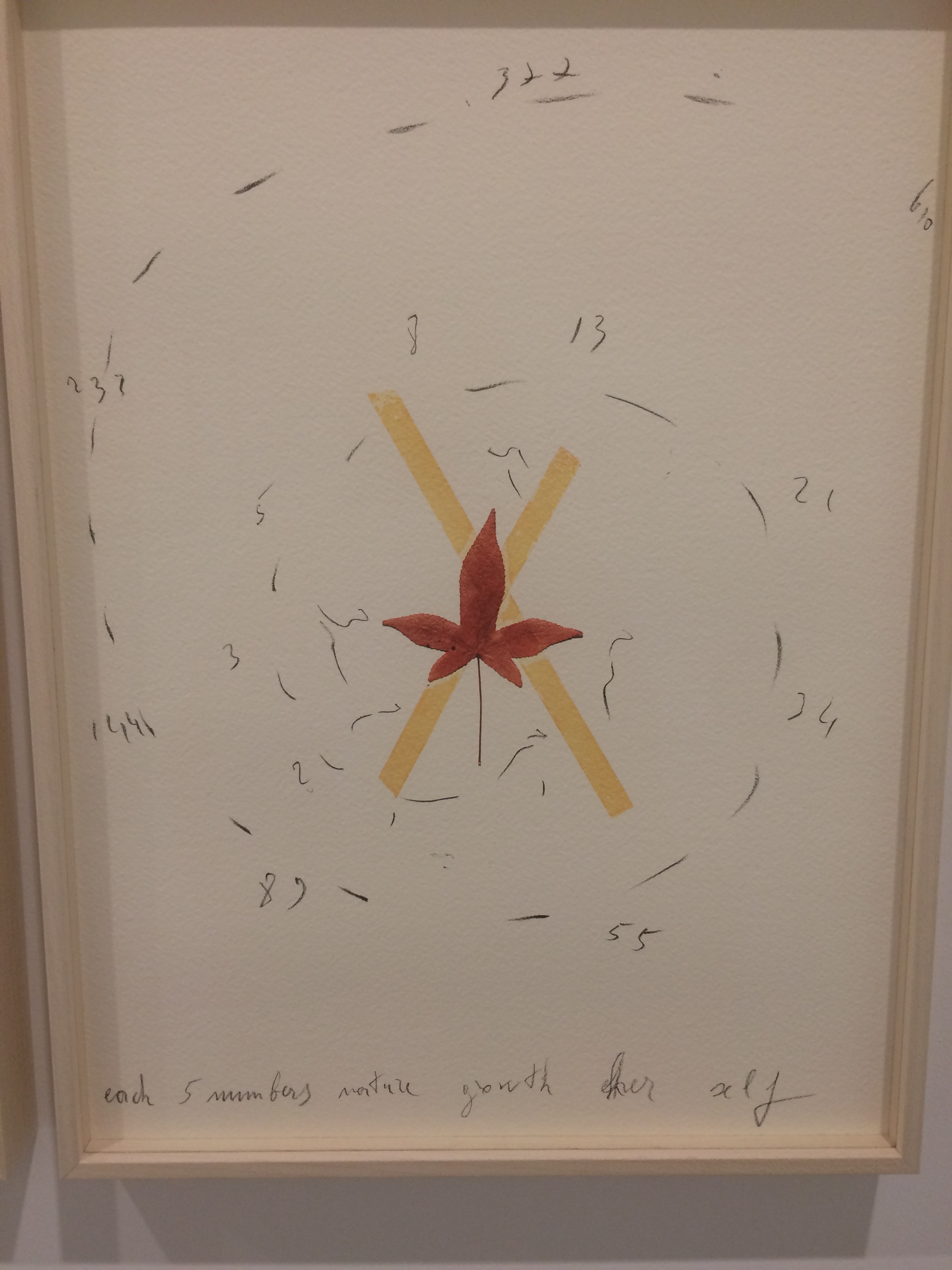
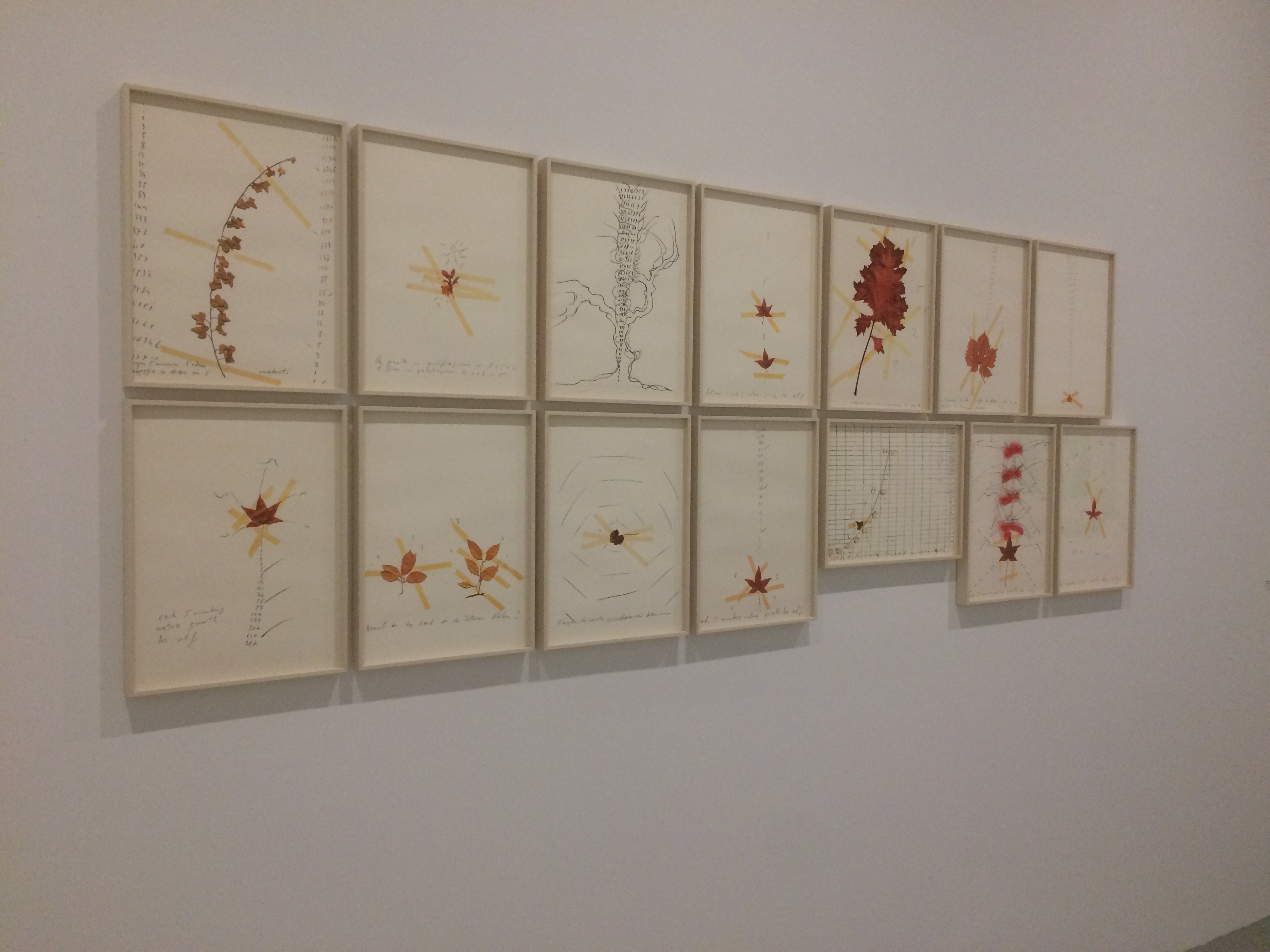
The exhibit “Arte Povera” curated by Ingvild Goetz at the Hausser & Wirth Gallery celebrates the 50th anniversary of the Italian artistic movement. Curator Germano Celant came up with the name “Arte Povera” which translates to “Poor Art”.  Although the artists in the group had different  practices, they were united in their rejection of the commercial leanings of Western art and chose to use everyday or “poor” materials in there work. Although a number of the artists made mathematically influenced work, Mario Merz offers the most direct connections. Merz created a large body of work over many years based on the Fibonacci Sequence.
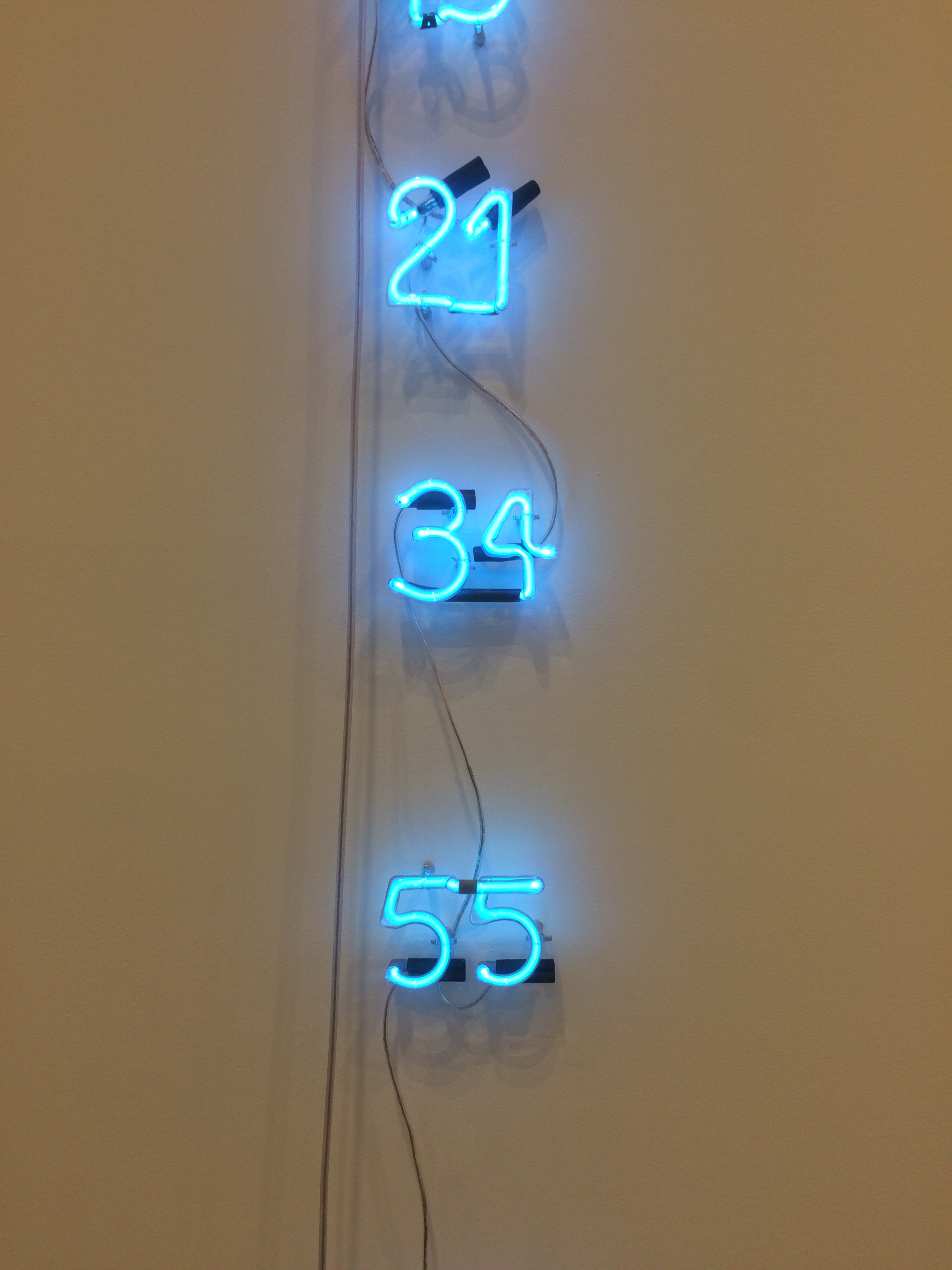
This large wall installation from 1991 titled “Crocodilus Fibonacci” features the sequence’s digits in neon lights.
 Here are some examples from a portfolio of lithographs based on the Fibonacci sequence and the growth patterns of plants  “Da un erbario raccolto nel 1979 in Woga-Woga, Australia” (From an herbarium gathered in 1979 in Woga-Woga, Australia) .
All pictures courtesy of the gallery.
Susan Happersett

Ruth Asawa at David Zwirner Gallery

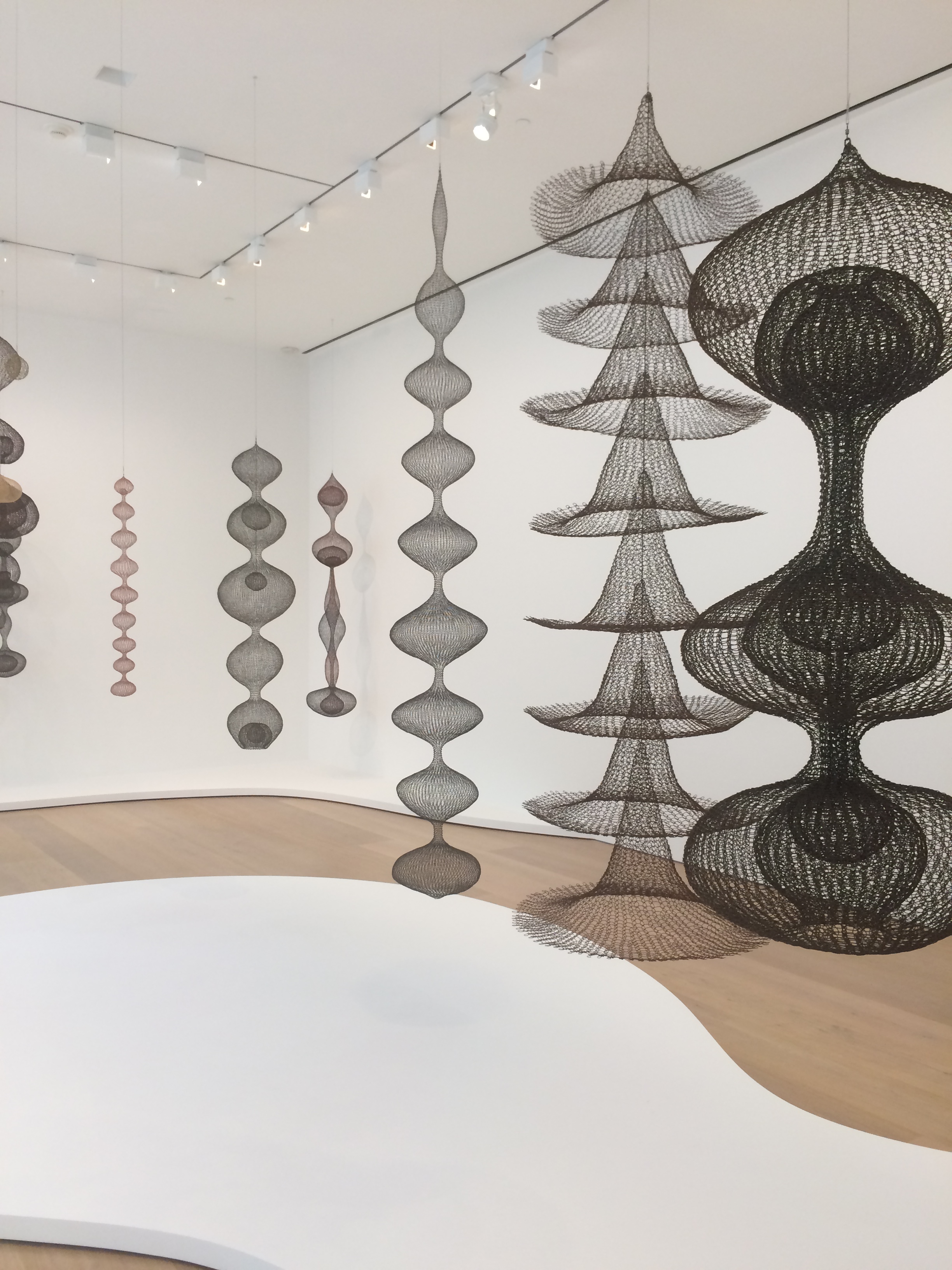
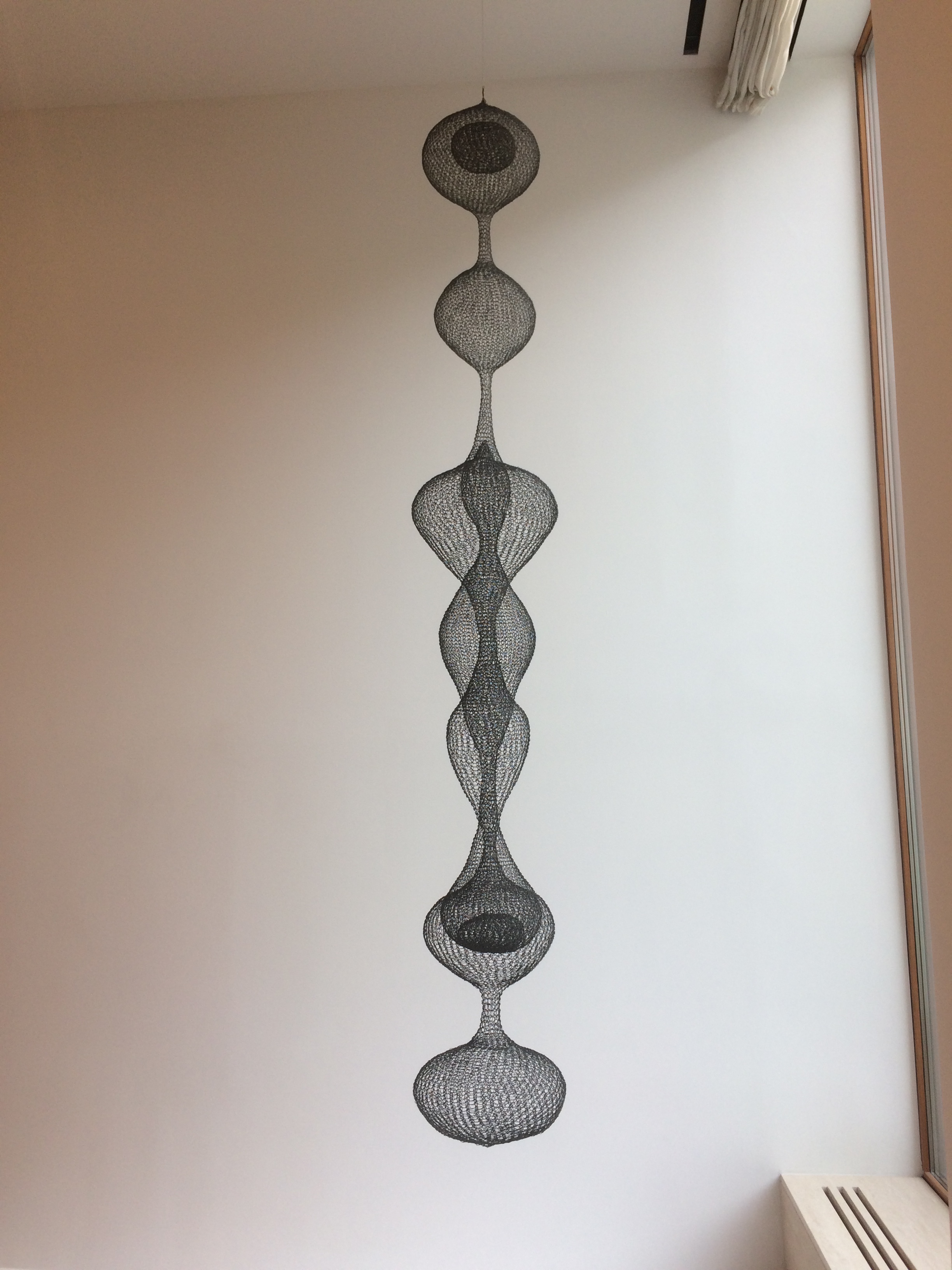
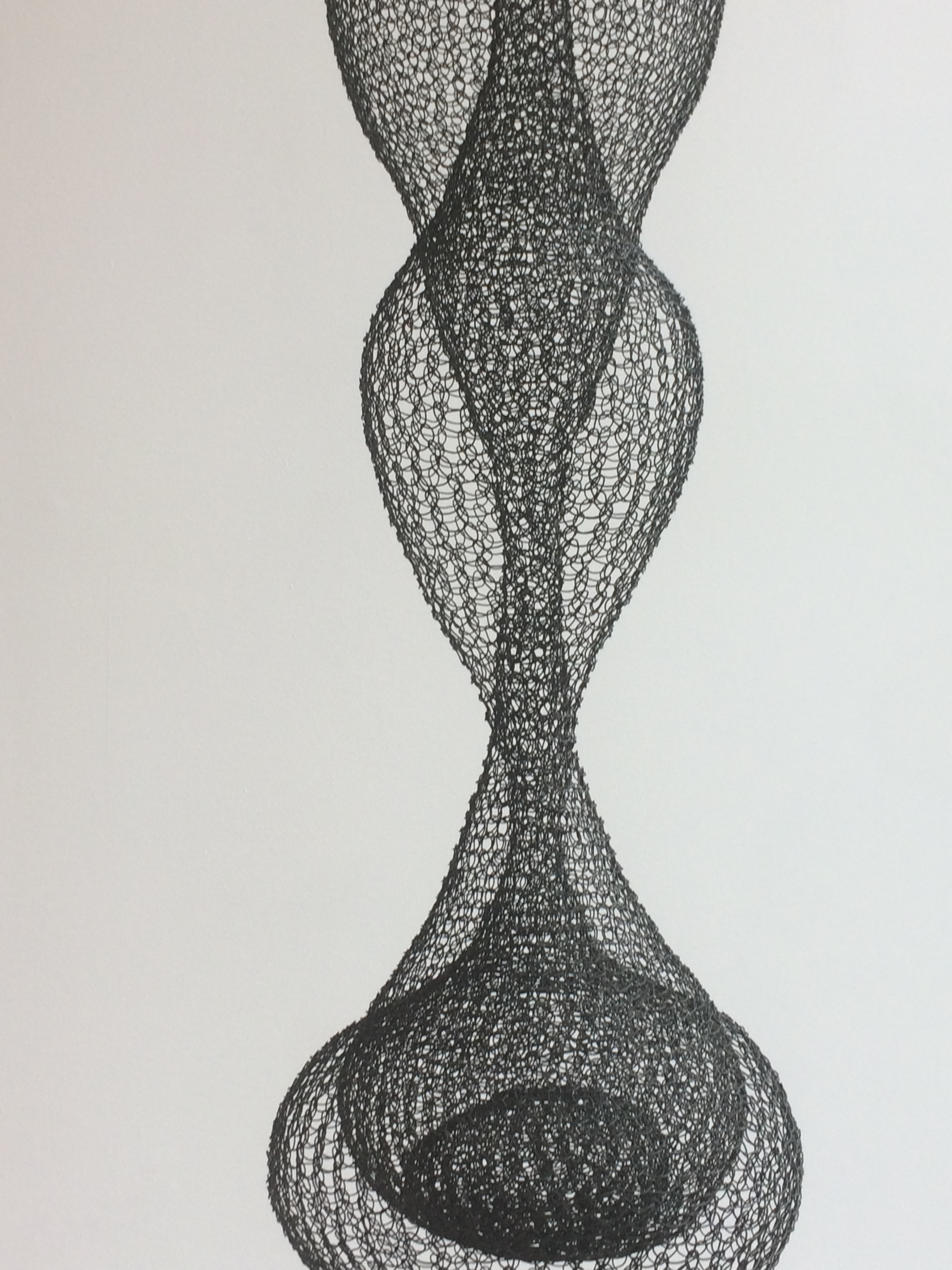
Ruth Asawa studied at the Mountain College, and in the late 1940’s began making crocheted wire sculptures. This solo exhibition at at David Zwirner features a large collection of these hanging forms.

Almost all of the structures feature a vertical line of symmetry. No matter your vantage point in the gallery the reflective symmetry is visible.

This sculpture is referred to in the catalog as “Untitled, 1954, Hanging, Seven-lobed Continuous, Interwoven Form, with Spheres with in Two Lobes”. It shows another element of Asawa’s work: the interior and exterior forms change positions. They seem to flow through each other.
This phenomenon questions our preconceived ideas about the rules for inside and outside in a 3-D geometric shape.

Susan Happersett

Fashion and Mathematics

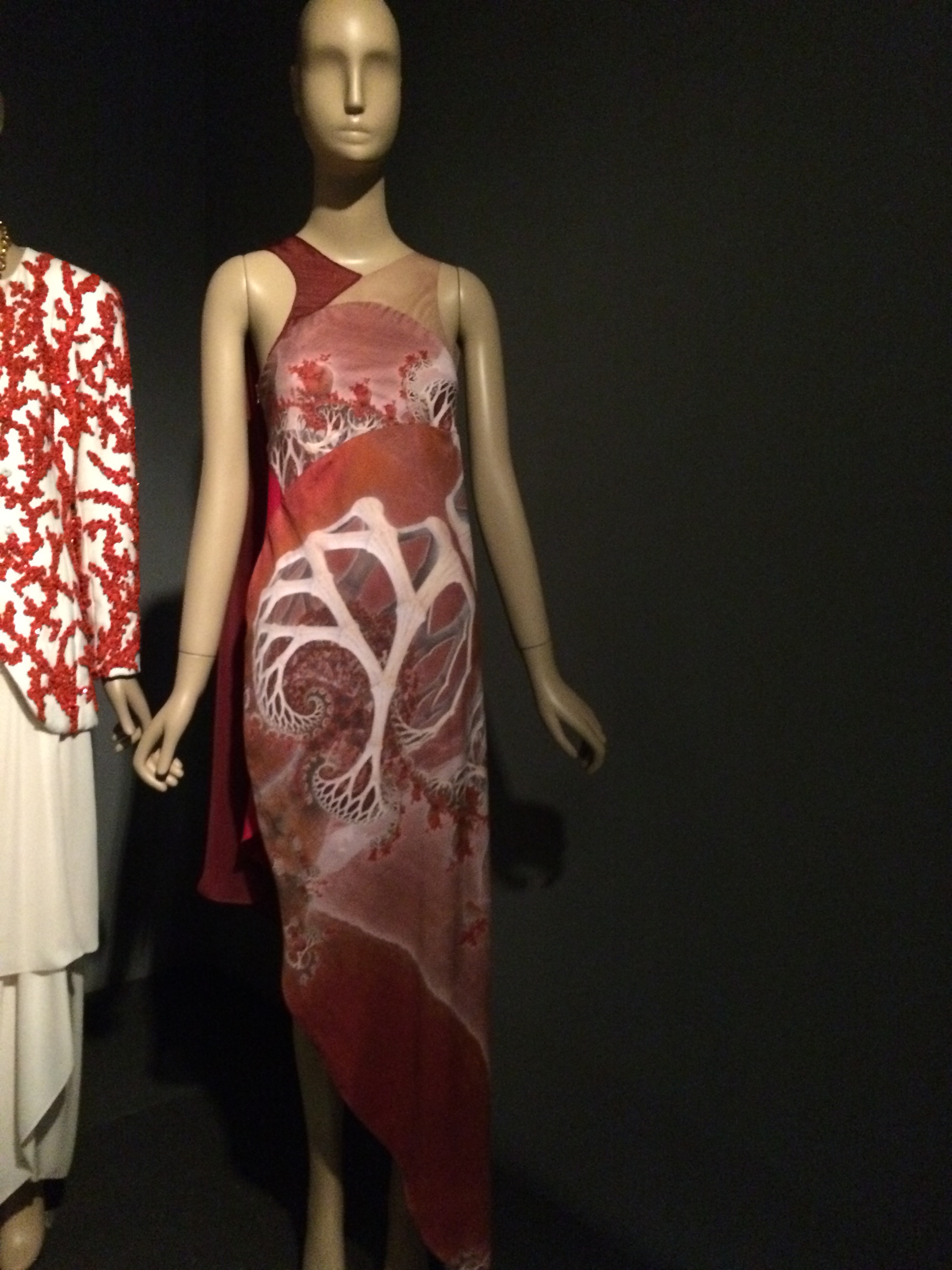
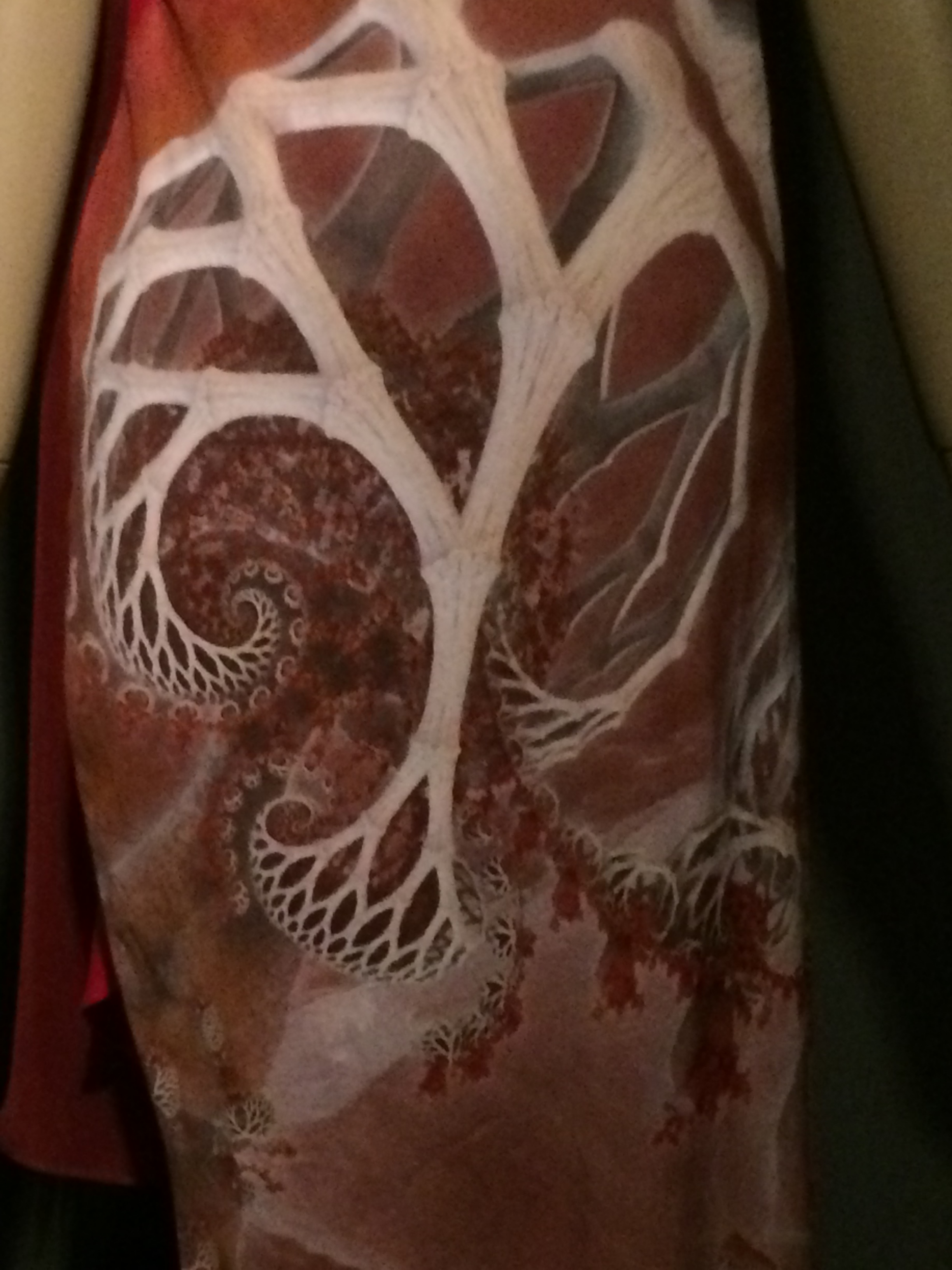
The Museum at FIT is currently presenting an exhibit titled “Force on Nature”, that features clothing and accessories that refer to the natural world. There are many growth patterns found in nature that can be expressed mathematically, so it is no surprise that I found some interesting math in the show.
This dress created by fashion design collective “ThreeASFOUR” in 2016 features geometric fractal patterns.
MC Escher is probably one of the most famous examples of artists who explored math in his art.
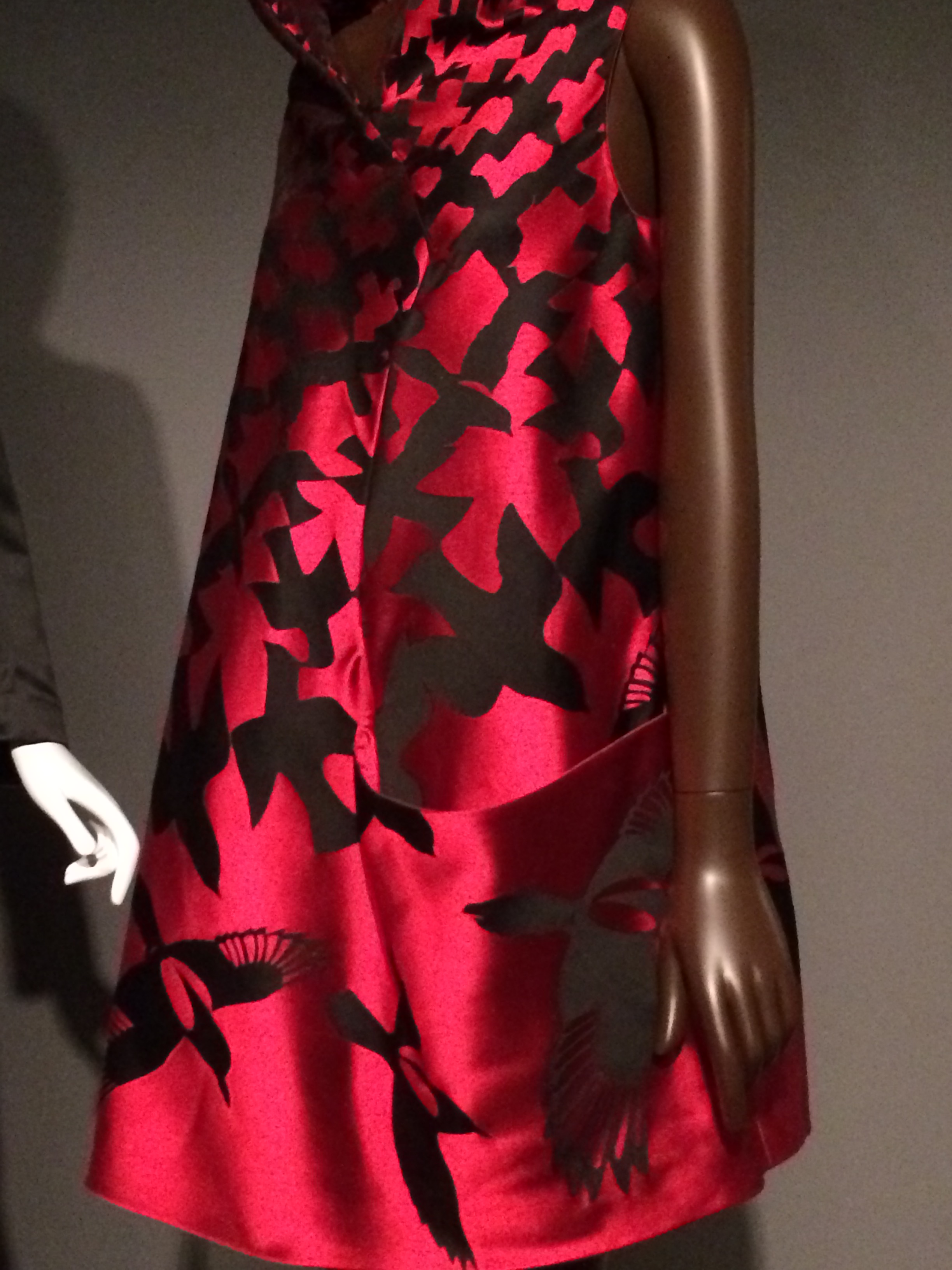
This dress by Alexander McQueen in 2009 is inspired by Escher’s work. The birds become a houndstooth pattern.
All pictures courtesy of the designers and the Museum at FIT.
Susan Happersett

TWINKLE IN THE EYE – A group show at Pablo’s Birthday Gallery

The current exhibit at the Pablo’s Birthday Gallery on the Lower East Side features a number of works with interesting geometric themes.

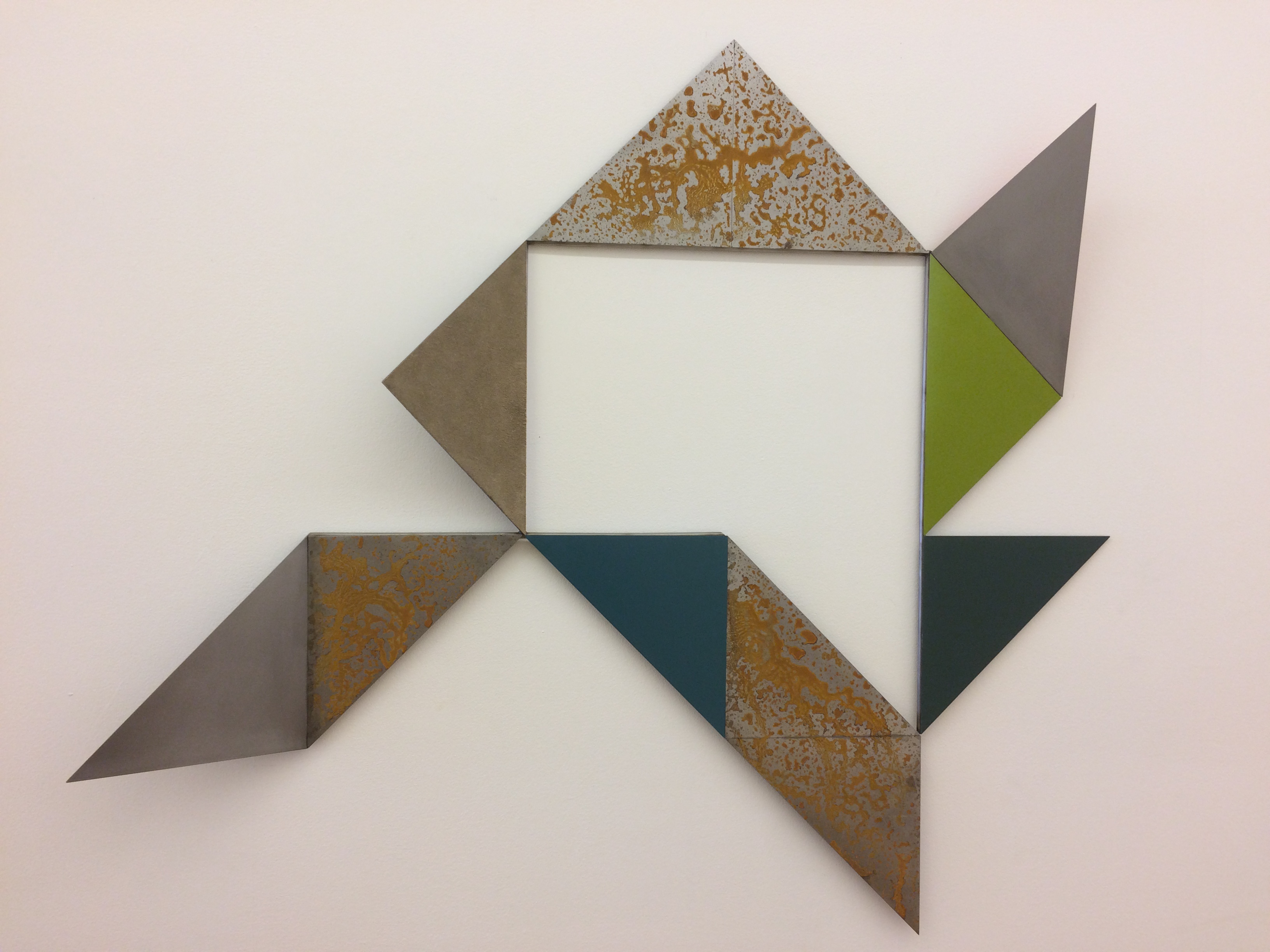
Henrik Eiben – Minnesota – Steel
Picture courtesy of the gallery

Henrik Eiben’s steel wall construction, titled “Minnesota” is built from a collection of isosceles right triangles. Joining two congruent triangles along their legs (sides that form the right angle) results in parallelograms. Adding a third triangle, a trapezoid is formed. The steel sections have been hinged together with leather and some of the triangles that make up this open frame are angled off the wall. This gives the work a more 3-D presence, with the breaking off the flat wall pale into the gallery space.

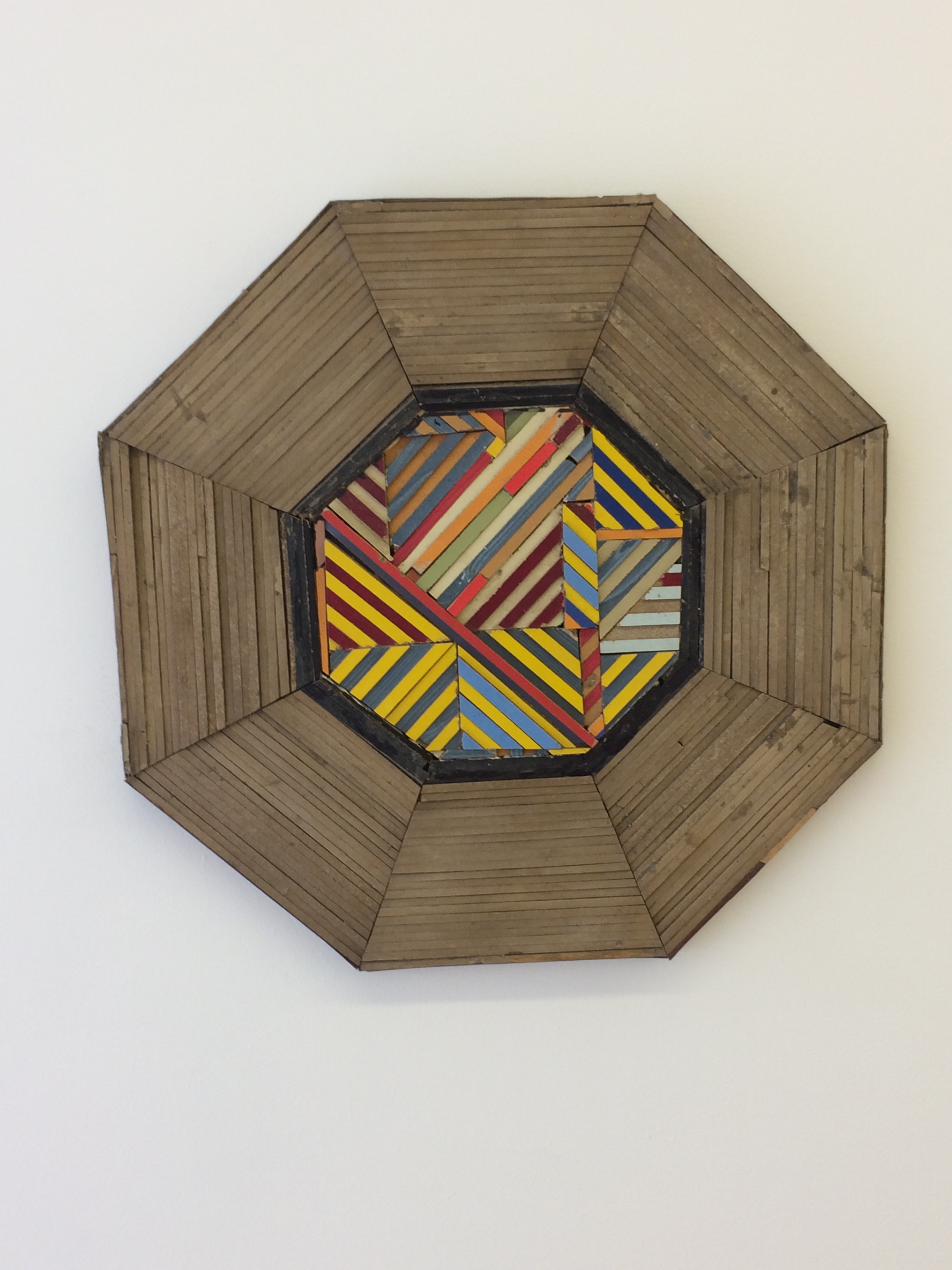
Karsten Konrad – VW – Mixed media
Picture courtesy of the gallery

“VW”  is a mixed media octagonal mosaic by Karsten Konrad. The walls of the sculpture are created using a series of parallel strips creating a series of tight concentric octagons. This is in contrast to the multicolored parallel strips in the patchwork of diagonals that make up the central image.
Susan Happersett

Eric Erickson at Buster Levi Gallery

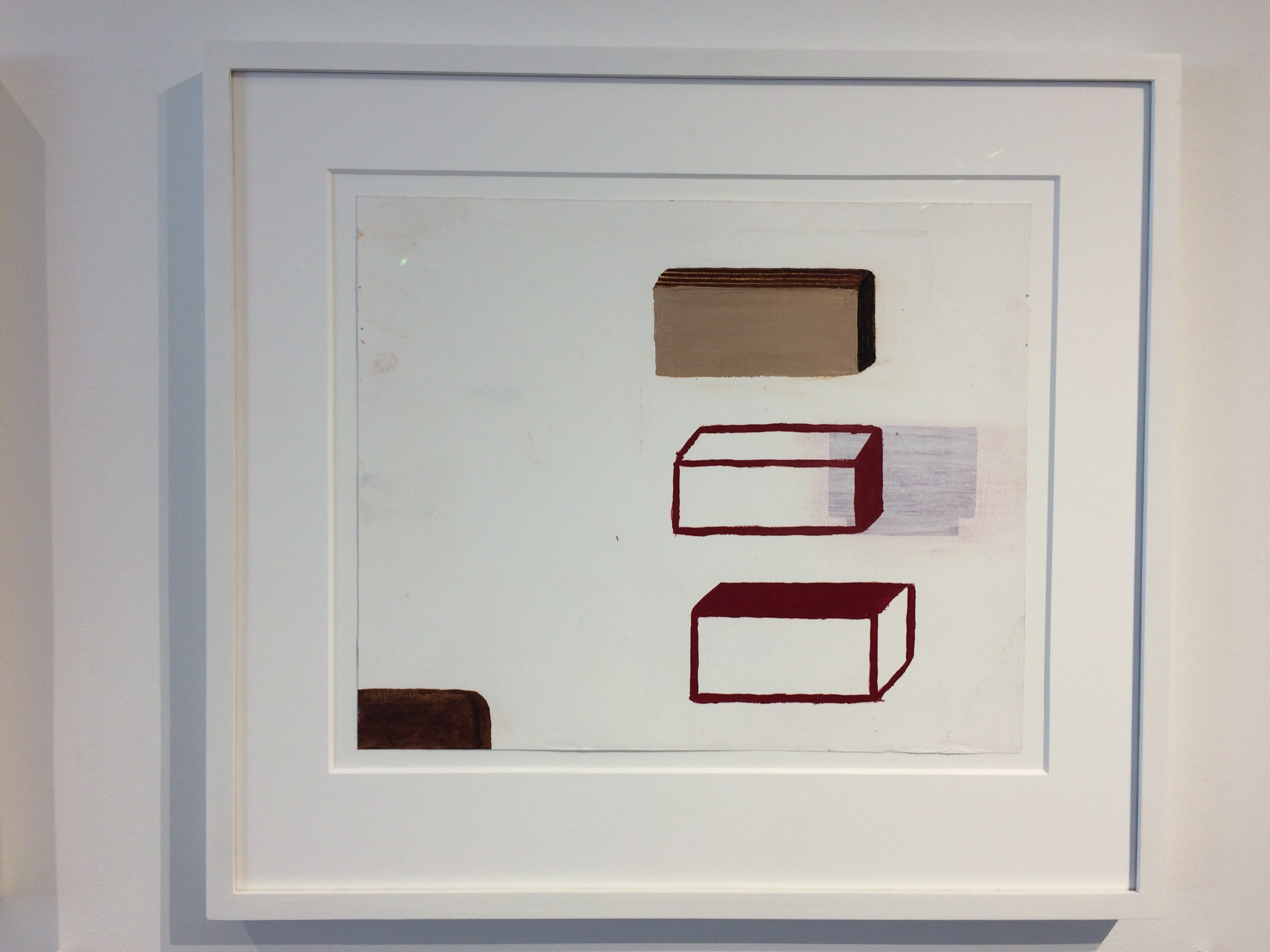
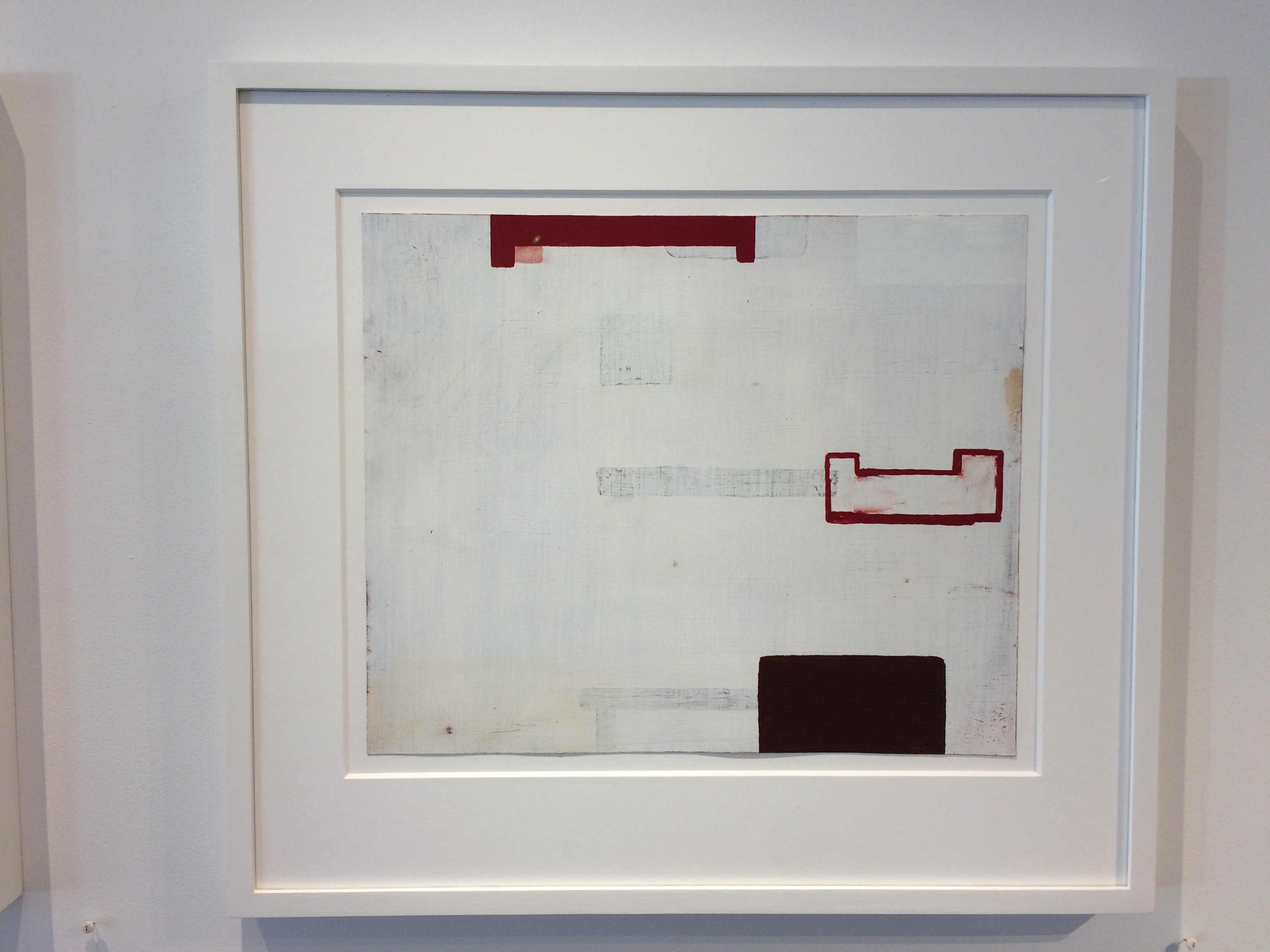
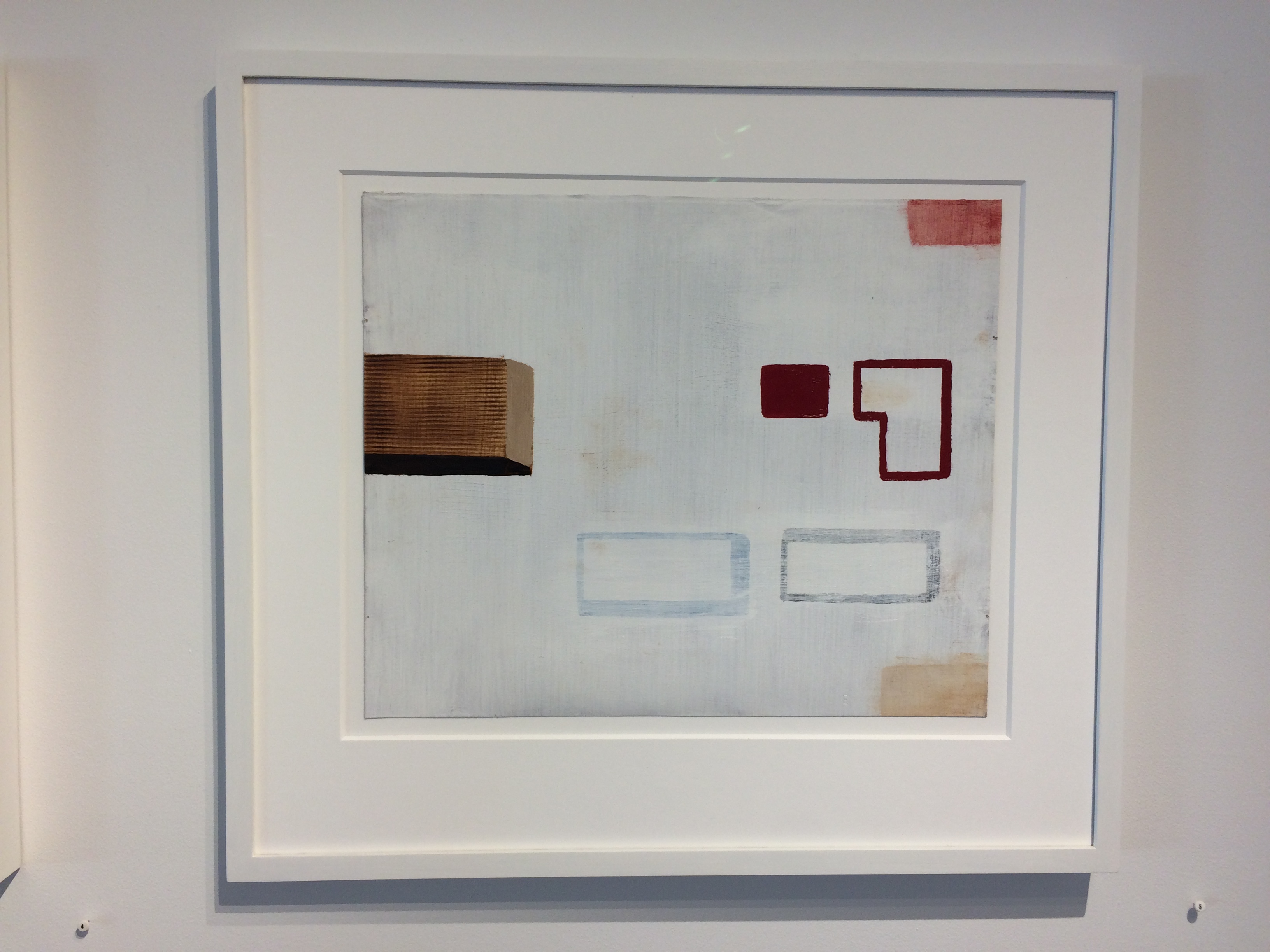
The paintings on display at Eric Erickson’s solo exhibition at the Buster Levi Gallery in Cold Spring, NY are part of a new series referred to as “Diagrams”. According to Erickson this work is “related to dubious diagrams often found with anything needing home assembly”.
The artist has taken the inaccurate 2-D schematic representations for the 3-D items we build and live with everyday and distilled the geometric qualities of these images into solid blocks of color and subtle painted line drawings. Although the original instructional diagrams may have lacked the necessary information to accurately represent real objects, the shapes themselves create interesting compositions.
Susan Happersett

“A Line Can Go Anywhere” at James Cohen Gallery

The James Cohen Gallery is currently presenting “A Line Can Go Anywhere”.  Curated by Jenelle Porter, this exhibit features the work of 7 fiber artist from the Bay area.
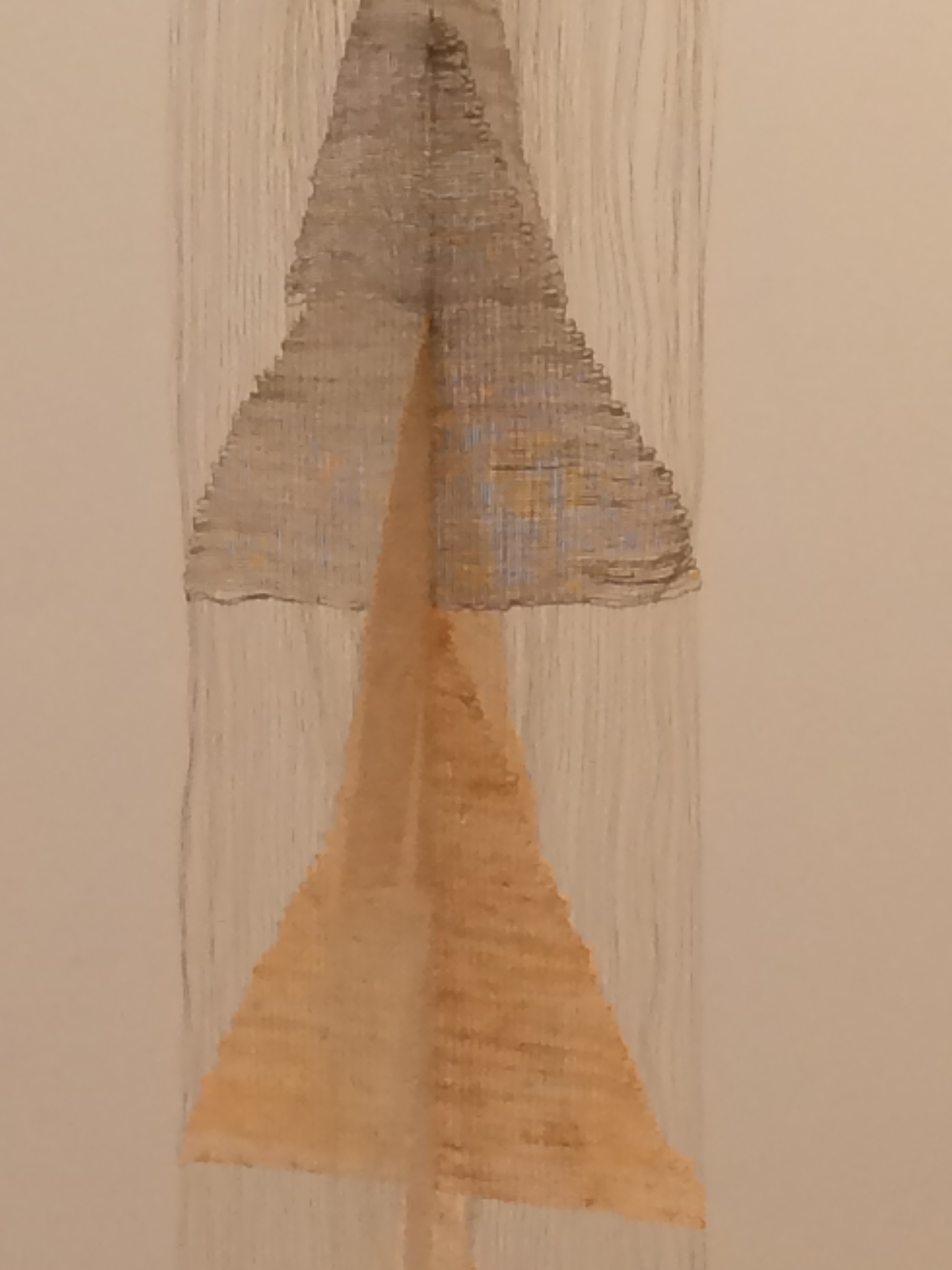
I was particularly intrigued by the work of Trude Guermonprez. This untitled work from the 1960’s has two perpendicular planes of weaving.
There is usually a grid-like nature to a weaving produced by the warp and the weft that gives it mathematical properties. Creating isosceles triangles, Guermonprez has broken the squares we expect in a woven grid with exciting results.
Susan Happersett

Polly Apfelbaum at Alexander Gray Associates

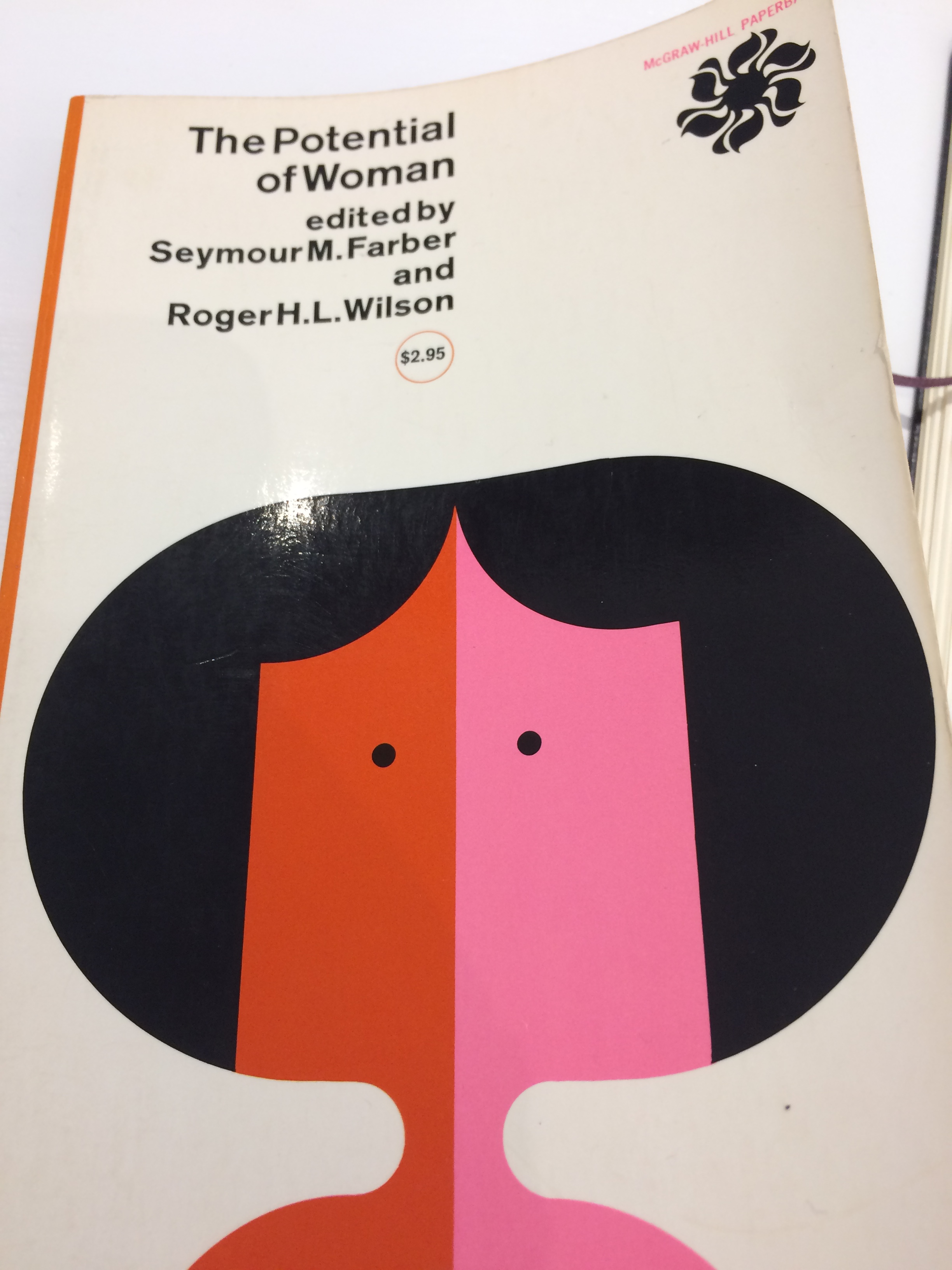
The exhibition “Polly Apfelbaum: The Potential of Women” at the Alexander Gray Associates gallery features a new series of gauche paintings inspired by the 1963 book “The Potential of Woman”.
Written for a symposium of the same name, this text offers a condescending outlook on the future contributions of women. The cover design by Rudolph deHarek features a portrait of a woman’s head using flat shapes of color with a vertical line of reflective symmetry.
Using this image as a staring point, Apfelbaum repeats and rotates the original form to create paintings with a variety symmetrical properties.
In this work the woman’s head has been repeated once and rotated 180 degrees, creating order 2 rotational symmetry.
For this next painting the head is repeated 6 more times. The arrangement of 7 women offers some more complex patterns. By slightly altering the central figure the artist was able to impose both vertical and horizontal lines of reflective symmetry in this work.
Apfelbaum’s appropriation of this particular image offers a socially charged commentary. The use of mathematics to manipulate the image creates a dynamic visual dialogue.
Susan Happersett
All pictures courtesy of the gallery