Charles Thomas O’Neil at Howard Scott Gallery

Charles Thomas O’Neil

The Howard Scott Gallery in Chelsea NYC is currently exhibiting a selection of Charles Thomas O’Neil’s recent abstract paintings.

53-1

Untitled 2740, 2013
Picture courtesy of the artist and the gallery

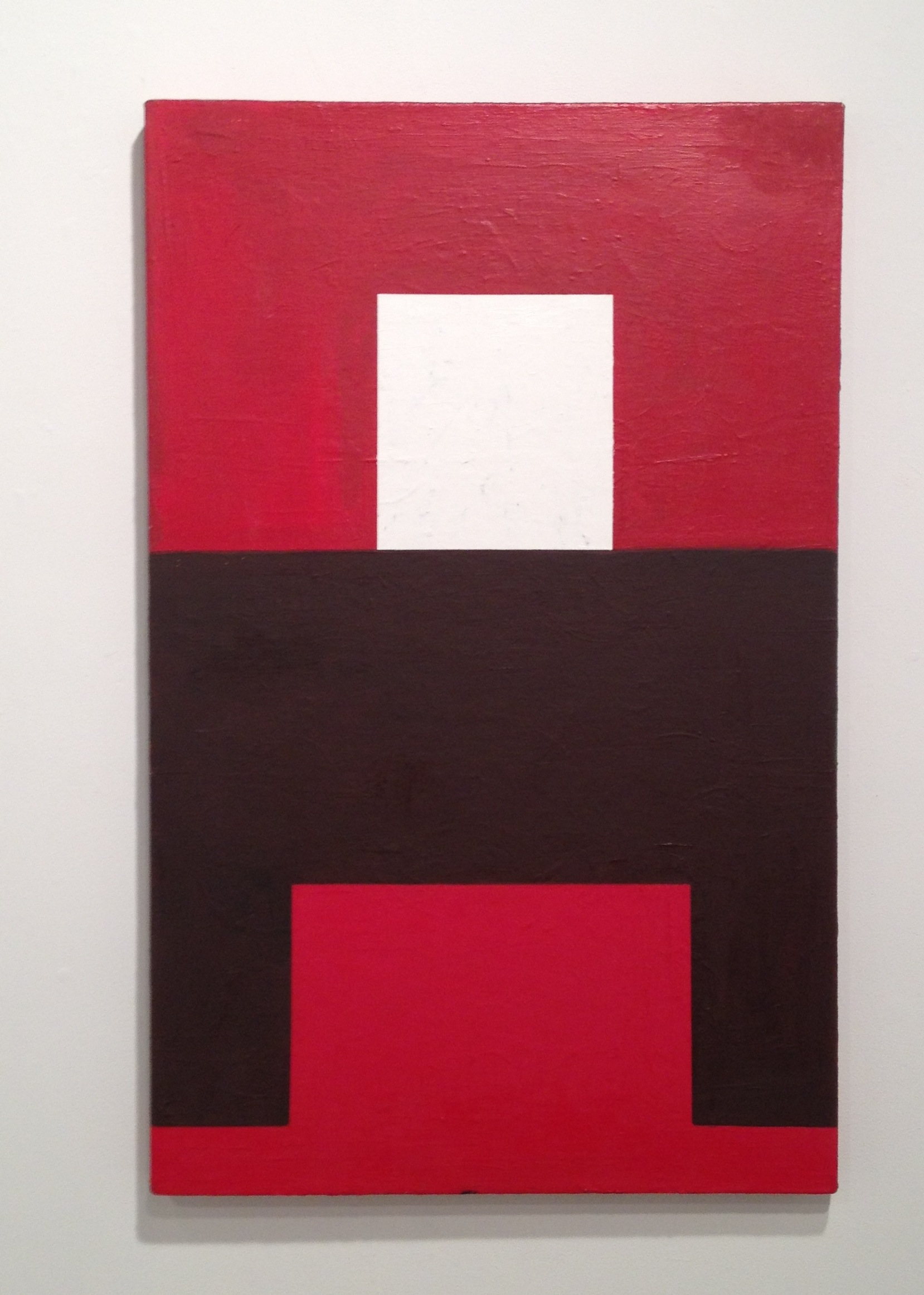
The painting “Untitled 2740” (2013)  has a vertical line of reflection symmetry running through the center of the canvas. The top section of the features a rust colored bridge-like shape enclosing a white rectangle. The bottom section of the painting has a variation of the bridge shape in dark grey.

53-2

Untitled 2741,2013
Picture courtesy of the artist and the gallery

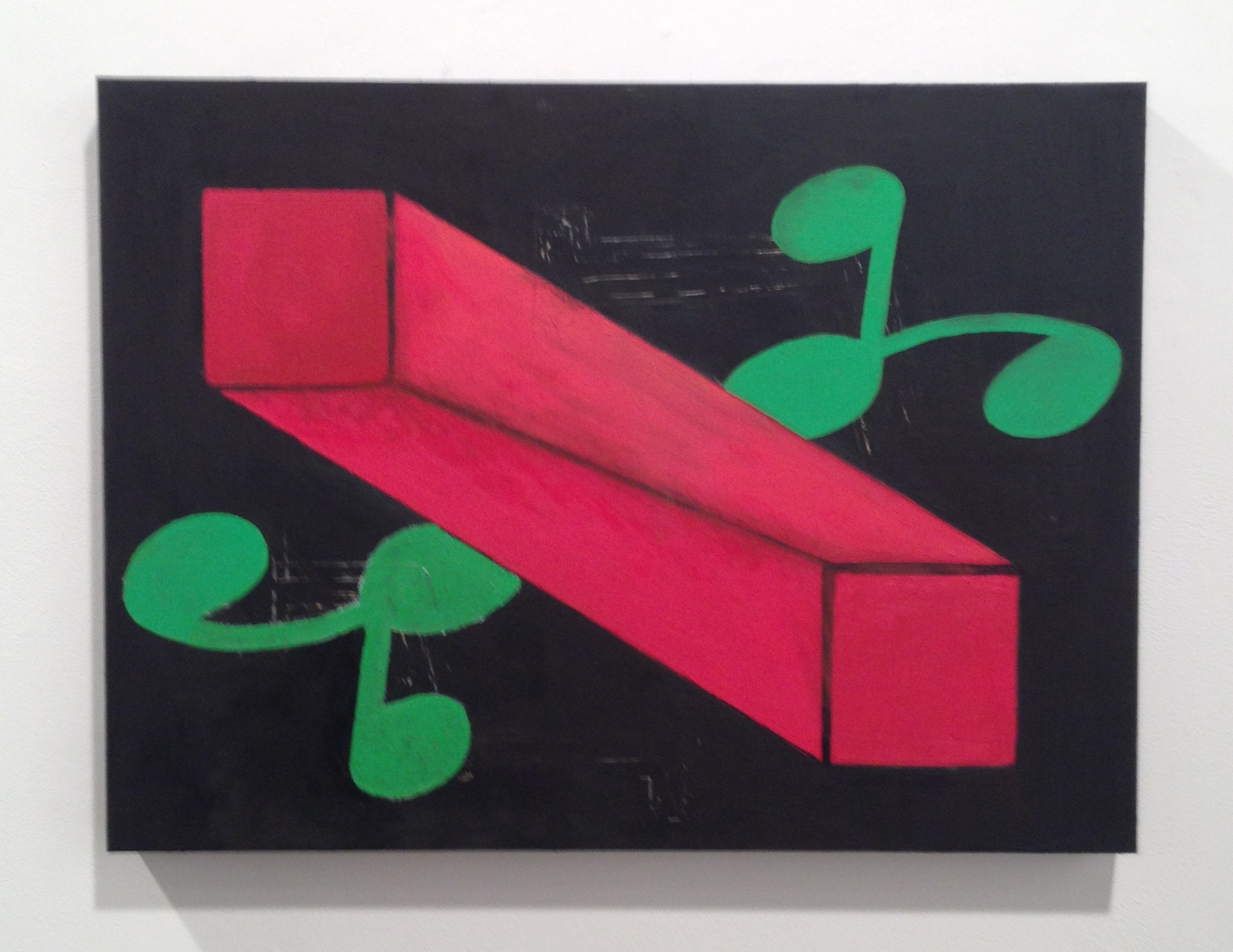
The oil painting on panel “Untitled 2741” (2013) is a 2-D rendering of what appears to be a 3-D impossible object. It looks like a rectangular bar with square ends positioned so both ends are visible to the viewer. This work has 180 degree rotational symmetry.

O’Neil’s geometric designs are enhanced by his use of saturated colors that immediately draws in the eye of the viewer. I also appreciate his use of visible painterly strokes which keep the work from looking flat and static.

More MathArt next time.

Susan Happersett

Right Triangles – Cordy Ryman and Kwang Young Chun

It can be very interesting to see how the same type of shape is used it different contexts. Recently I saw the work of two artists both using right triangular 3-D wedges.

Cordy Ryman

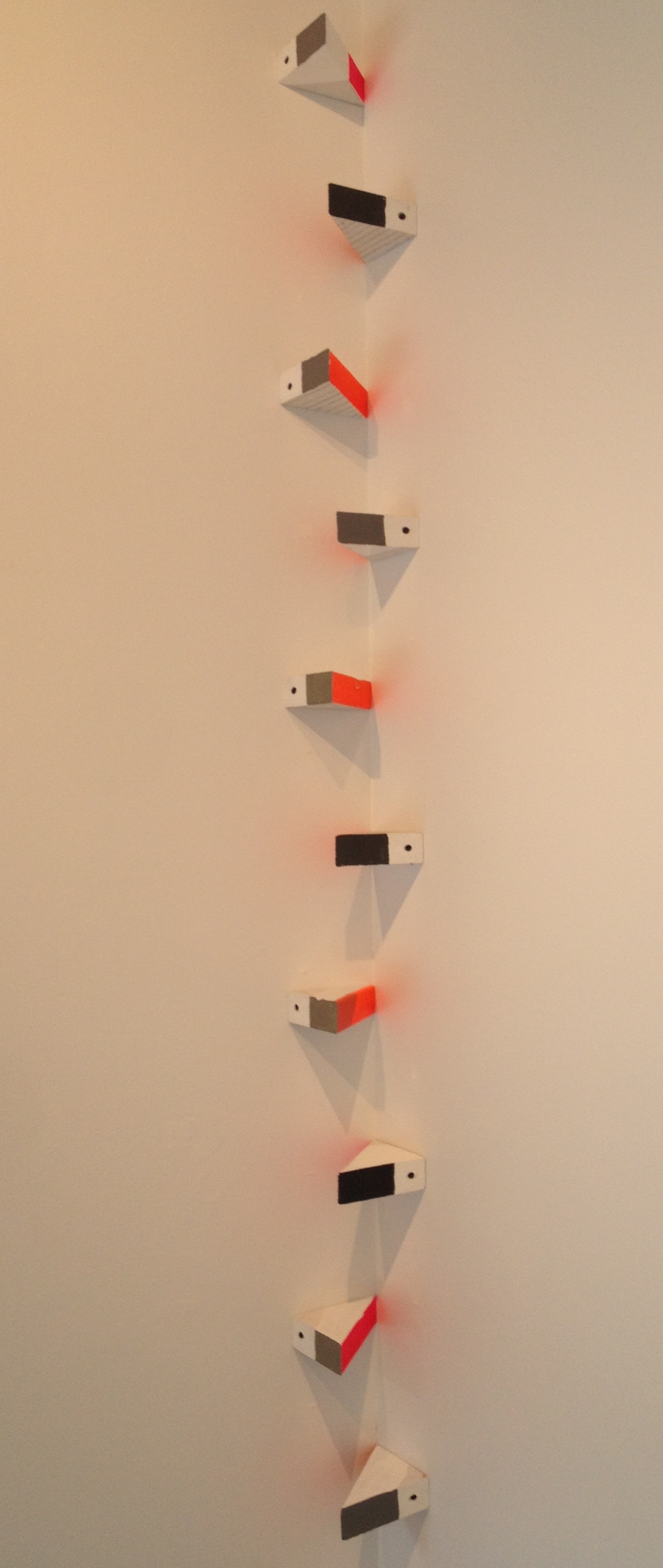
Cordy Ryman has the installation “Zipper Spine” 2014 at the Lesley Heller Workspace gallery in the group exhibition “Destructure” curated by Jonathan Melville Pratt.

51-1

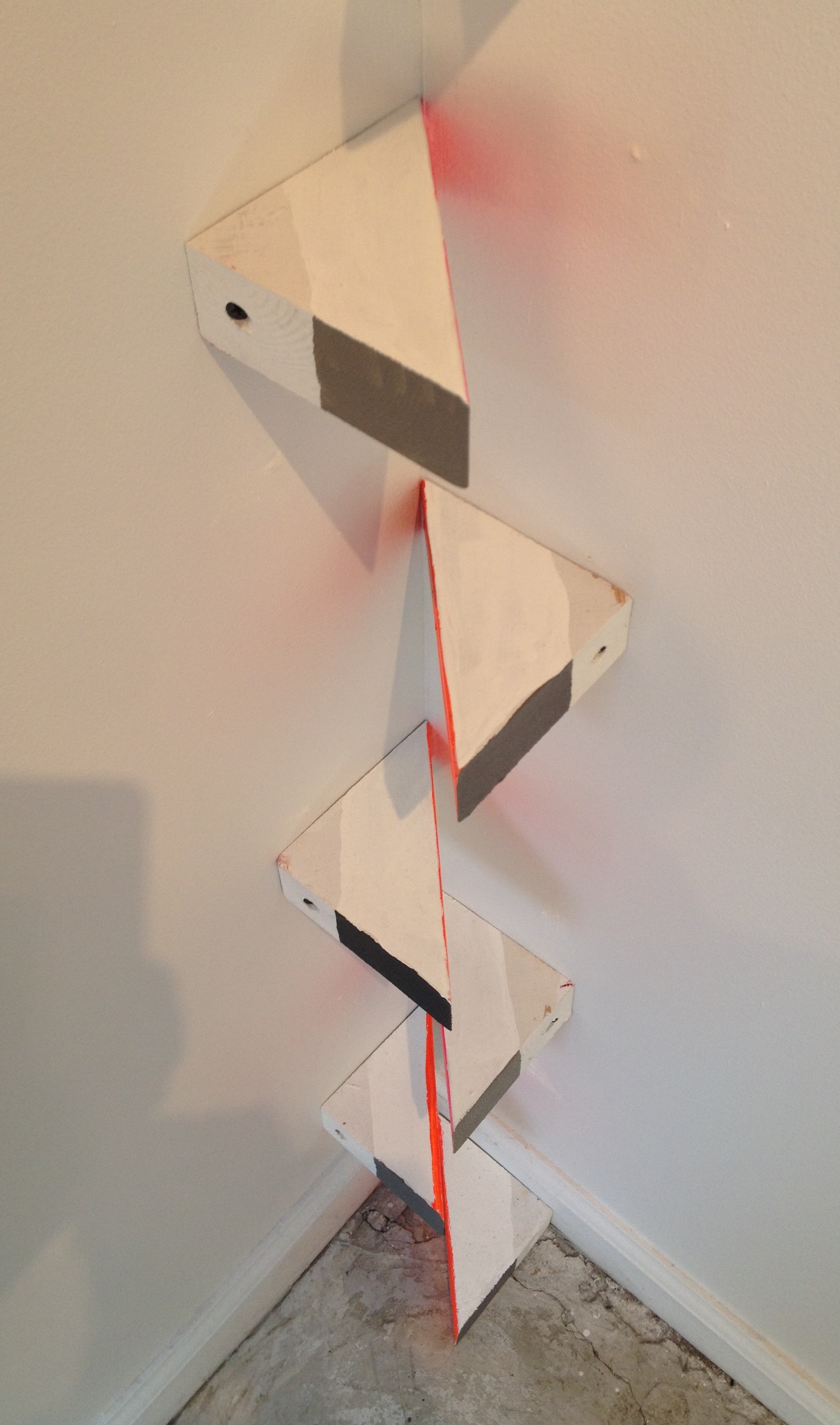
“Zipper Spine” is s series of 16 isosceles right triangles. They have two vertices with 45 degree angles and one vertex with 90 angle. The 16 wedges are attached to the wall in the vertical line of the corner. Each wedge has a 45 degree vertex positioned into the corner.
51-2
This placement creates a study of the equal positive and negative space of the 45 degree angle of the triangle in the 90 degree corner.

Kwang Young Chun

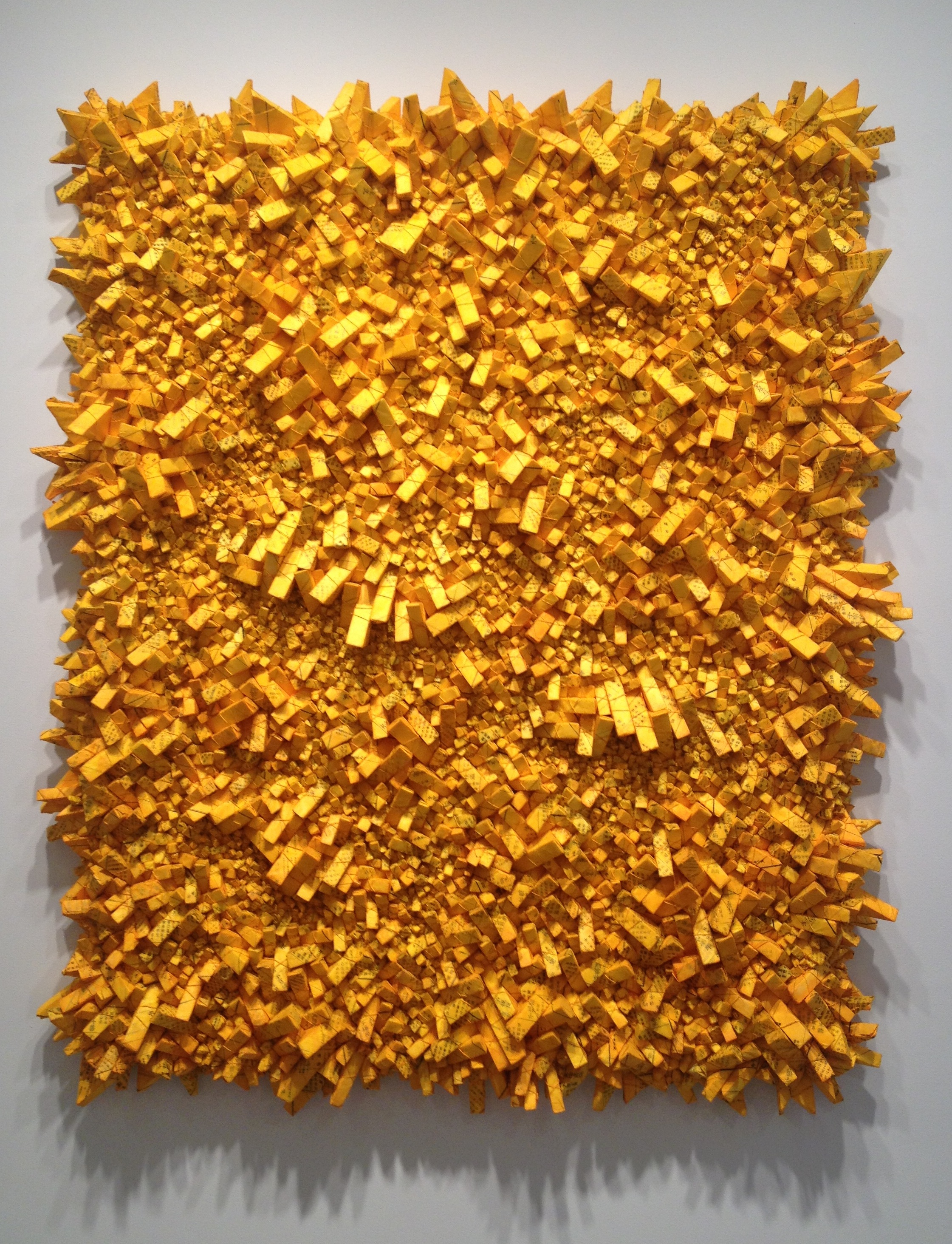
Kwang Young Chun also uses triangular wedges in his wall sculptures. Hasted Kraeutler gallery is currently hosting a solo show of Chun’s work. His art is created by using a multitude in polystyrene triangles wrapped in Korean mulberry paper. The result is complex 3-D patterning.
51-3
The large scale (69″X57″) assemblage “Aggregation 13-APO18” 2013 features right triangles of many sizes covering and protruding from the entire canvas. The result is a wild explosion of pattern and the texture.

Both Chun and Ryman are elevating the humble right triangle. But in very different ways. While Ryman uses consistency of size and shape to explore the theme, Chun uses hundreds of elements in varying sizes to build a dynamic environment.

More MathArt next time

Susan Happersett

Rachel Garrard at Klemens Gasser & Tanja Grunert Gallery

Mitra Khorasheh has curated a fascinating exhibition of the paintings, sculptures, videos and performance art of Rachel Garrard title “VESSEL” at Gasser Grunert. All the work in the show is about geometry, a very personal geometry, based on the physical measurements of the artist’s body. In the press release from the show Garrard is quoted as saying: “I see the human body as a microcosm, a seed encompassing all the geometric and geodesic measures of the cosmos, as a container for something infinite”.

One of the geometric forms used by Garrard is the isosceles triangle.

50-1

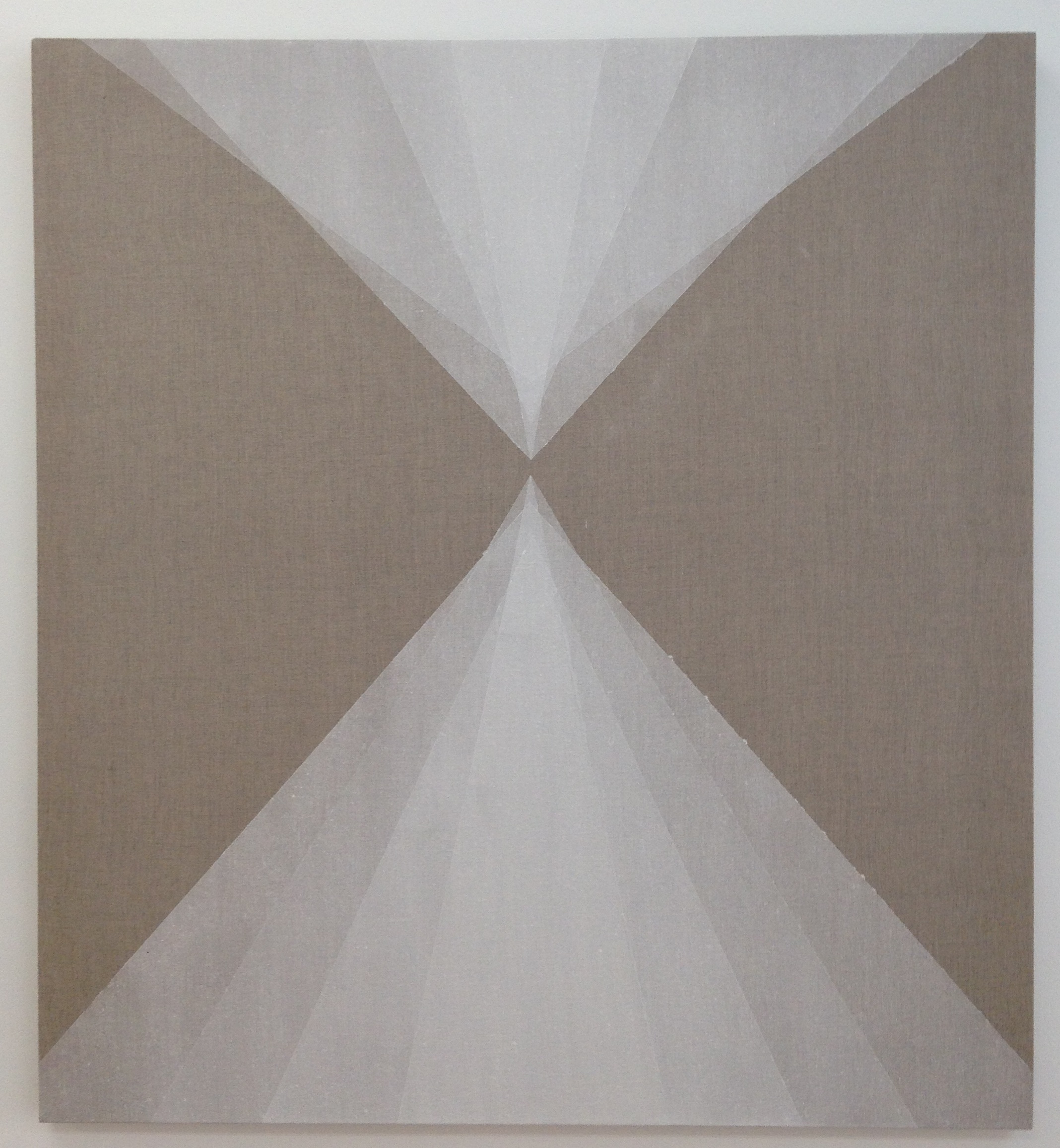
The work “Convergence 2004” (quartz dust on linen) features layers of transparent isosceles triangles, 4 with the bottom of the canvas as the base and three with the top of the canvas as their base. The vertex angles are lines up on a vertical reflection line of symmetry that runs through the center of the canvas. This expresses the symmetric nature of the human form, with a vertical line of symmetry, but also the non-symmetrical nature, i.e. the absence of a horizontal line of symmetry.50-2

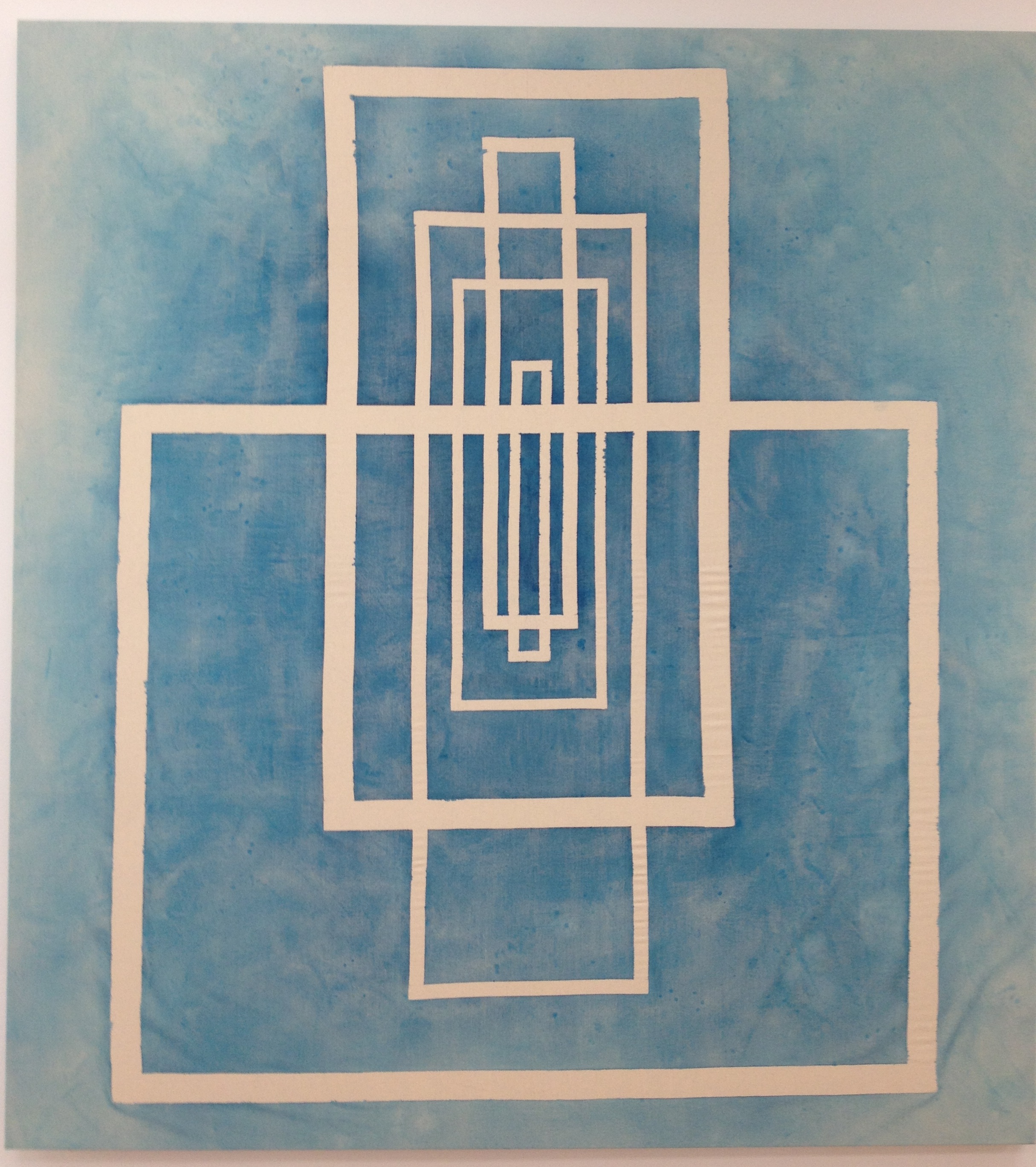
The geometry for “Blue II” (Ink on canvas, 2004) is takn diretcly from the outline of the artist’s body. Garrard uses various rectangles to create a structure that relates the proportions of her body and again displays a verical line of reflective symmetry.

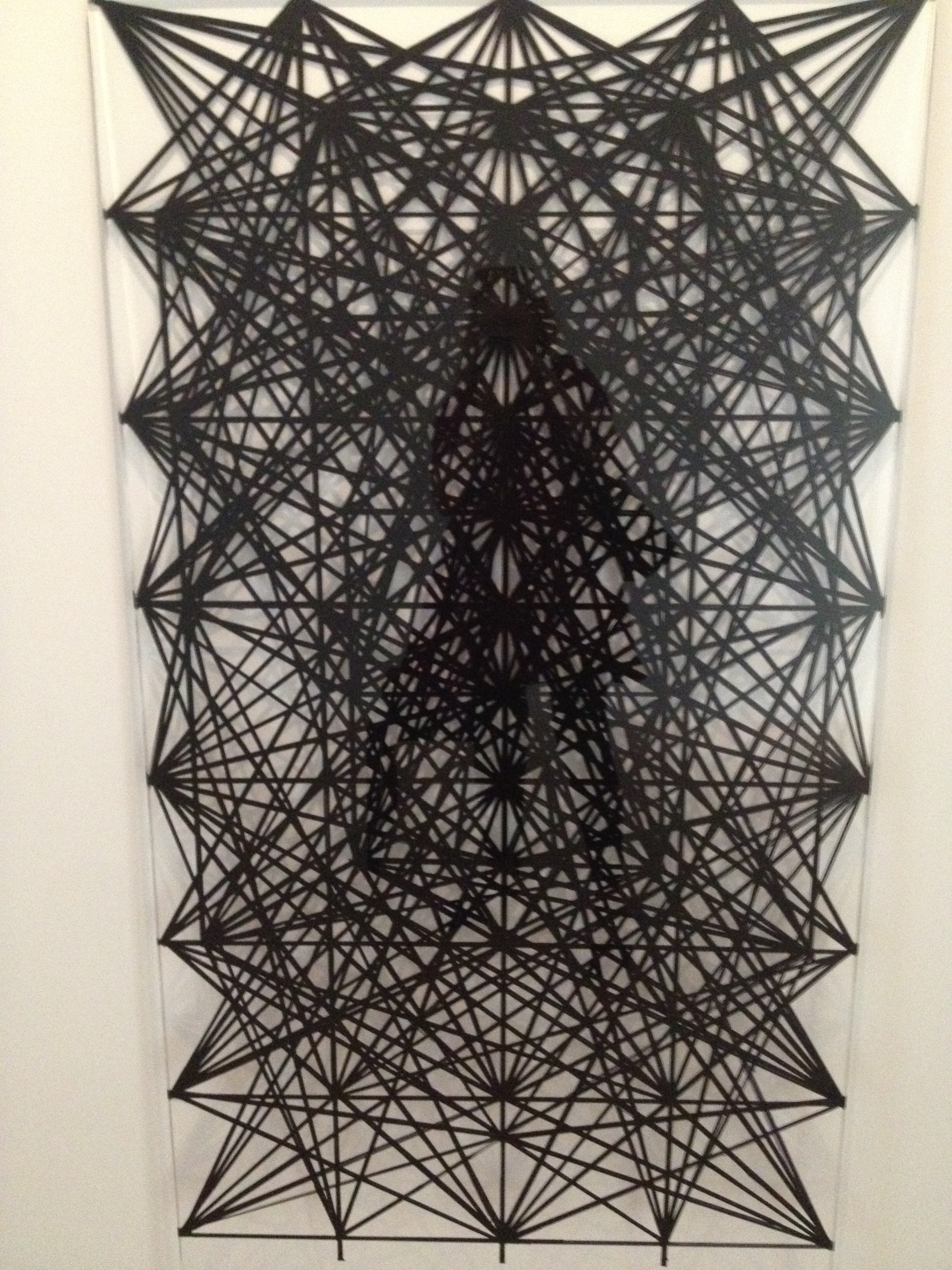
Garrard has also created videos and performance works that are based on her techniques of dividing up her body into a sort of grid of points. The artist then connects these points with either tape lines, directly on her body, or paint lines on a clear panel.

50-3

The sculpture “Geometric Void” (paint on perspex) is the result of an 8-hour performance from 2010. Rachel Garrard has created a new way to express geometry based  on the proportions of her body. Although the nature of this work is very personal, the essence of these symmetries and proportions reveal universal truths.


Bridges Math Art Conference Seoul – Part 3

36-1

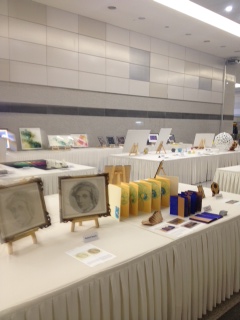
There was so much interesting work at the Bridges Conference Art Exhibition it is difficult to select just a few but… here are a few more of my favorites.

John Hiigli

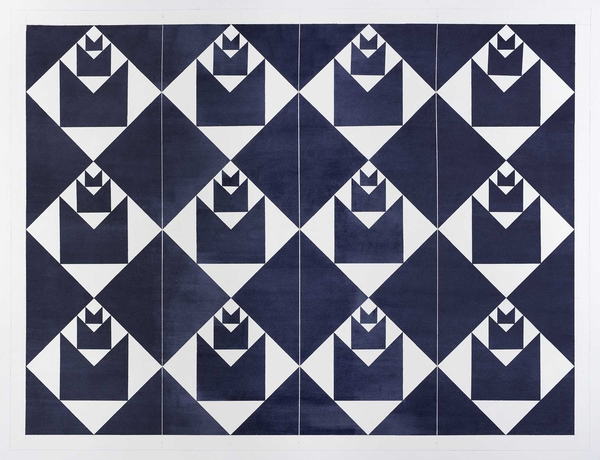
John Hiigli is a New York based artist whose work I have admired for years. His Contribution to the exhibition included an outstanding black and white painting titled “Chrome 203 Homage to De Barros I: Translation”:

36-2

Hiigli – Chrome 203 Homage to De Barros I: Translation
Picture courtesy of the artist

This painting is a great study of the power of positive and negative space. Hiigli uses 3/4 squares in alternating black and white to build a square pattern that he then uses to create a 3 by 4 grid of these square elements. I really like the concept of using a 3/4 fraction of a square, the general outline of the square remains even though 1/4 has been removed. These patterns are based on the work of Brazilian painter Geraldo De Barros.

Henry Segerman

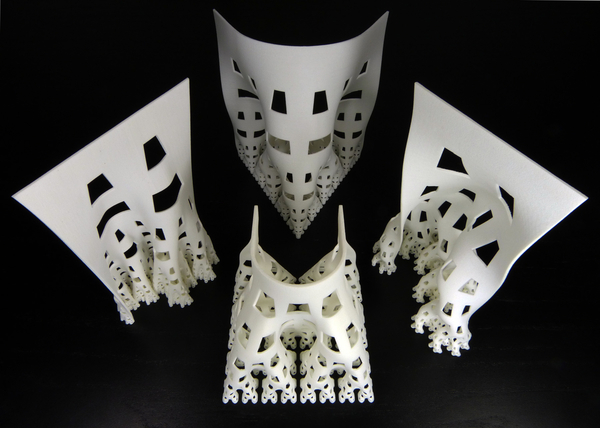
There were a lot of sculptures at the conference that were made using 3-D printers.  One artist whose work stood out was Henry Segerman. His “Developing Fractal Curves” figures had a graceful presence and conveyed the narrative of the Mathematical sequences in an interesting linear fashion.

36-3

Segerman – Deloping Fractal Curves
Picture courtesy of the artist

These four structures start at the top with the basic iterations of the fractals clearly defined. As the viewer’s eye travels down into the curves the patterns become more and more complex. These small sculptures do an excellent job of conveying the nature of fractal curves.

Mike Naylor

Mike Naylor has created an interactive Mathematical pattern generator called “Runes” that can be used on a tablet or smart phone. This program allows the participant to explore the operation of multiplication by making curves within a circle that is divided like a numbered dial. The more numbers on the dial the more complex the patterns become. ”Runes” is available here. Naylor has created an excellent tool to show students how a simple mathematical process, used in different permutations, can result in a wide variety of visual images.

Susan Happersett

Bridges Math Art Conference Seoul – Part 2

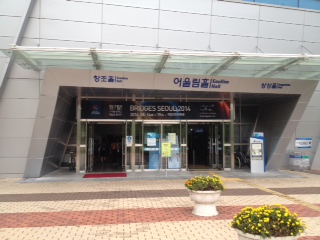
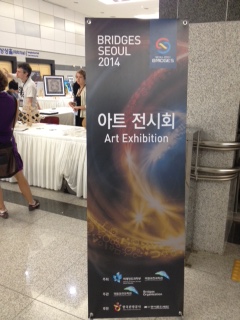
I have just returned from an amazing visit to Seoul to participate in the Bridges Conference. Bridges is an international organization that promotes the connections between Mathematics and Art, Music, Architecture, and Culture. This year the conference was a satellite conference for the huge International Congress of Mathematicians that took place in Seoul during the same week. This proximity enhanced our events by bringing numerous renowned Mathematicians (including Fields Medal winner Cedric Villani) to speak at the Bridges conference. One of the highlights of this conference is always the Art Exhibition. There was so much exciting work on display but I will only be able to discuss a small percentage in my blog.

Gary Greenfield

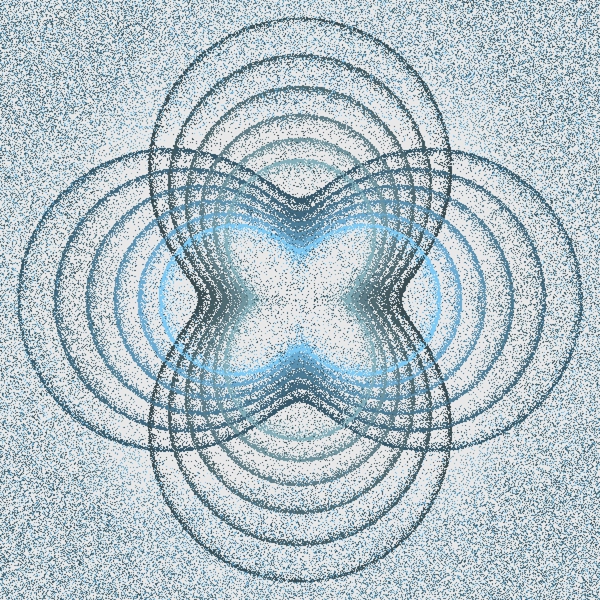
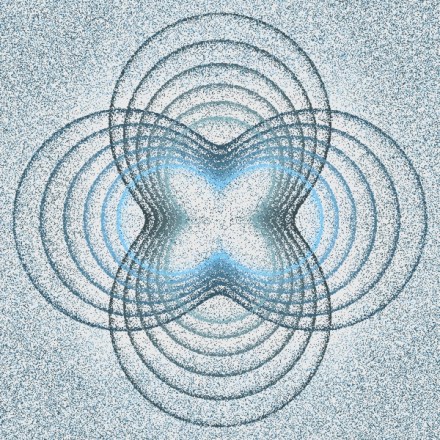
There is a type of computer assisted painting referred to as Ant Paintings in which points of pigment are deposited on a surface using an algorithm that determines when the pigment is picked up, where it is carried and where it is dropped. This process of “mobile automata” mimics the natural behavior of ants moving grains of sand. The completed paintings have an organic quality. Gary Greenfield has created a new series of work using this technique. He is the first artist to explore the incorporation of formulae into the algorithms in such a way that geometric shapes are formed in the painting.
40-1

PCD #11863 – 6″ x 6″ – Digital Print – 2014
Picture courtesy of the artist

In the digital print “PCD #11863”, Greenfield starts the process with uniformly distributed grains of pigment. Then the virtual ants are instructed to carry and deposit the color on to twelve polar curves. Polar curves are curves drawn using the polar coordinate system. This is  a 2-D coordinate system like the Cartesian coordinate system, but instead of having two axis to define the placement of a point on the plane, the Polar Coordinate system uses a single fixed point, an angle from a fixed direction, and the distance from the initial point, to determine the placement of the point. For this particular painting Greenfield used the formula

daum_equation_1409057425549 to determine where the pigment would be distributed  The resulting image has order four rotational symmetry and a graceful use of concentric shapes, but what makes this work unique to me is its organic quality.

David Reimann

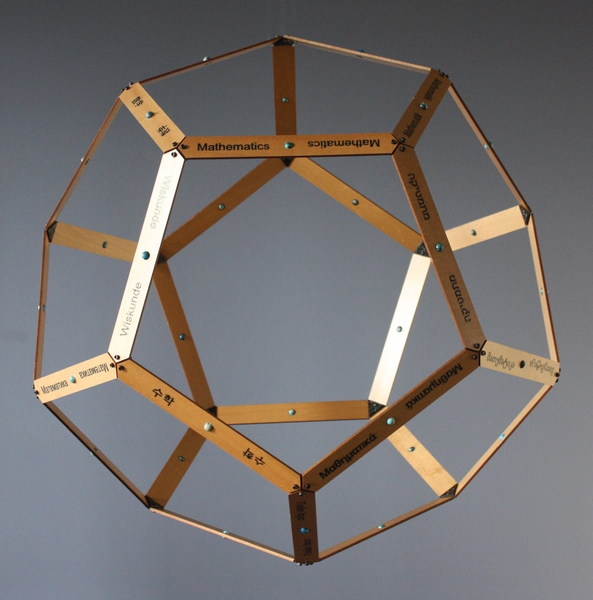
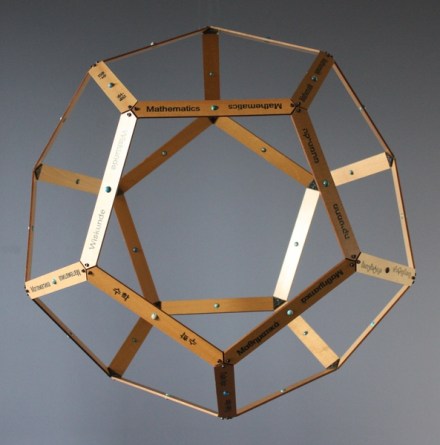
There was one sculpture in the exhibition that I felt was a great visual representation of the whole conference. “Mathematics is Universal” is a wooden dodecahedral form by David Reimann.
universal

Mathematics is Universal – 23 in x 23 in x 23 – Mixed media sculpture – 2014
Picture courtesy of the artist

A regular dodecahedron is comprised of 12 regular pentagons (regular means all sides have the same measure),  and 30 edges. The sculpture “Mathematics features the 30 edges of the dodecahedral form made out of wood strips. Each of the 30 strips has the word mathematics hand-painted in a different language. I feel this sculpture is a perfect metaphor for our conference. People from many cultures gathering to discuss the beauty and form of Mathematics.

Suman Vaze

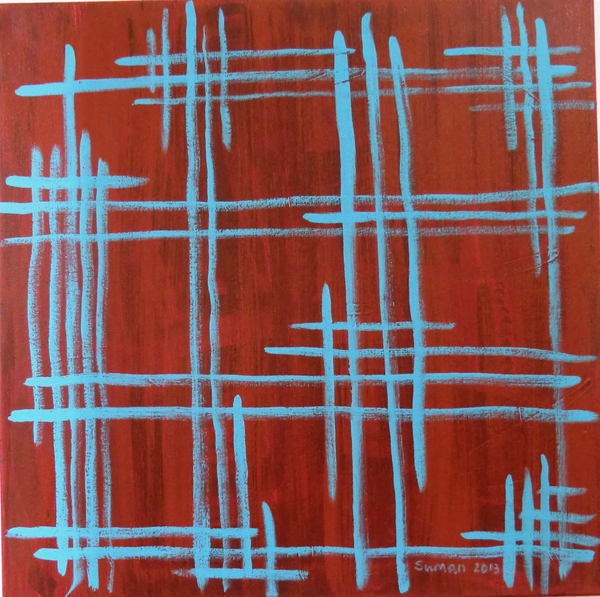
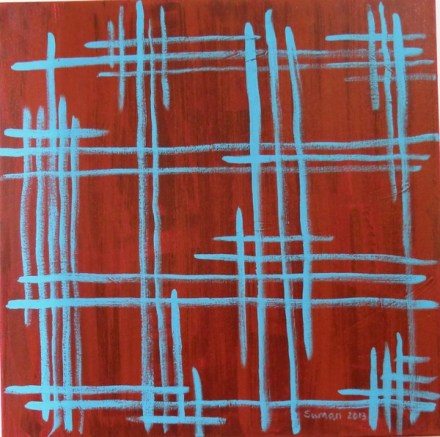
Some of the most abstract and gestural art on view was by the painter Suman Vaze. Her canvas “Ryoanji III” is an expression of the balance found in a 4 by 4 magic square. It is divided into a 4 by 4 invisible grid, and the number of horizontal and vertical lines going through a section of the canvas represents the number that would go in the corresponding square of the magic square.
cimg0559

Ryoanji III – 24″ x 24″ – acrylic on canvas – 2013
Picture courtesy of the artist

The particular magic square Vaze selected to depict in “Ryoanji III” is particularly well balanced each row and column adds up to 34 but each 2 by 2 square also adds up to 34. A nice Fibonacci number!

These are just a few of the interesting works on display at Bridges. I will tell you about some more in my next post!

Susan Happersett
Math Unmeasured

Summertime is a time to relax the rules. During most of the year my drawings require the use of grids and calculated templates. In the warmer months, when I am away from my studio, I continue to draw, but using a more organic approach. I have created two new types of small scale drawings based on the Fibonacci Sequence. These works are more about counted iterations then measuring. This allows the patterns to grow and develop more freely across the paper.

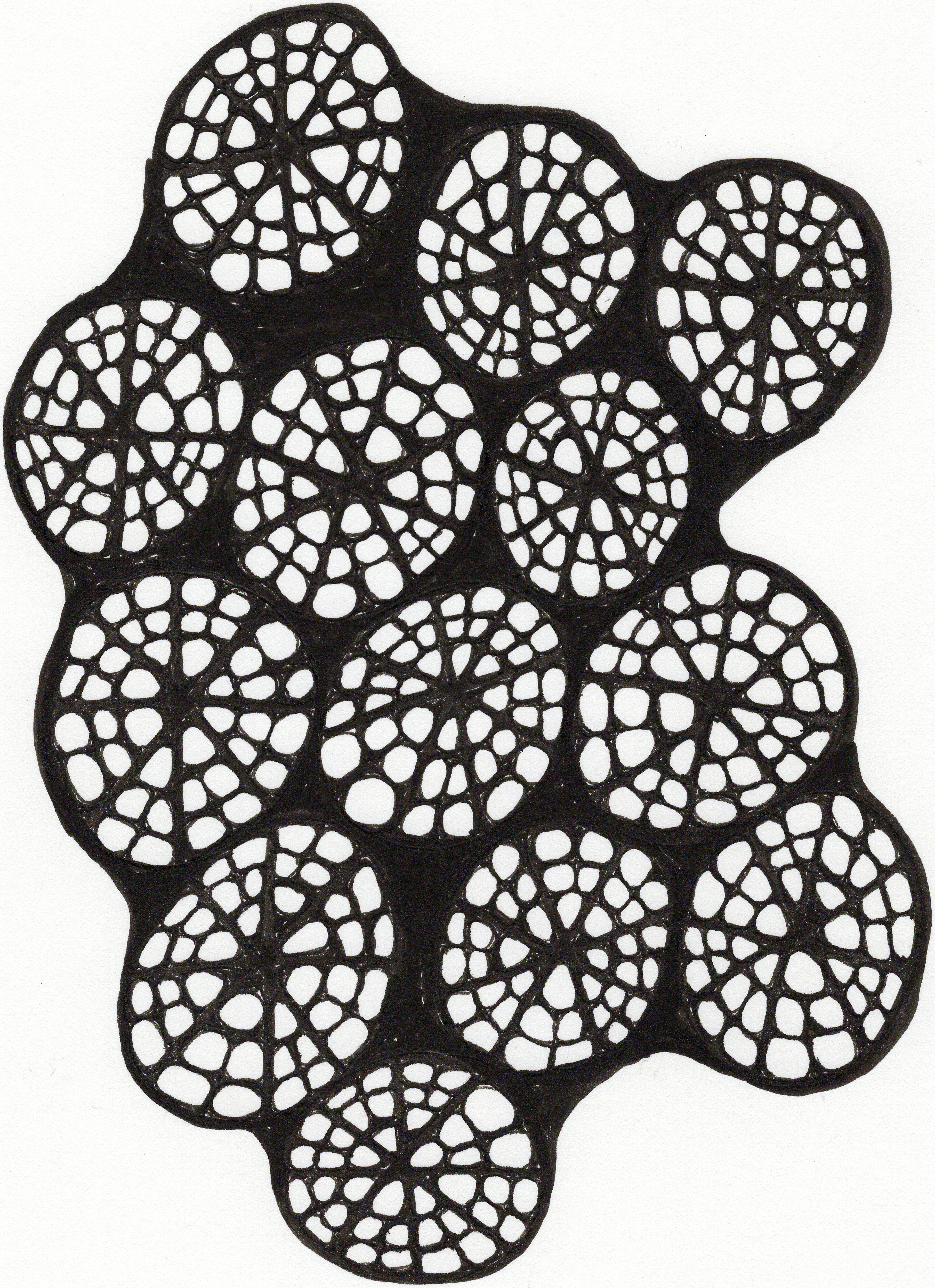
The first type of drawing I am calling Fibonacci Fruit. This type of drawing features pod-like forms with internal structures based on the consecutive terms of the Fibonacci Sequence. Here are two examples using the numbers 5 and 8.

In the first drawing there are 13 pods each divided into 8 segments and each segment contains 5 seeds.

EPSON MFP image
The second drawing has 21 pods and again each pod has 8 segments with 5 seeds each.

EPSON MFP image
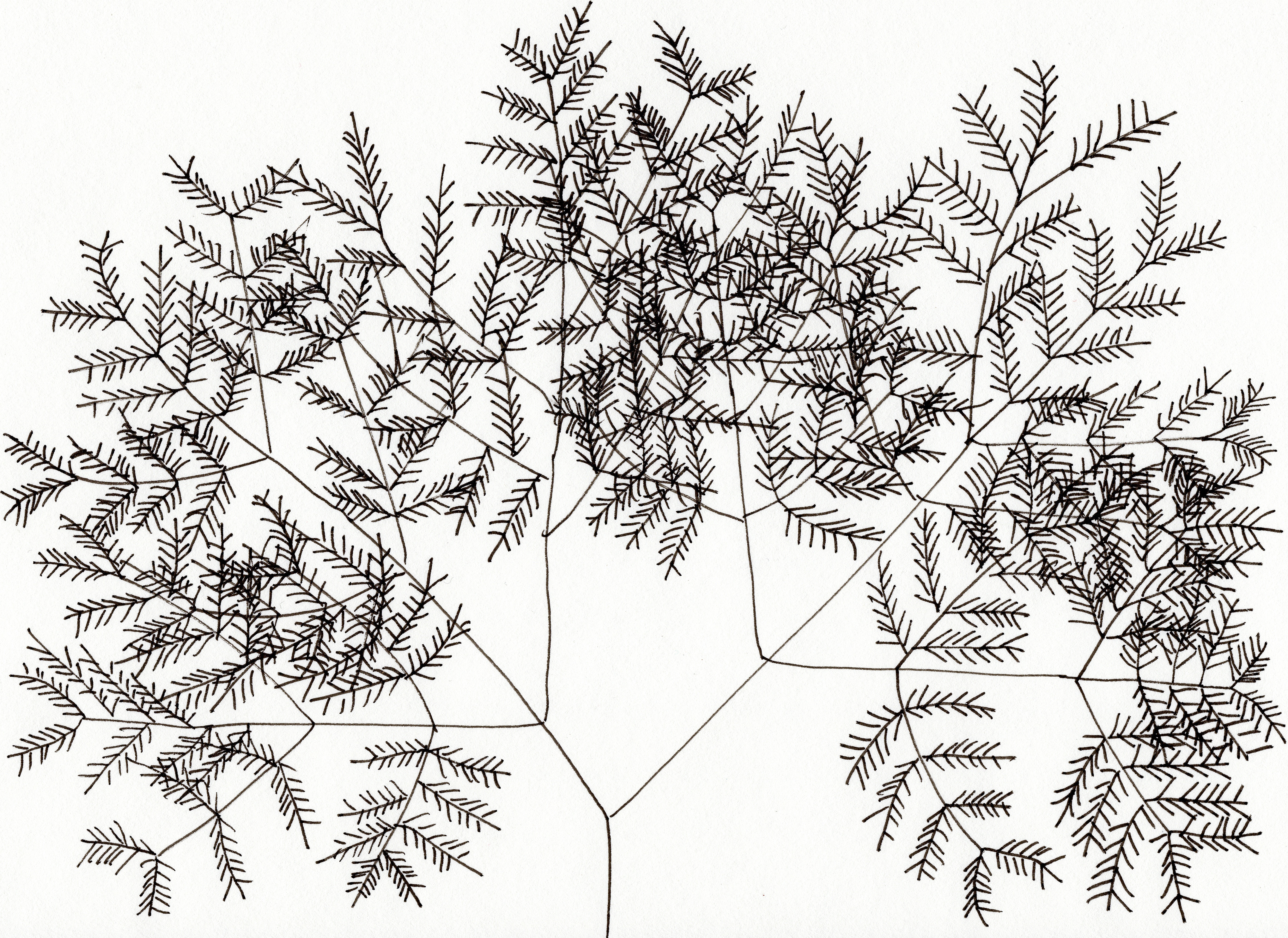
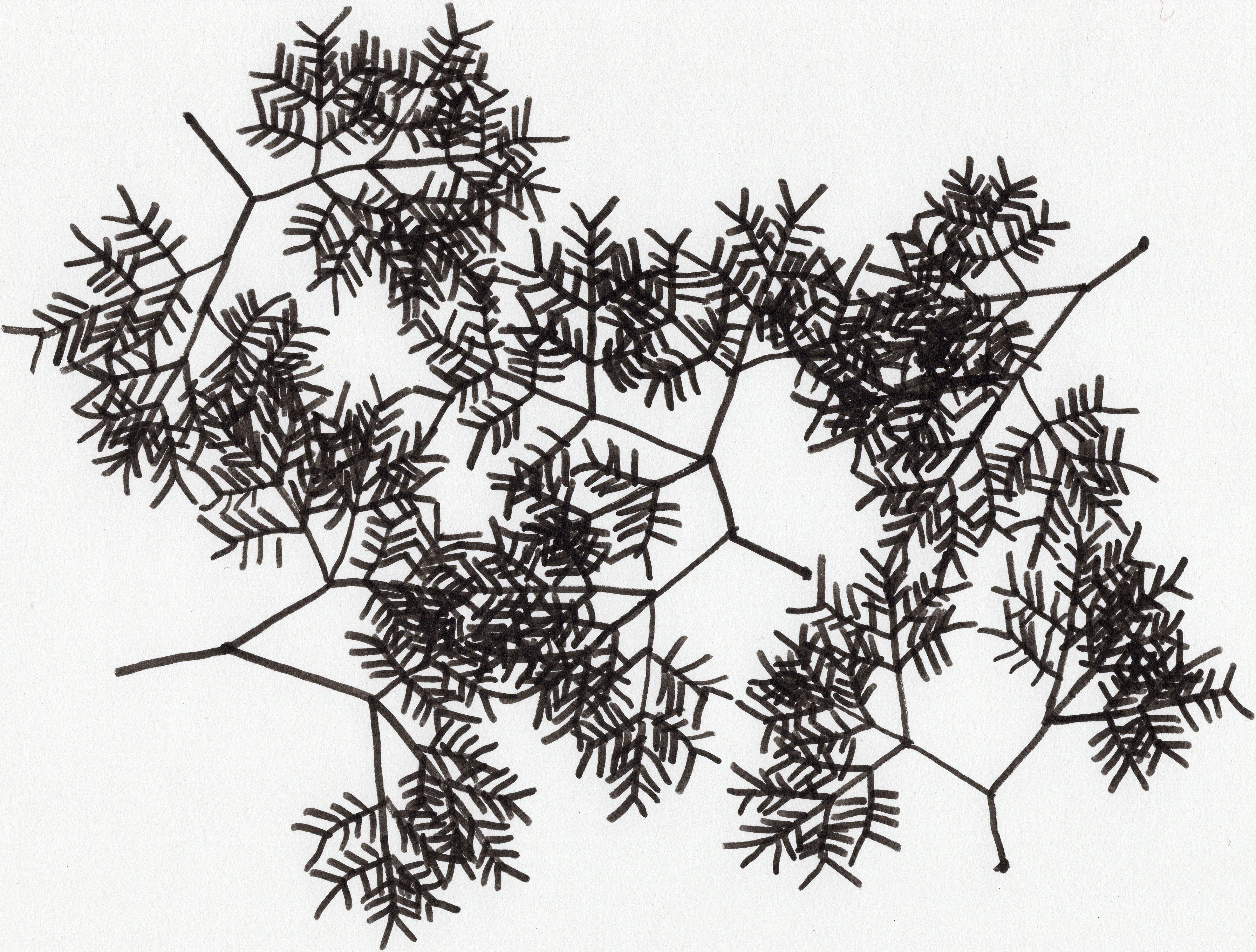
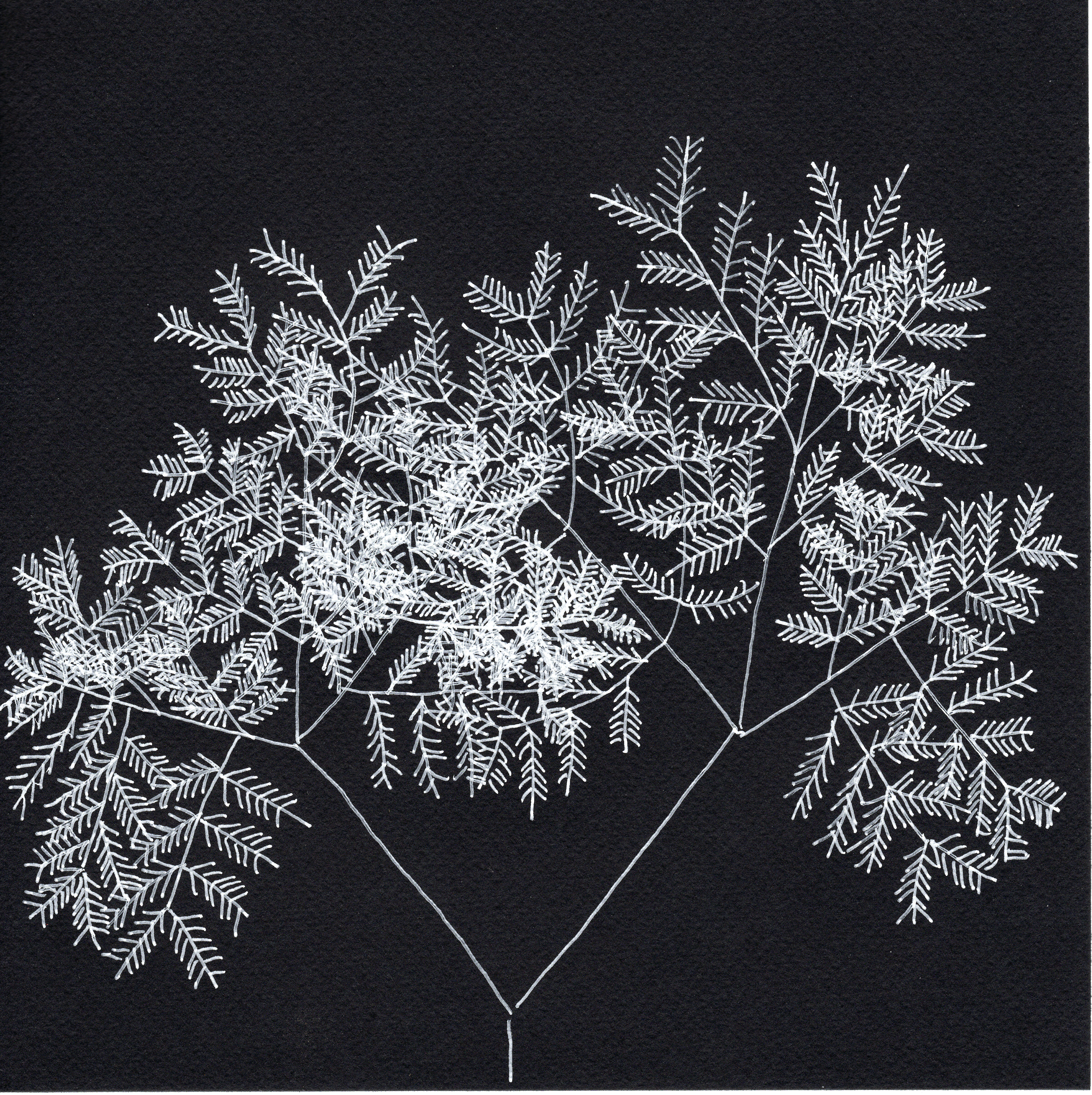
Another type of new drawing I am calling Fibonacci Branches. In these drawings one branch divides into two new branches. Those branches each divide into three branches, then those branches each get five branches, then each of those gets eight branches until finally each of these branches gets thirteen new branches.1, 2, 3, 5, 8, 13. This creates a treelike arrangement.

EPSON MFP image
In the next example, five sets of branches are scattered across the page. Each branch formation starts with one branch and grow in a similar fashion to the other drawing but in this case the final branch count is eight.

EPSON MFP image
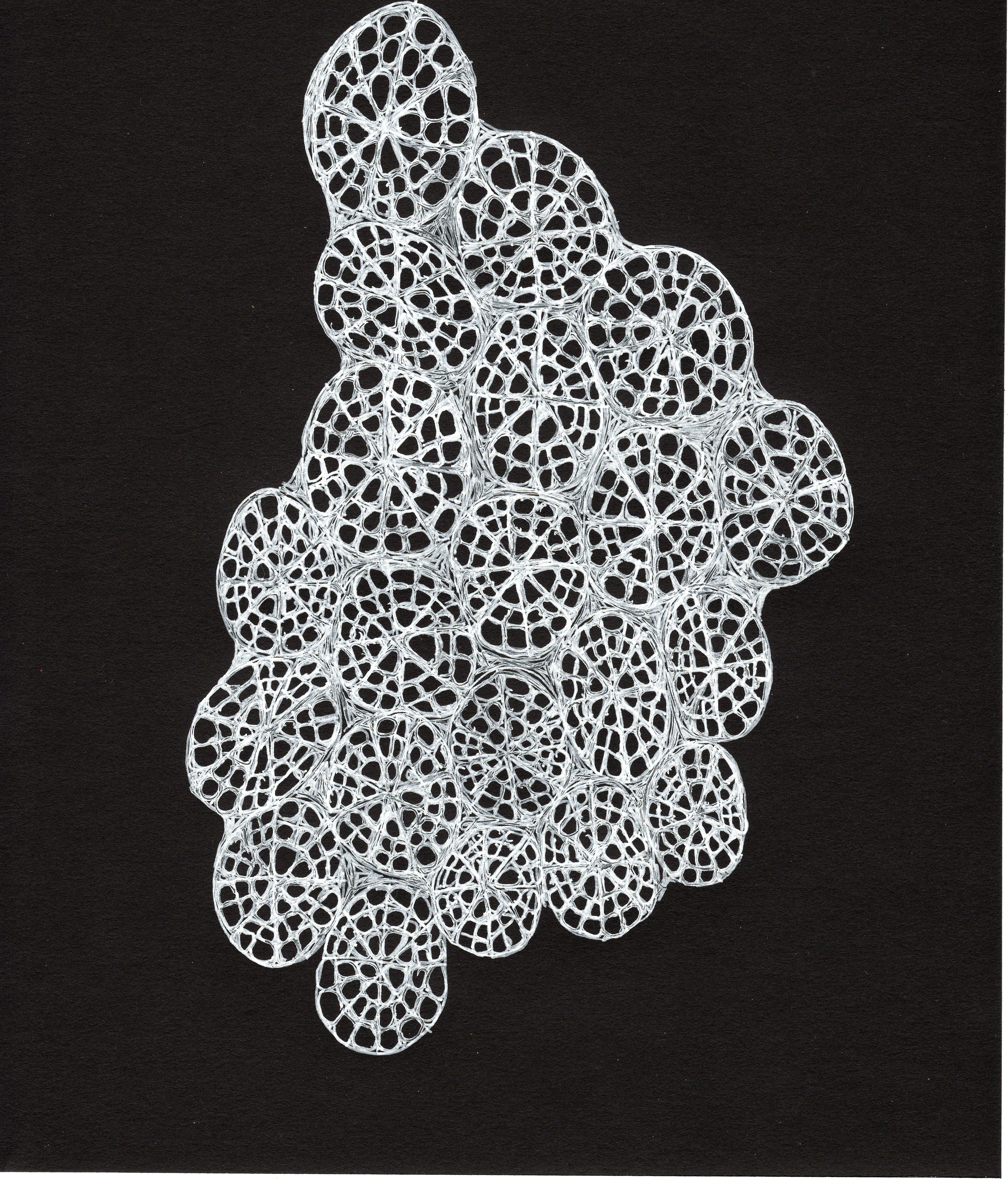
I am always interested in the negative space in my drawings. A good way to explore this is to make a white on black drawing.

EPSON MFP image

There are still a multitude of possibilities for the continuation of these two drawing series. It will be exciting for me to see where the Fibonacci Sequence will take me next.


Susan

Mathematics and Fashion: Charles James at The Metropolitan Museum of Art

When you think about evening gowns, mathematics may not be the first think that comes to mind, but Charles James used geometry and engineering to design his stunning sculptural creations. In 1944, Vogue Magazine referred to his “Mathematical tailoring”.
The Metropolitan Museum has devised an exhibition that celebrates the mathematical structures of James’ work using technology to enhance the viewer experience. Robotic arms with cameras and video recorders present close-up details of structural elements of the gowns. X-rays provide an inside glimpse at the architectural support systems. Computer models provide 360 degree topological maps of the twists, spirals, and folds incorporated into the fashion. Unfortunately it was very dark in the gallery and impossible to take photos but the Metropolitan Museum has a great website with videos and images at metmuseum.org. I have included two of my favorite dresses.

32-1

Charles James – Four leaf clover dress

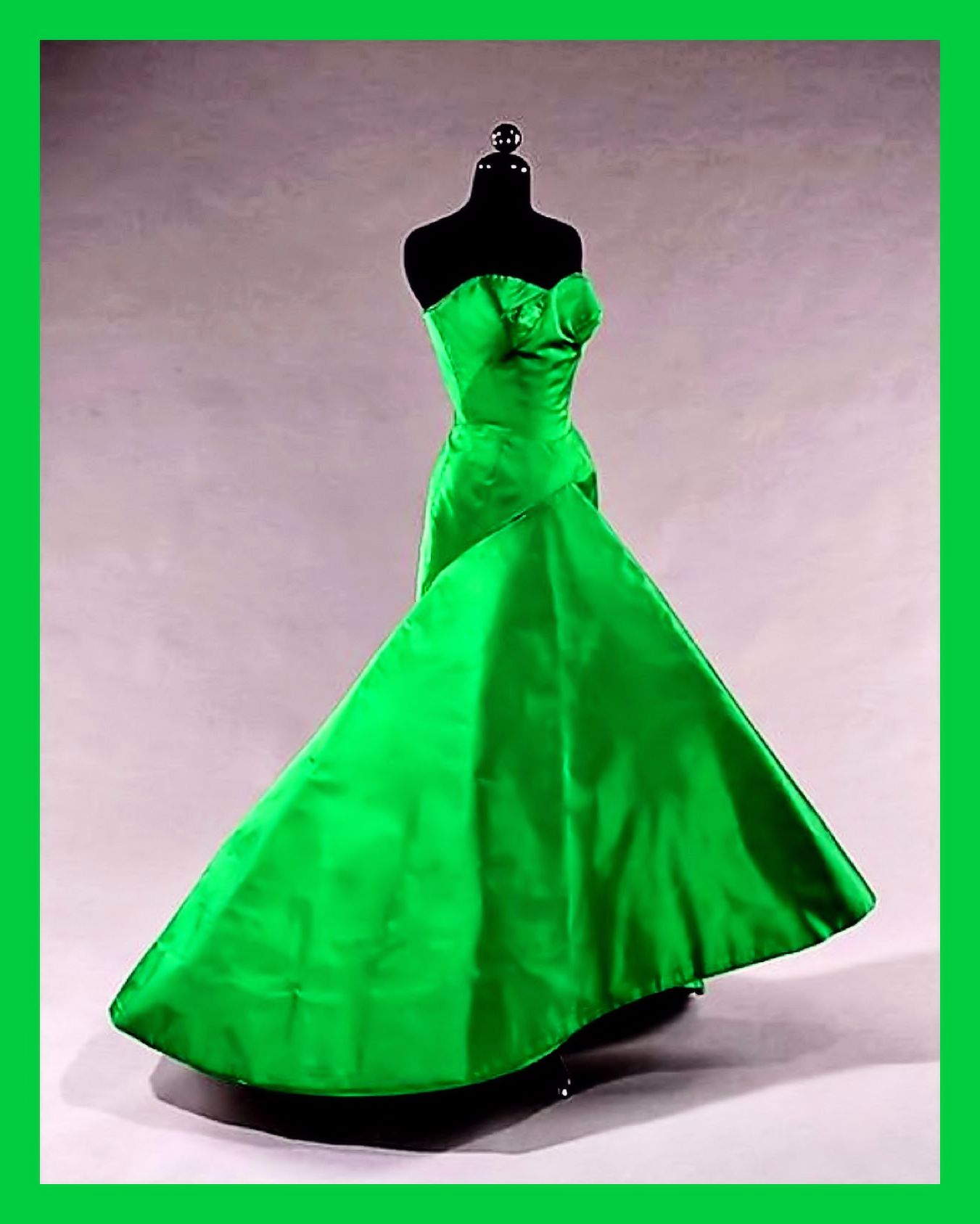
The evening dress “Four Leaf Clover”  features a hyperbolic curve for a sweeping skirt.

32-2

Charles James – Spiral Dress

The green satin Spiral dress incorporates a spiral of fabric that seems to flow directly back into itself creating an Moebius strip that encircles the wearer.

There are many other examples in the exhibition of the complex geometry utilized to design these creations. Throughout his career James was also involved with teaching other designers to use his mathematical techniques. He invented his own schematic dress forms and mannequins that are also on display at the museum.

The engineering nature of Charles James’ approach to fashion combined with the technologically curated presentation of the Metropolitan Museum creates an exhibition that reveals connections between Mathematics and fashion design.

— Susan Happersett
Water Weavers at The Bard Graduate Center

“Water Weavers, The River In Contemporary Colombian Visual and Material Culture” is currently on view at the gallery of the Bard Graduate Center in Manhattan. This exhibition explores the connections between the river and culture exploring the art, craft, and design that has manifested from these connections. A number of the displays reflect the cultural importance of the symmetry in the objects created.

31-1

Abel Rodriquez – Fish Trap
Picture courtesy of the artist and the gallery

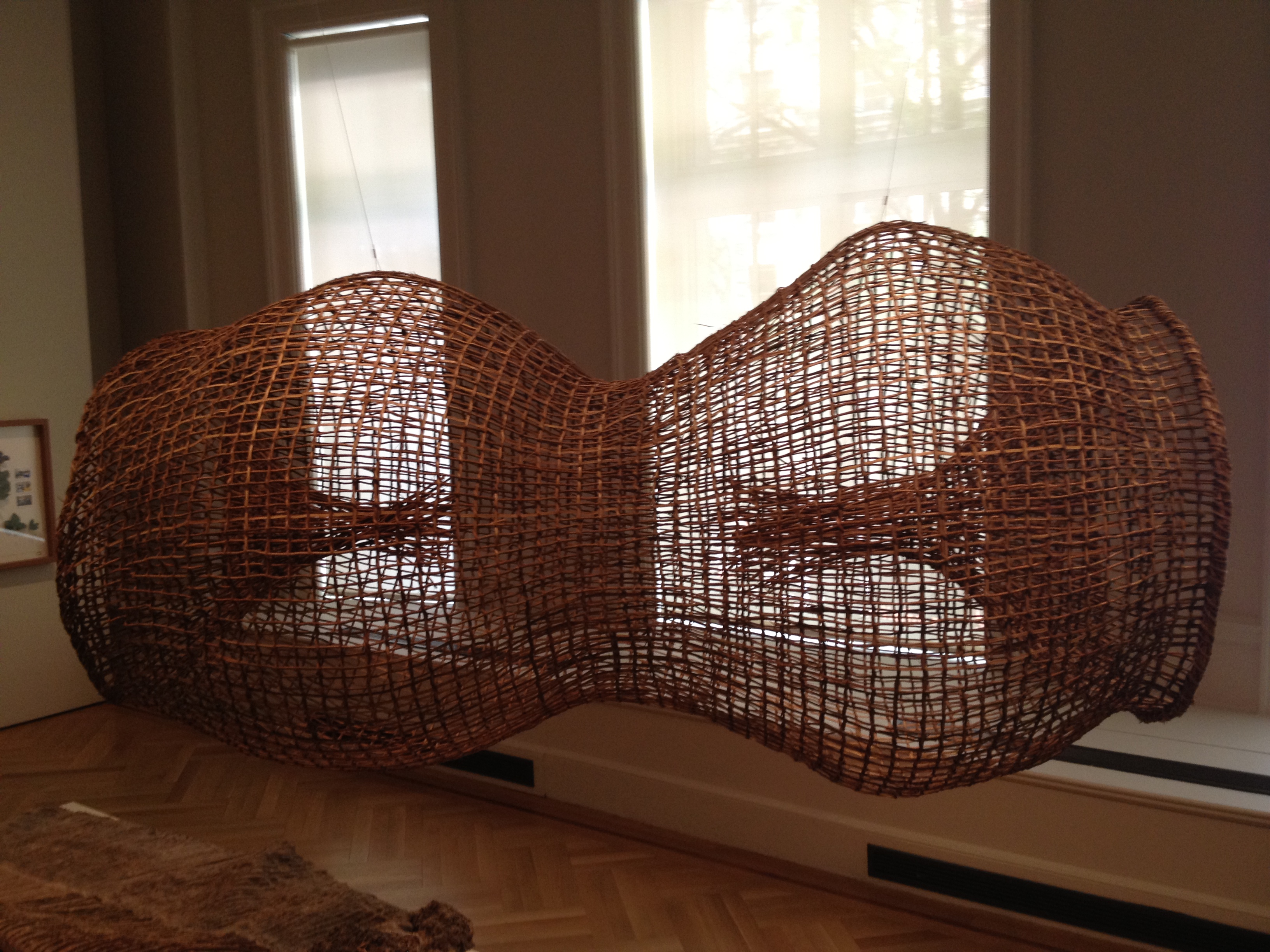
The large scale woven form “Fish Trap” (2013)  by Abel Rodriquez was created using Yare’ fiber. This form features 3-D symmetry with a central horizontal axis of rotational symmetry as well as a vertical axis of reflection symmetry. In these weavings Rodriguez has expressed the grace and elegance of form of a traditional and functional object.

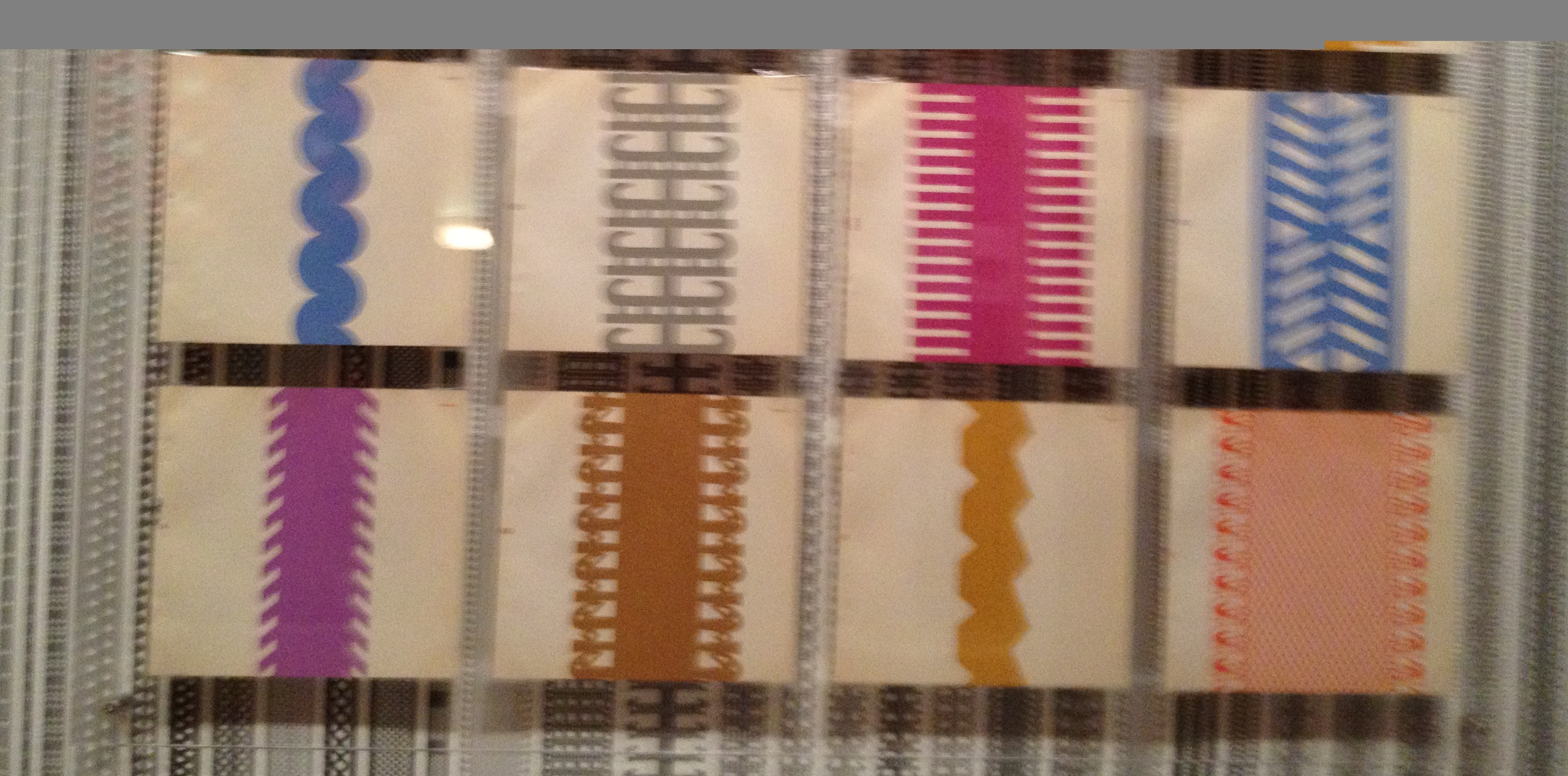
David Consuegra was one Columbia’s most influential graphic artists. In the 1960’s he developed a series of abstracted patterns based on the esthetics of pre-Hispanic designs. A group of his prints of the individual geometric images are on display in the gallery. Each of these elements of his visual dictionary is based on either reflectional or glide-reflectional symmetry.

31-2

The art collective Tangrama has used technology  called “Applique” (2014) to create  wall paper designs incorporating the work of David Consuegra.

31-3

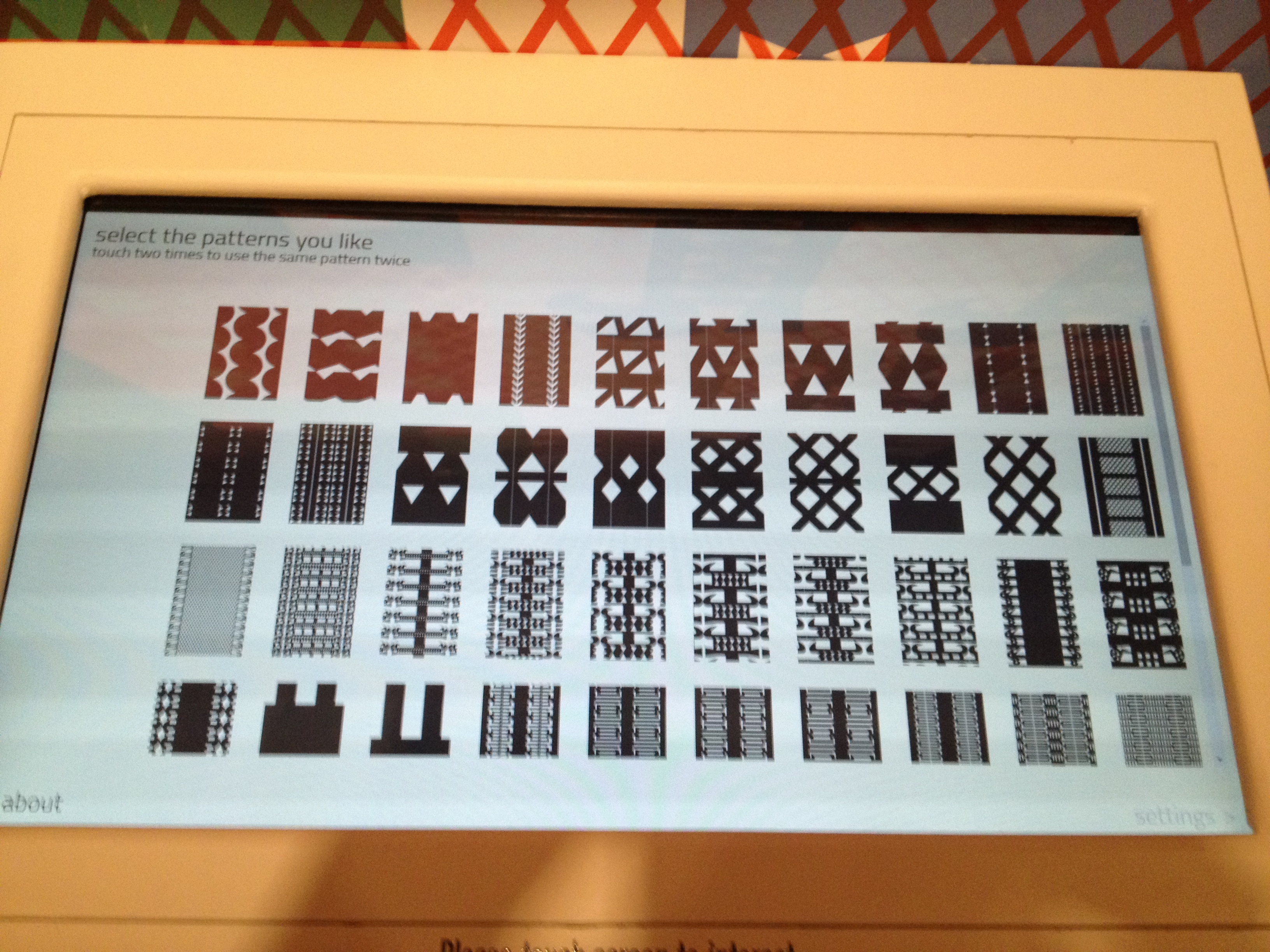
Tangrama has also provided the viewer an opportunity to explore these patterning opportunities with a tablet-optimized web application based on David Consuegra’s designs installed in the gallery.31-4

This interactive software allows the participant to layer up to five different patterns with ten color choices, ten gradient variations, as well adjusting size. There is also the ability to allow the patterns to move by scrolling across or up and down the screen. I had a great time exploring a few of the multitude of visual possibilities available with this amazing design generator.

Susan Happersett
Transmutations – Benigna Chilla at Tibet House NYC

Benigna Chilla has incorporated mathematics into her art practice throughout her career. Her recent, large scale canvasses on display at Tibet House are inspired by her stay in Bhutan in 2011.

30-1

Overview of the exhibition
Picture courtesy of the artist and the gallery

Chilla has included small segments of cultural pattern and textiles into the texture of these paintings. This enhances the connections between the bold symmetries and traditional Tibetan Art. In the painting “Two black Triangles” there is the obvious reflection symmetry of the black triangles, but there are also subtle almost-reflective symmetries. Near the bottom of the canvas there two added sculptural elements, but the right one is higher than the left. On the right hand side of the bottom border there are two red triangles with grey circles on top. On the left hand side, the triangles re grey, but the circles  are red.

30-2

Two Black Triangles – Mixed Media – 8′ x 6′ – 2012
Picture courtesy of the artist

The painting “Full Moonstone” features a large central Mandala with 8-fold rotational symmetry.

30-3

Full Moonstone – Mixed Media on Canvas – 8′ x 6′ – 2013
Picture courtesy of the artist

In the press release for this exhibition, Chilla discusses the importance of both the meditative and physical processes involved in the creation of these works. There are not many artists who can discuss creating mathematical symmetries and meditation, and I personally find that combination very inspiring.

Susan Happersett