Author: Susan Happersett
Art on Paper Fair
More from the Armory Art Fair
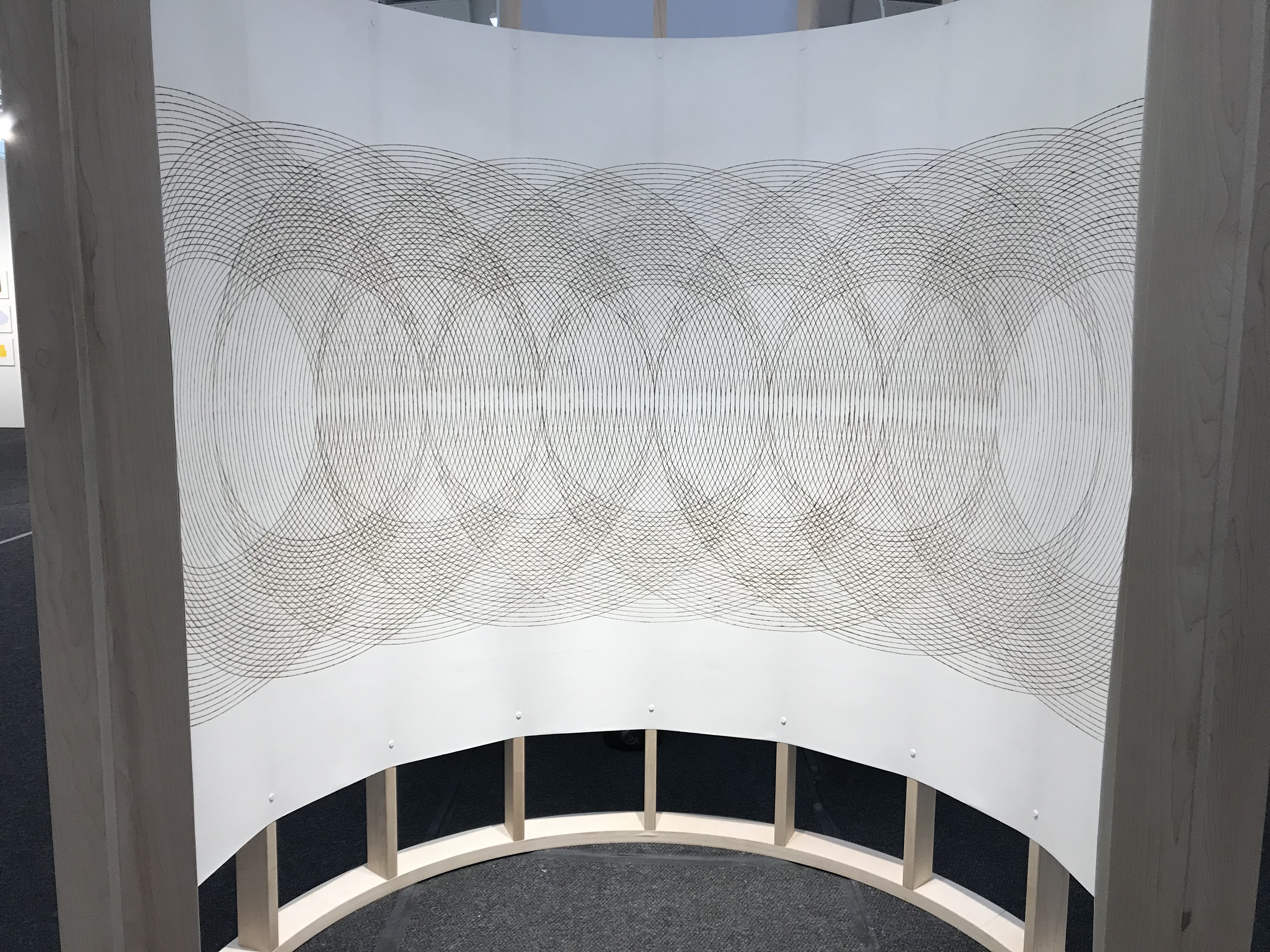
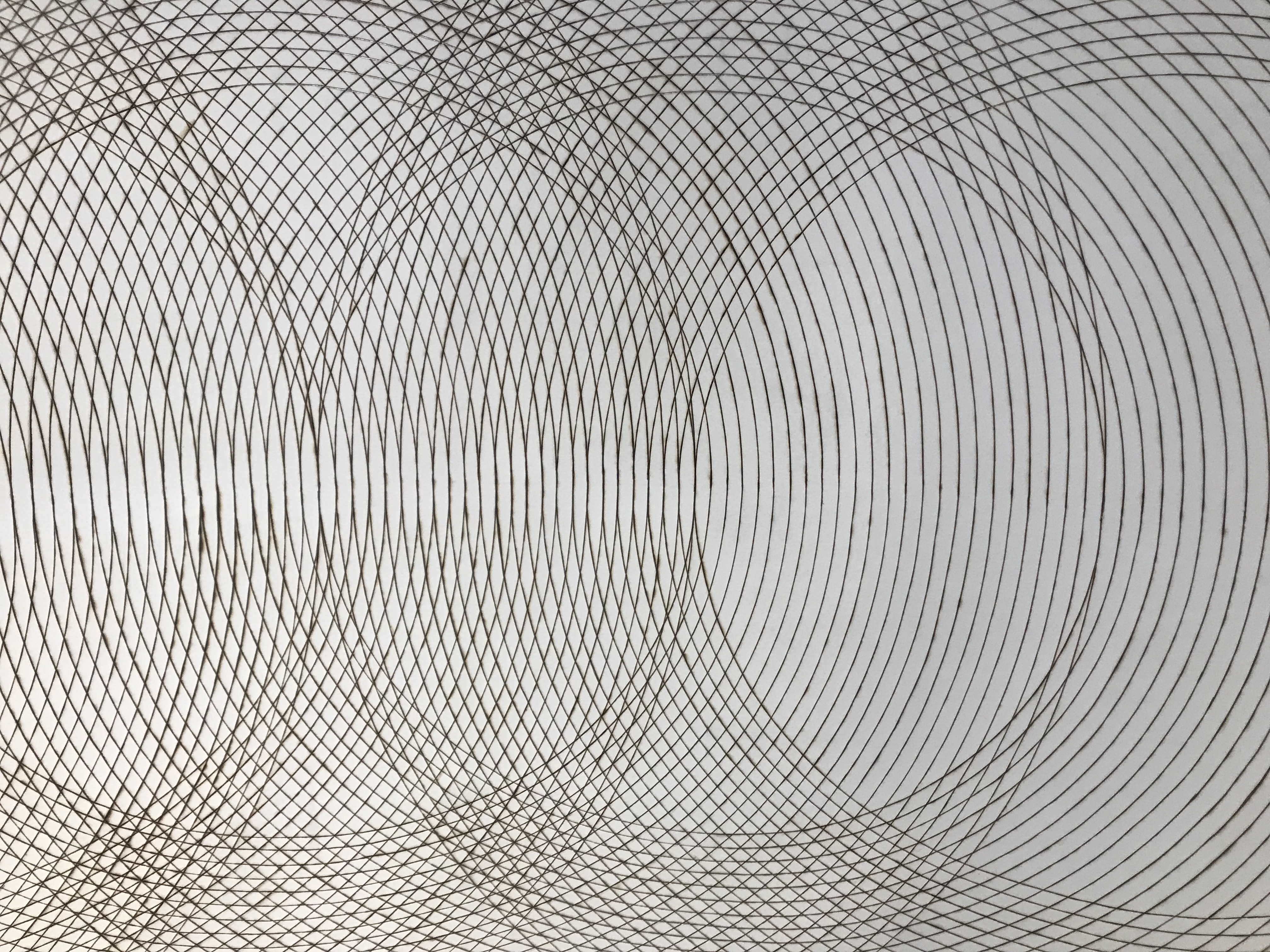
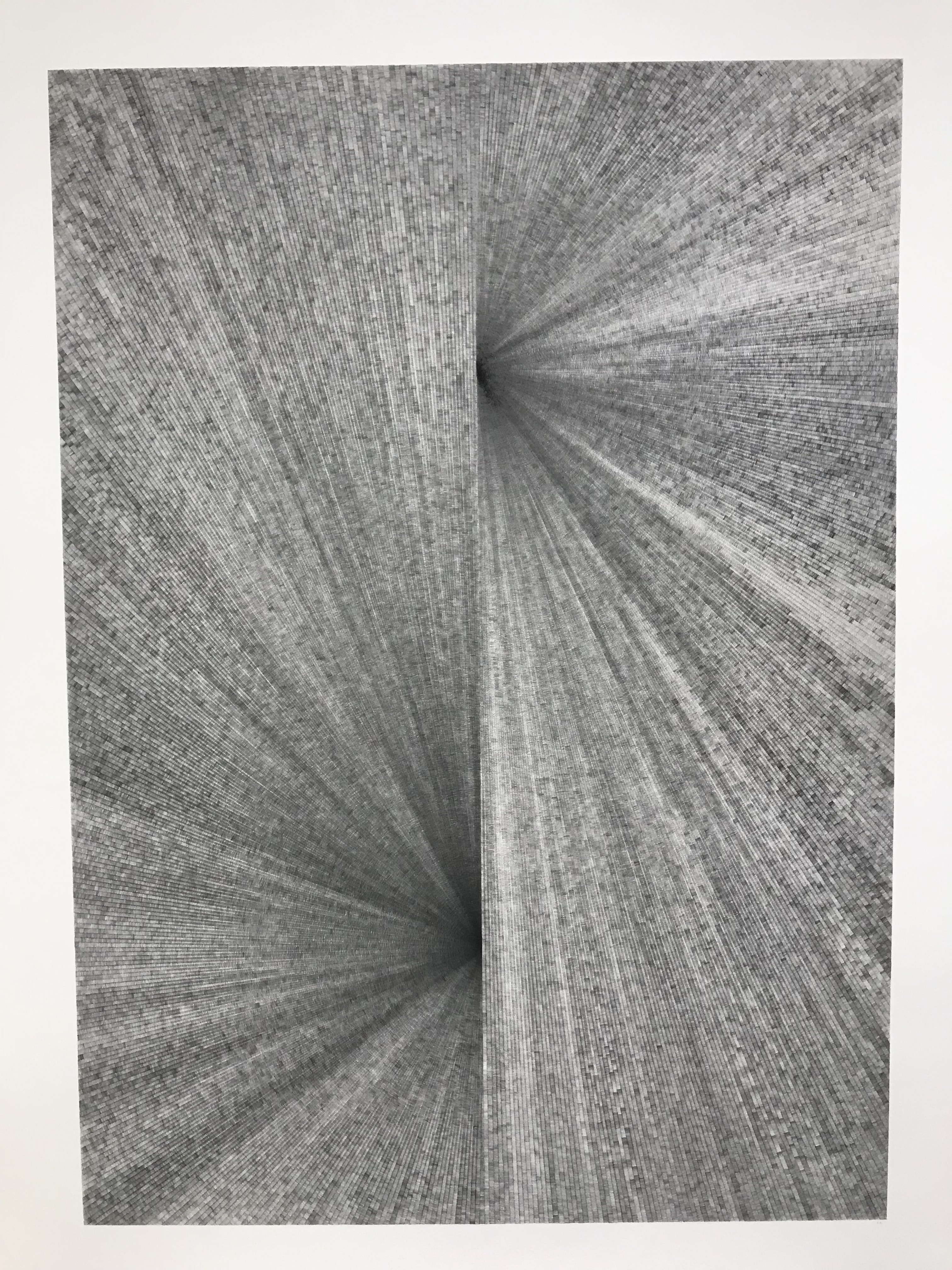
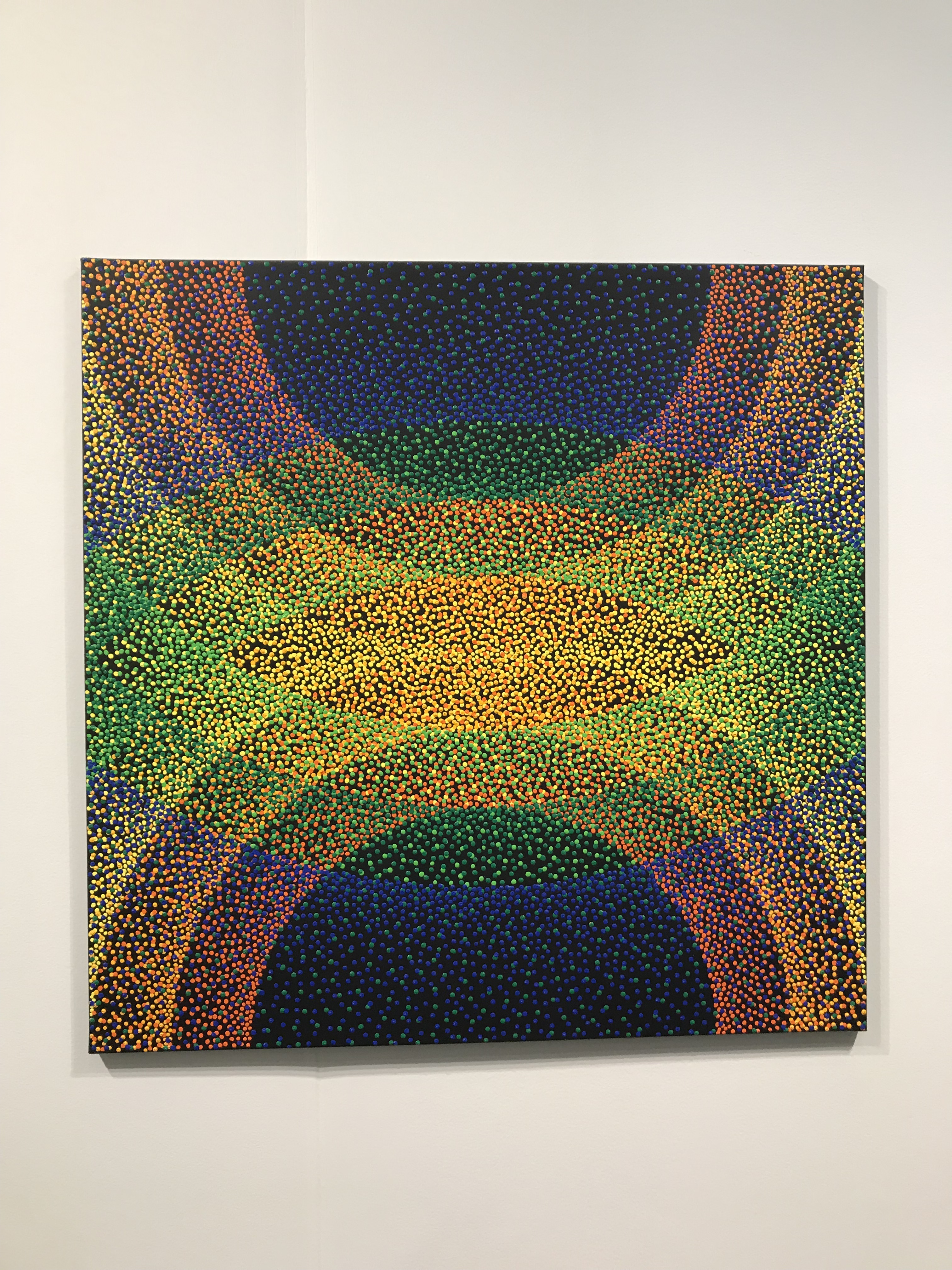
One of the trends that I have noticed in geometric drawings and paintings is the use of overlapping circles. There were two particularly interesting examples at the Armory Fair.

In the Galeria Nara Roesler booth, Julio L Parc’s painting “Alchimie 420” from 2018 was on display. This work offers a pointillistic representation of two half circles with concentric arcs radiating out from the top and bottom of the canvas. As the arcs get larger they overlap at the center and fall of the picture plan on either side.
The i8 gallery from Reykjavik Iceland presented Ignacio Uriarte’s 2018 ink on paper “ Eight Circles Form a Square”. Uriarte’s circles feature a textural shading technique that give them a 3 dimensional presence, but at the same time they appear somewhat transparent because you can see all parts of all 8 circles even they are over lapping. The square structure is formed by two columns of three over lapping circles and over that there is a central column of two non-overlapping circles. There are four sections where three circles and overlap.
These giant art fairs can be almost overwhelming. It is almost impossible to see everything. Buy because there is so much art in one place it is exciting to see how different artists deal with similar geometric themes.
Susan Happersett
Proyectosmonclova Gallery at the Armory Show – New York City
It is March of n NYC so it is time for the giant art fairs. This year at the Armory show on Pier 94 galleries from all over the world brought an exciting assortment of work.
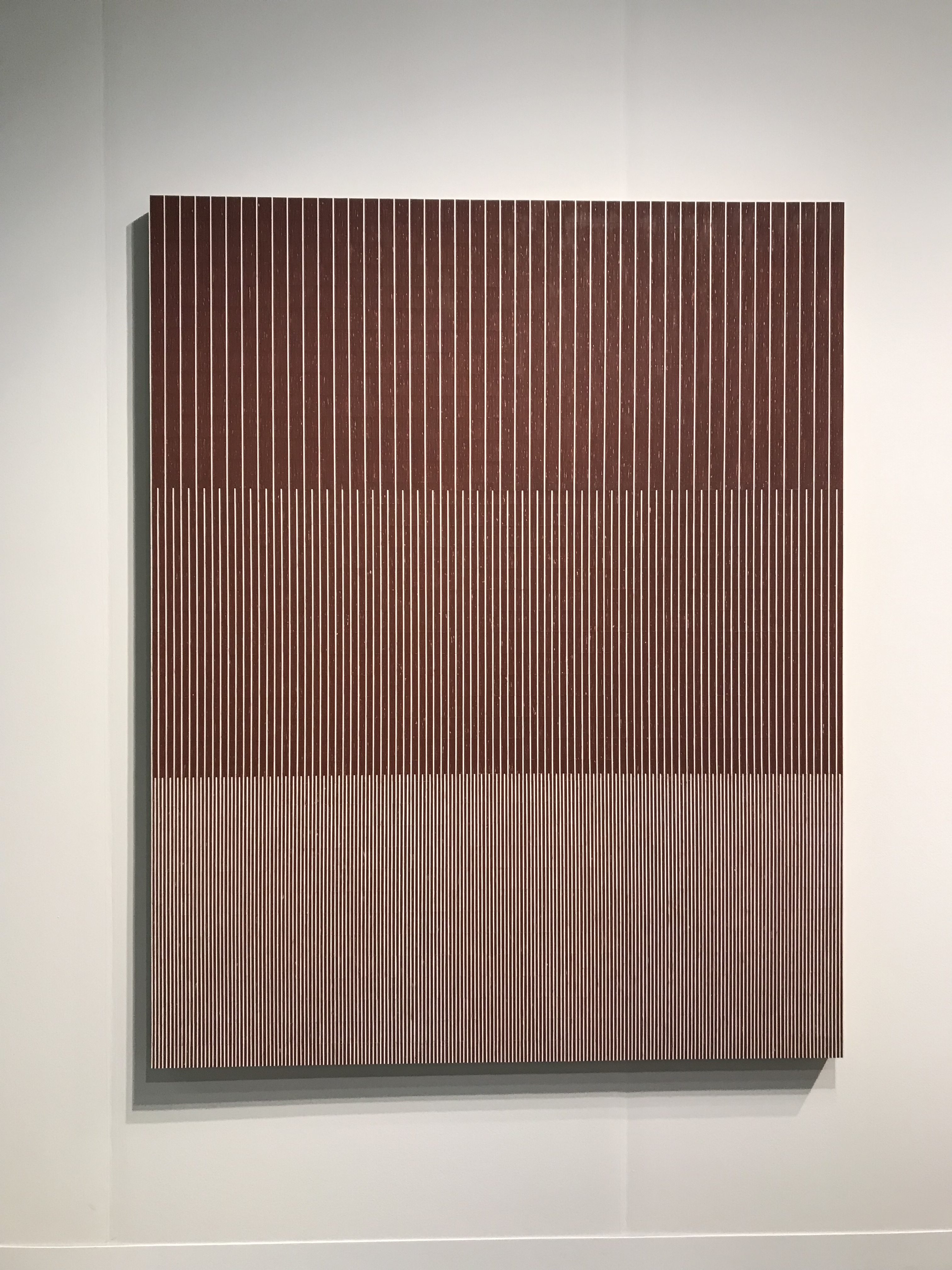
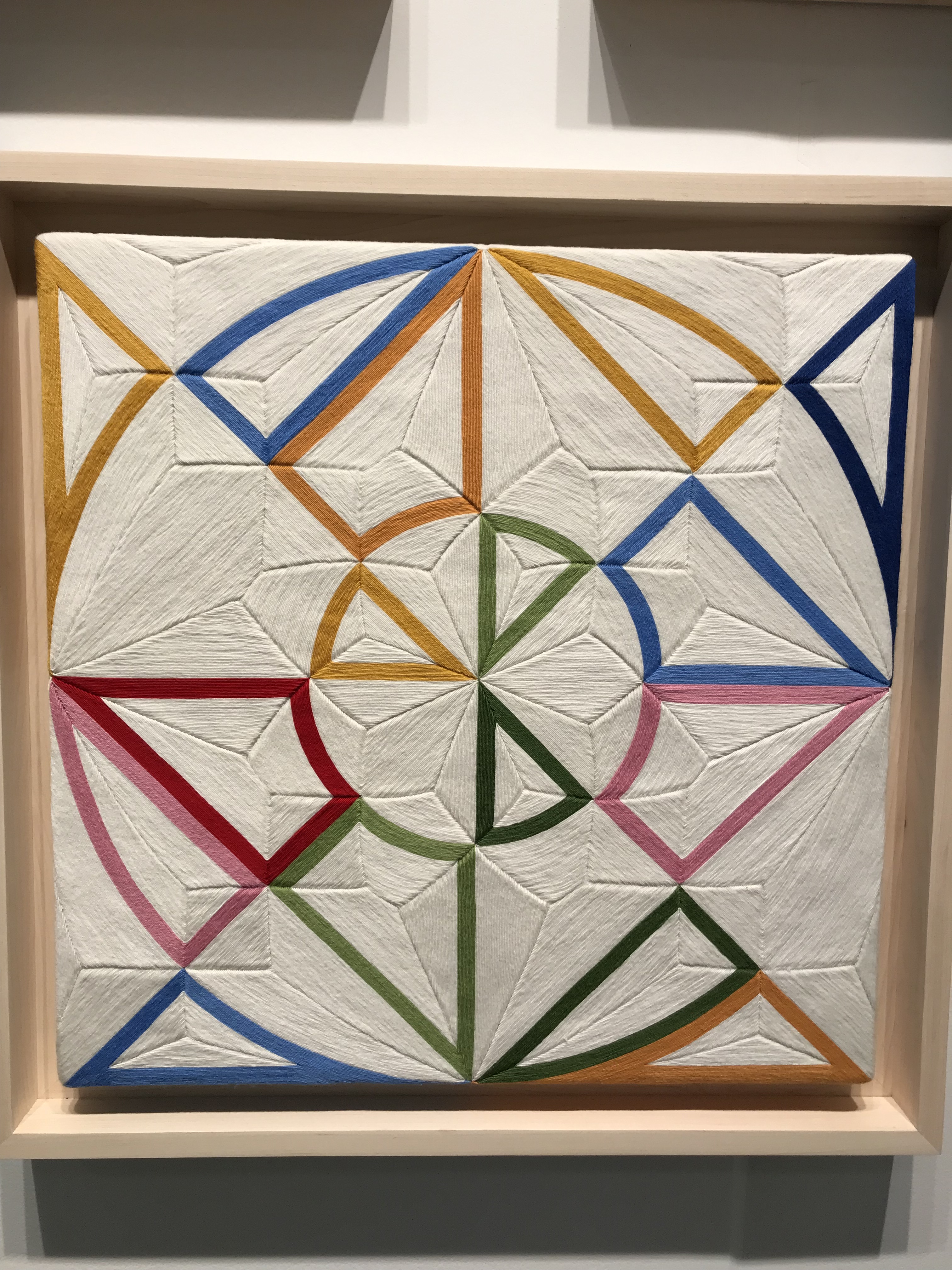
The Proyectosmonclova gallery from Mexico City exhibited the work of two artists whose work have Mathematical implications.

Gabriel de la Mora’s “193,200” from 2019 has two distinct mathematical themes, both geometric and numerical.The use of parallel lines with increasing frequency from top to bottom creates an electrifying pulse of geometric forms. The three rectangular horizontal rows explore the idea of positive and negative space. This work was created using 7;728 used sides from 3,864 match boxes from 193,200 burnt matches. The act of counting each of these elements expresses the intensity and detail in De la Mora’s artistic practice.

Eduardo Terrazas creates geometric forms using wool yarn on wood boards for the series “ Possibilities of a Structure” from 2018. Each of these works have an underlying stitch pattern featuring order 4 rotational symmetry and a circle inscribed within the square structure of the board. The symmetry is broken by highlighting some of the geometric forms with colored thread. Each shape possesses one curvilinear side. The concept of a non symmetrical pattern with a symmetrical framework offers a refreshing way to look at geometry.
Susan Happersett
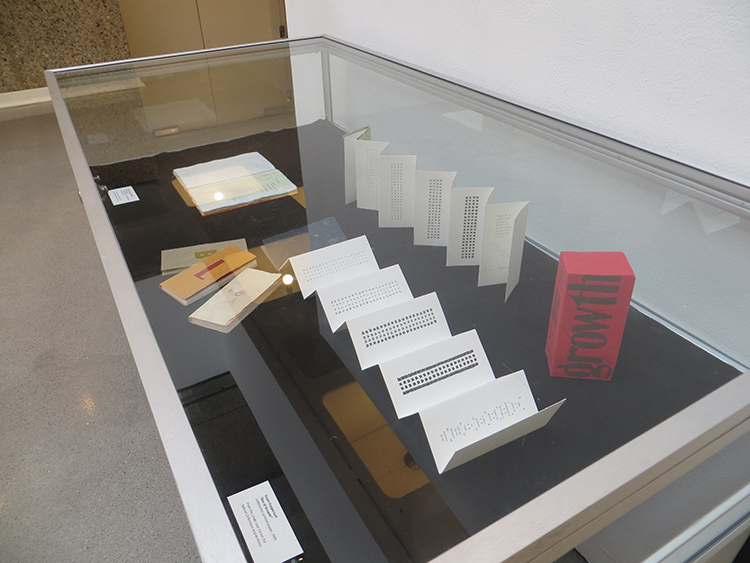
Booklyn Artist’s Book Fair
Finding Fibonacci
“Falling into Place” at Odetta Gallery
The Odetta Gallery in Brooklyn is currently presenting a group show titled “Falling into Space”. It explores how physical forces affect the position of objects the artists each utilized a distinct geometric language.
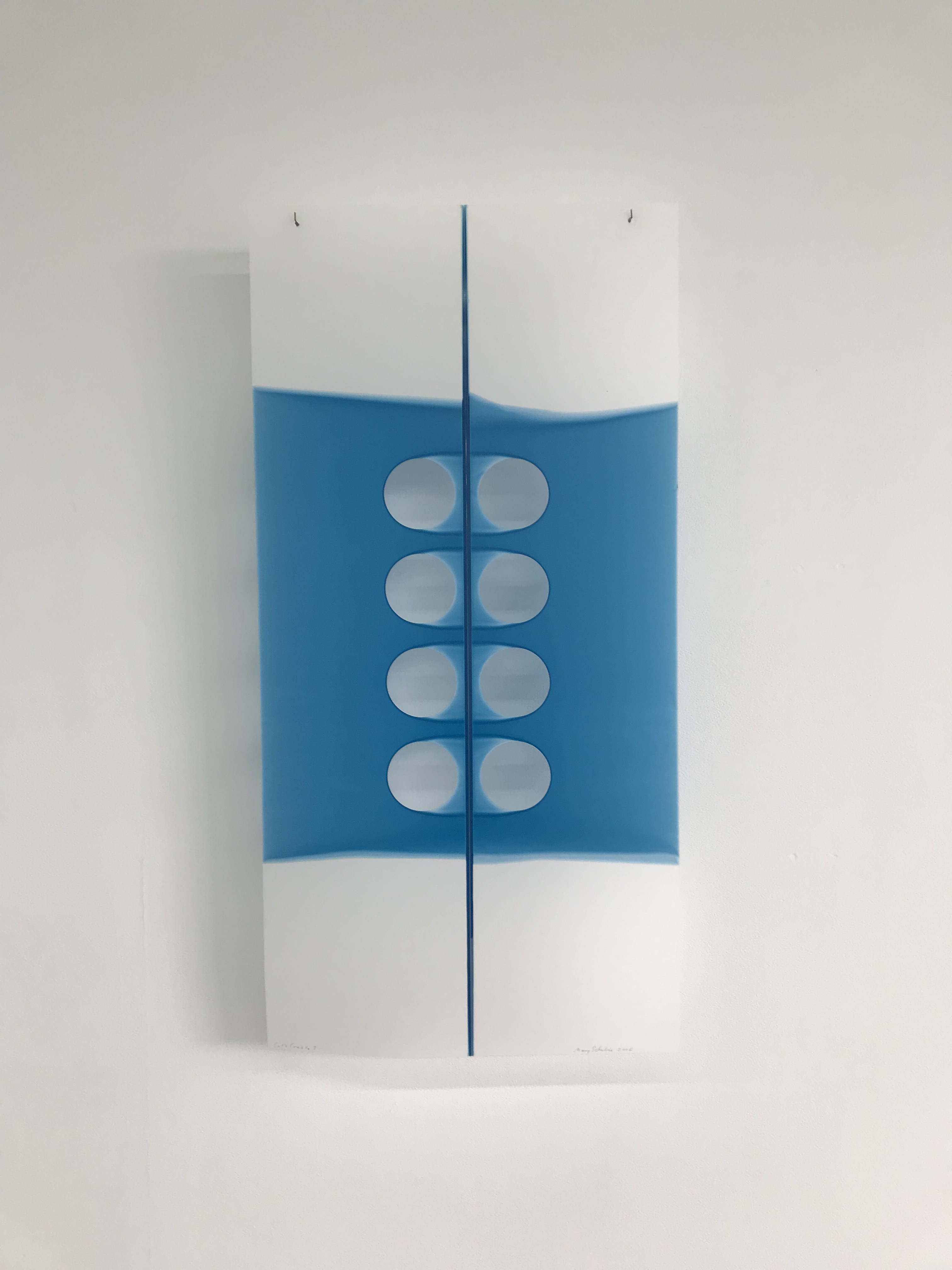
Mary Schiliro’s acrylic painting on Mylar “Cat’s Cradle 7” from 2006 incorporates two columns of circular cutouts. The vertical line of reflection symmetry resulting from the cutouts is subverted by the fluid veil of blue transparent paint.
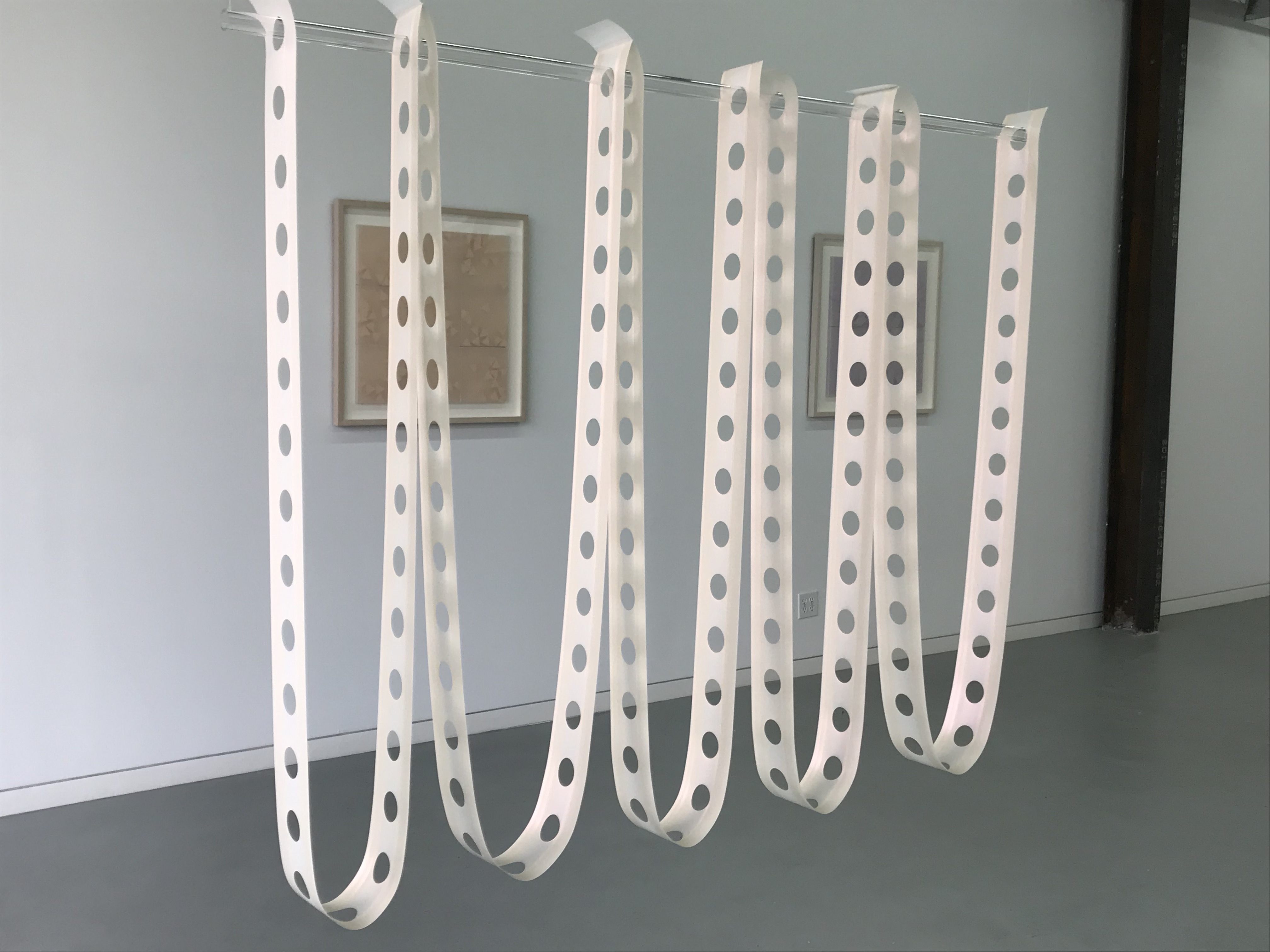
Schiliro’s installment “Disembody” from 2017 continues the theme of a straight line of circular cutouts. The long Mylar ribbon is presented in loops hung from a plexiglass rod running through the center of the gallery. The forces of gravity creating the undulating curtain. The cutaways lined up to create a series of voids illustrating the concept of positive and negative space.

Daniel G Hill’s wire frame wall drawing “Dishtowel Fold” from 2018 is a construction using straight lines to present the basic outline and folds of a form effected by gravity. The two ends are isosceles right triangles. The left hand triangle flush against the wall and the right hand triangle falling forward off the plane.
All of the work in “Falling into Place” involves each artists’ geometric processes in a very personal way. The viewer can move through the gallery and interact with each piece on a very human level.
Susan Happersett