Gego at the Guggenheim (more)

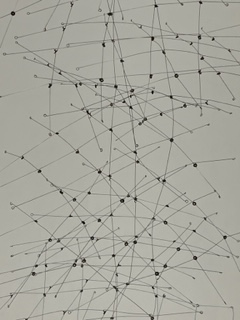
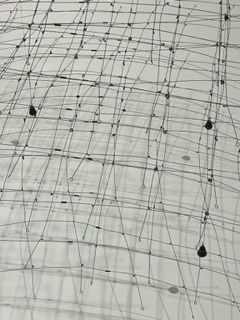
As I mention in a previous post I am totally enamored with the Gego show at the Guggenheim. So here are a few more wonderful examples of her work. The museum devoted an entire section of the exhibition to Gego’s use of parallel lines. I particularly liked the black sculptures on display. 

This aluminum sculpture from 1957 is titled “12 Concentric Circles”. It uses a series of curved lines create a 3D drawing. Both the sculptural form and its shadows create an interesting play of positive and negative space.

“Sphere” from 1959 is made from brass and steel. For this sculpture, the artist used straight parallel lines, but the overall shape is curved. I particularly like the juxtaposition of the straight and the curve. Again the shadows are so important and give a sense of more than 3 dimensions.

“Gegotoi” (1959) is an iron sculpture of all straight lines. To me this really feels like an open triangular book with parallel lines of texts.

Again if you are in NYC head to the Guggenheim! I still have more art from this show I want to talk about so…. Look for my next post soon.

Susan Happersett
FlutterFly

I am so happy to introduce my new collaboration, FlutterFly!


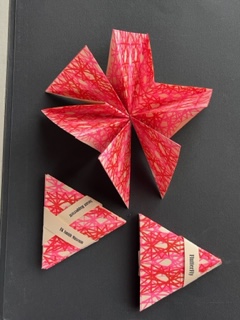
I worked with Esther K. Smith to create this limited edition series of Artist’s Books. The surface patterns are my algorithmically generated Trapezoidal Lace drawings that Esther overlapped and printed using Risograph processes at SVA. The structure for these pieces is one of my new inventions: I am working on developing non-Euclidean paper sculptural forms that can be build from a set of identical geometric paper shapes attached in a helix formation and then either bent or folded. These shapes are inspired by hyperbolic geometry.

The FlutterFly books are built using 3 very special rectangles. The proportions of the rectangle are such that when you fold along both diagonals equilateral triangles are formed. I used the Pythagorean formula to do my calculations!
If you would like to own a FlutterFly they are published by the EK Smith Museum and are available on Etsy for $33 plus shipping in the Purgatory Pie Press store. If you add the code 001Fibonacci in the instruction section you will also receive a free gift! 

I hope you like this new book. Let me know what you think.

Susan Happersett

Gego: Measuring Infinity at the Guggenheim, NYC

The Guggenheim Museum in New York is currently presenting the work of Gego in a retrospective titled “Measuring Infinity“. *Spoiler alert* I have been a huge fan of Gego’s work for awhile now, and I knew that her art would look amazing in the white helix that is the Guggenheim.


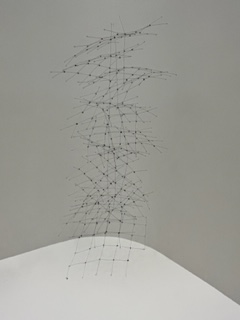
As you start to walk up the ramp there is a small alcove gallery. In this space, the curators have installed a selection of what Gego referred to as “reticulareas”, sculptures from the 1960’s to the 80’s. Their construction is based on squares and triangles. The whole environment was so breathtaking I literally  forgot to breath and started getting dizzy. Here are a few of my favorite pieces in the room.

A series of bronzes from 1977
“Columna”, 1972
Close up of “Columna”
“Retinulaveo Cuandrada”
Close up of “Retinulaveo Cuandrada”

What makes Gego’s work so irresistible to me is the fact that besides being very beautiful it also expresses Mathematics in two different ways. The work is all built using basic geometric principles. But the complexity of the patterns and the repetition lead the viewer to think about the infinity.

This exhibition is huge. I can not possibly write about it in one post. I have already seen the show twice and I plan to go back again. I will write more soon. In the mean time I encourage any one who can get to NYC this Spring or Summer to see this exhibition.

Susan Happersett
Printing and Mathematics


David Smith from England has recently solved an important Mathematical problem. He found a single polygon shape that can tile an infinite flat plane creating a non repeating pattern. Smith was not a mathematician, he had worked as printing technician. I have always felt that printing and especially letterpress printing with moveable type was a very mathematical art form.


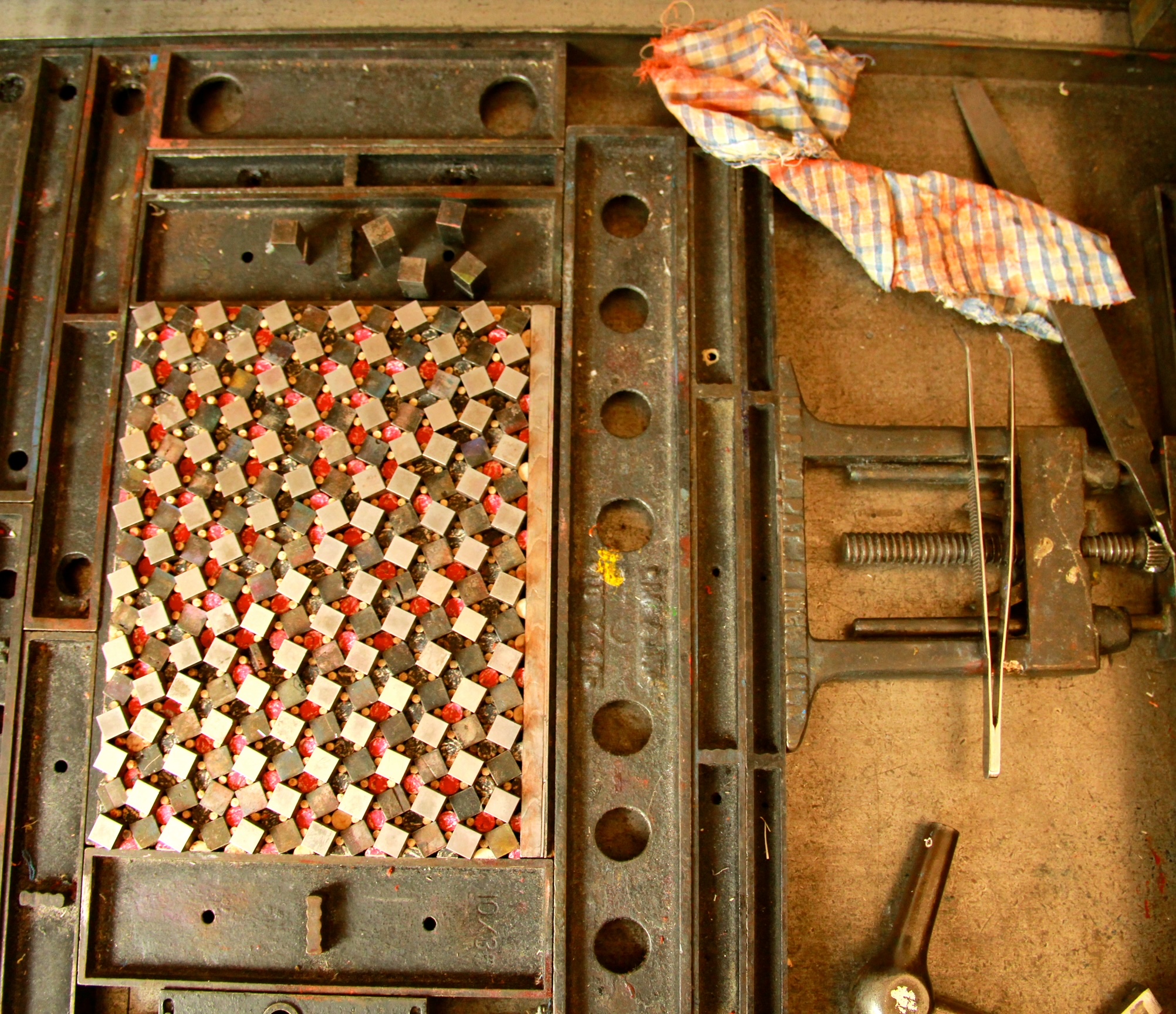
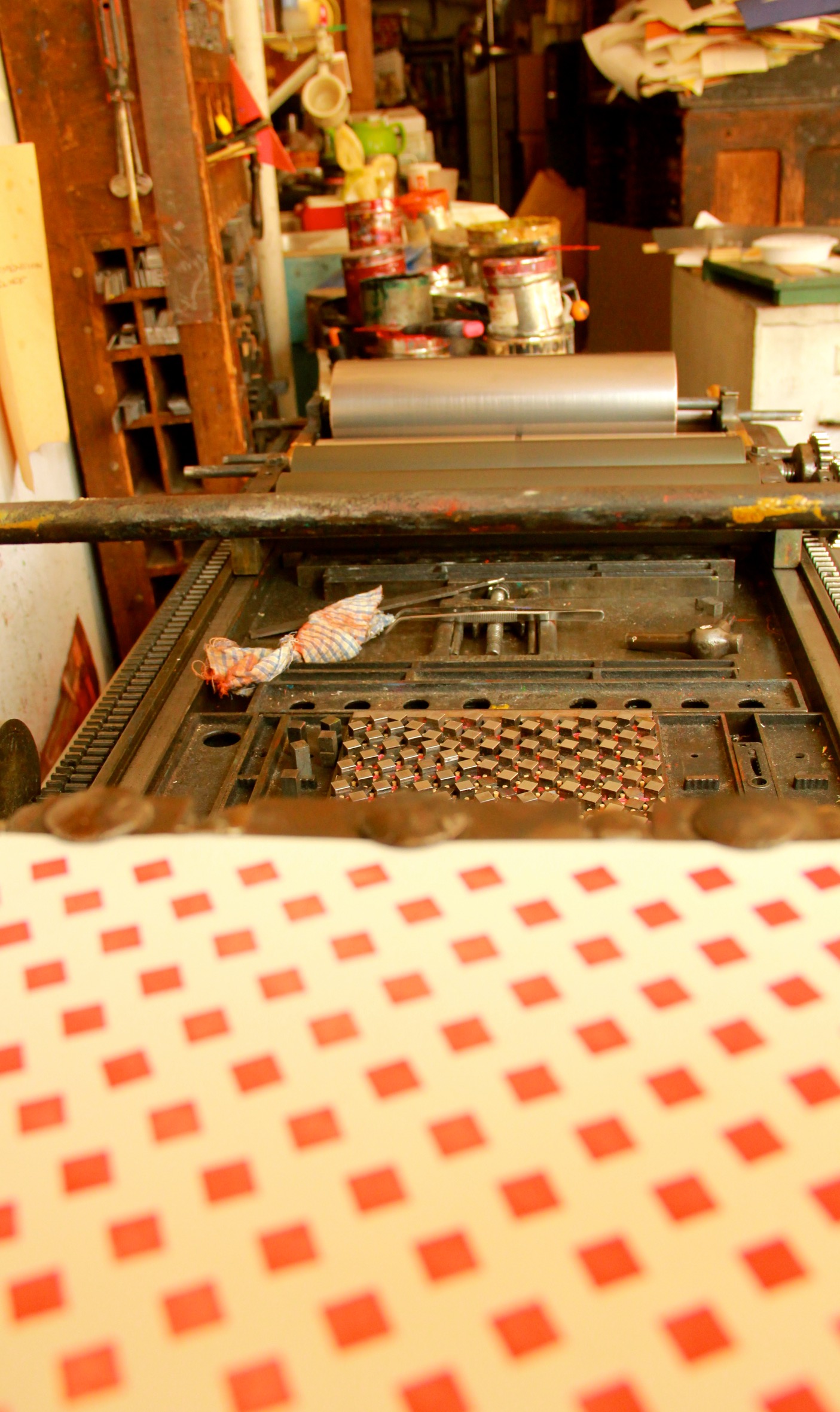
Dikko Faust is a master printer who develops beautiful tessellation patterns. Here are some of setups on the press.

If you are interested in exploring the mathematics behind printing, I recommend Faust’s Continuing Education course at SVA in Chelsea, New York.

Susan Happersett

Johnny Abrahams

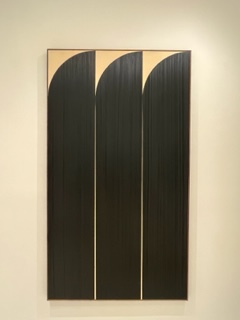
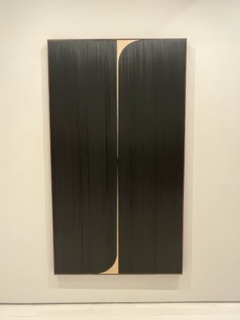
The Jack Hanley Gallery in Tribeca is currently presenting the exhibition “Dog’s Dinner” a solo show of recent paintings by Johnny Abrahams. These two examples are from the “Elemental” series of work. Using a pallet knife, the artist applied a thick layer of black paint creating a linear textuality.

This Untitled canvas from 2022 features 3 rectangles each with the same curvi-linear cut away. Although at first they appear to be separate shapes there is a small connection between them.

Also Untitled from 2022, this canvas features two rectangles. One with a curved lower center corner and one with a curved upper central corner. This piece has order-2 rotational symmetry. Again, these two shapes have one place were they are subtly connected.

This series of work juxtaposes the linear polygon with curved lines and positive space with negative

Susan Happersett

Harold Granucci

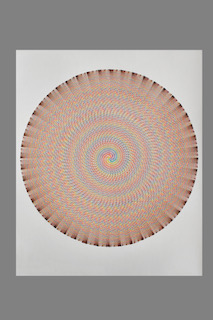
At the Outsider Art Fair earlier this month the company Art Sales and Research Inc presented the work of self taught artist Harold Granucci. After retiring from accounting and retail in 1979, Granucci became interested in the mathematical formulas he found in natural phenomena. He spent twenty years hand drawing elaborate patterns generated from his calculations.

Picture courtesy of Art Sales and Research Inc.

Using his Texas Instruments calculator and his knowledge golden proportions, Granucci created a large body of work that has just recently become available to the public. I am always excited to see work of previously unknown math artists fr the first tim.

Susan Happersett

Joe Rudko at Davidson Gallery

Davidson Gallery in Chelsea is currently presenting “Afterimage”, a solo exhibition of recent work by Joe Rudko.


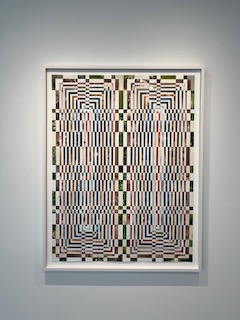
To create his works on paper Rudko slices up found photographs into rectangular strips. The actual photographic images become abstract patterns. Using very specific dimensions for the strips, they are assembled into patterns that mimic the look of weaving.


“MIRROR” from 2023 has a vertical axis of reflective symmetry. The symmetry is quite exact for the size and shape of the pieces of photographs. The symmetry for coloration is more of an approximation. Photography is a very important medium in contemporary art. I find it fascinating to find mathematical concepts addressed through these images.

Susan Happersett

Math at the Outsider Art Fair

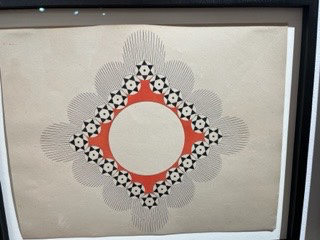
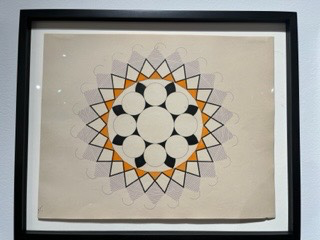
The first weekend of March is the Outsider Art Fair in NYC. Over the years I have noticed more work with mathematical connections. This year Norman Brosterman exhibited a series of detailed mathematical abstract drawings that were recently discovered in two albums from 1880. The word “Distractions” was embossed on the spines of the books. They are thought to be the work of an architect or a drafts person. These works feature interesting symmetries.

This first drawing has order-4 rotational symmetry over all and each of hexagonal Star elements have order-6 rotational symmetry.

This second drawing has two competing symmetries. The outer pattern of Quadrilaterals and orange triangles has order-22 rotational symmetry, while the interior ring of circles and petals has order-8.this results in the petals meeting the triangles at various stages of the pattern.

If you read this when I post it, go see the Outsider Art Fair this weekend.

Susan Happersett

Hanna Darboven at Petzel Gallery

“Fin de Siecle – Buch der Bilder” ,a solo exhibition of Hanna Darboven’s work, is currently at Petzel gallery in Chelsea.

In the October issue of Art Forum magazine Darboven comments on the use of numerals. “It has nothing to do with Mathematics. Nothing! I choose numbers because they are so steady, limited, artificial. To me, in artistically separating the digits in numbers from the idea of mathematics, is a mathematical act. 

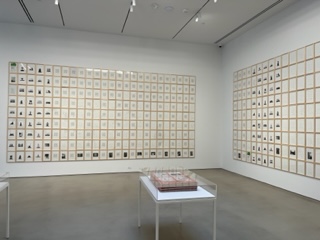
At the show at Petzel, a multitude of complex images fill the gallery walls, creating an abstract work that transcends both the numbers and the marking of time, documented by Darboven’s “day calculations” from 1988–1989.

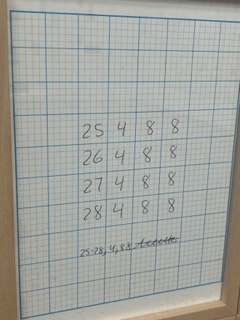
Here is a close up of one on the framed pieces in the exhibition. This page at first just looks like a numerical progression. The numbers correspond to to calendar days. Date, Month , Year. In this case 4 25 88 refers to April 25, 1988. 

Susan Happersett

Tara Donovan at Pace Gallery, NYC

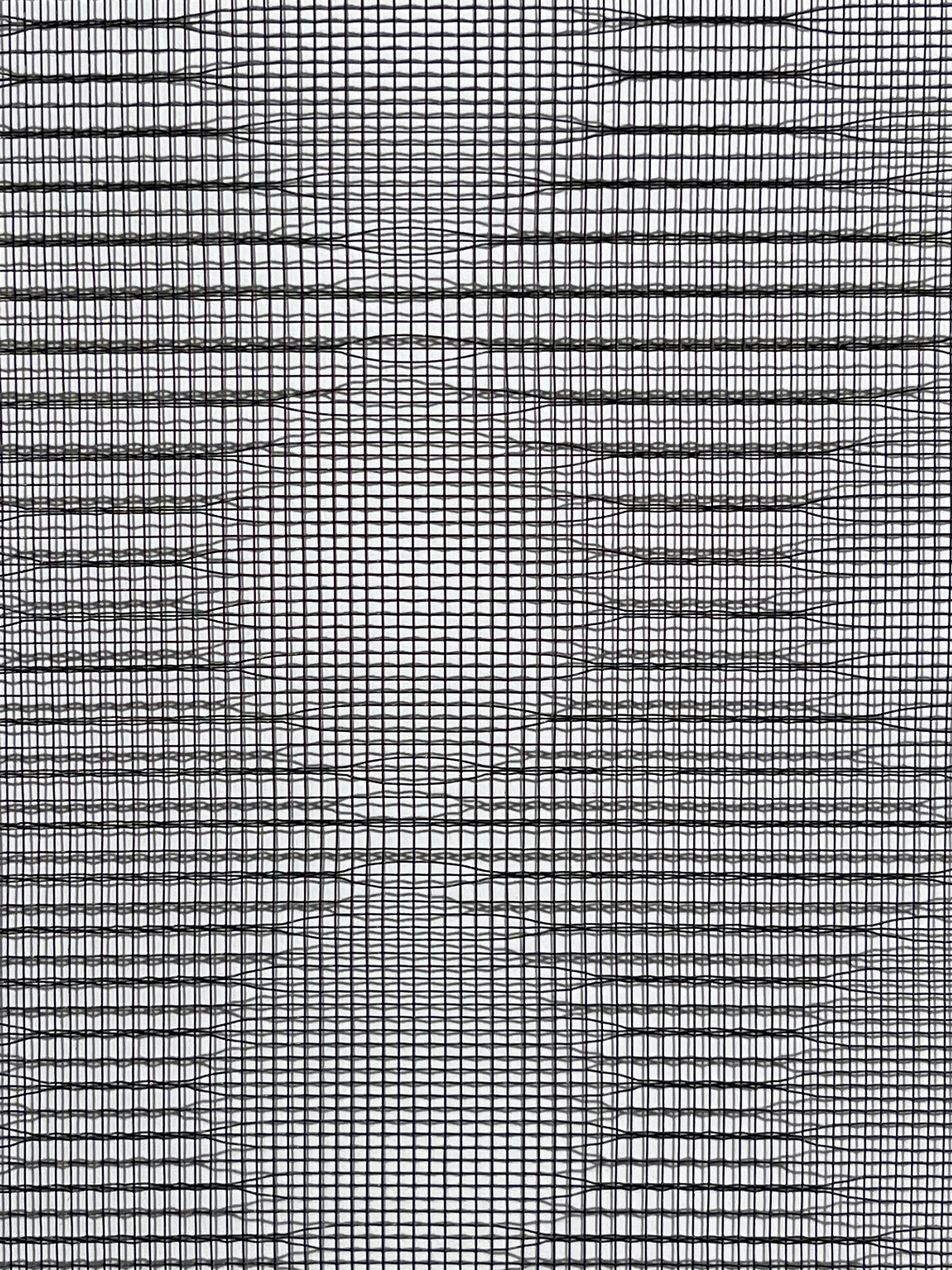
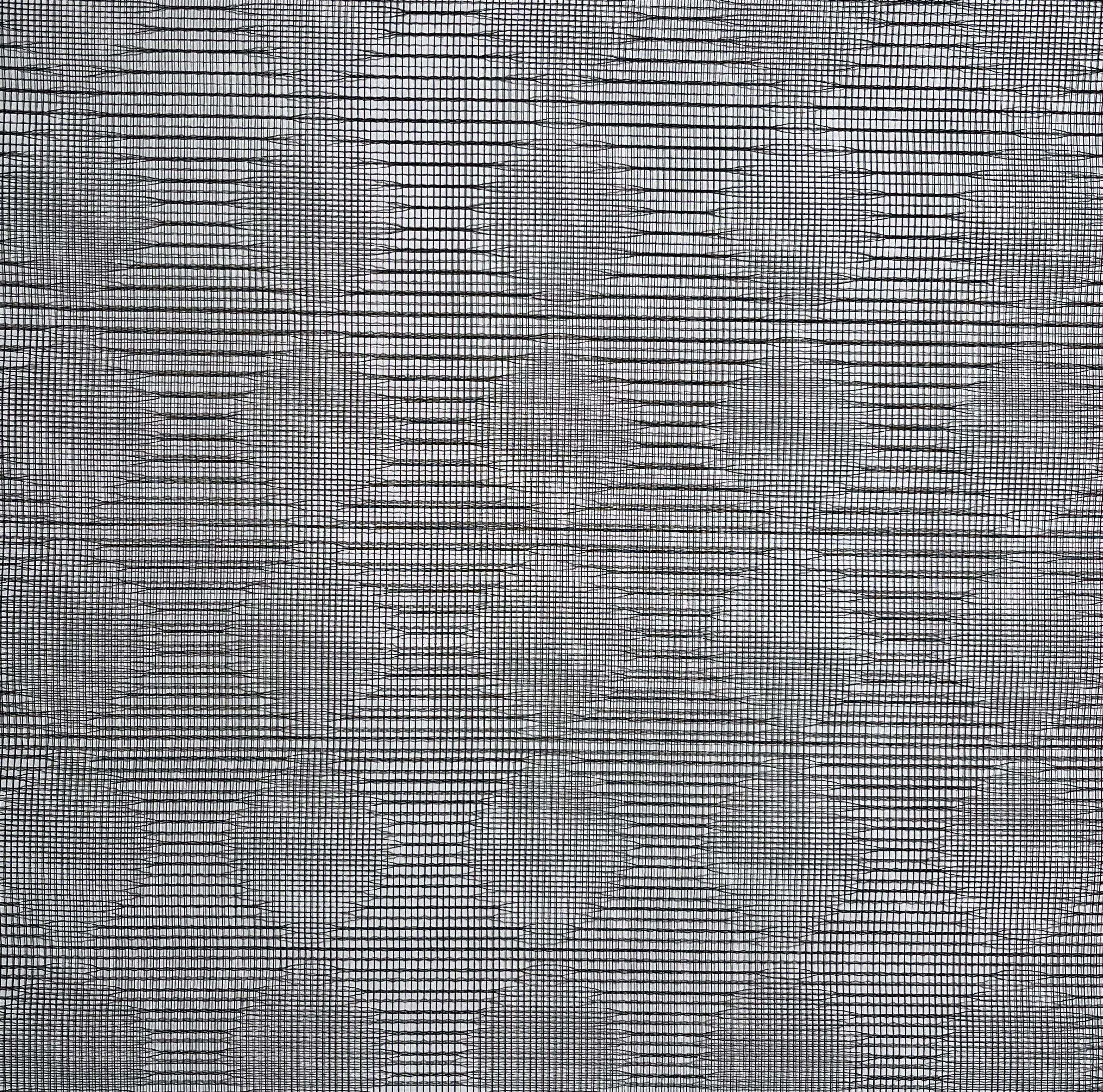
Tara Donovan’s recent screen drawings are currently on display at Pace Gallery in Chelsea. Donovan uses Mathematics to determine how to physically manipulate multiple layers on aluminum insect screens to create interference patterns. By pinching and cutting select wires using a predetermined rule set, the artist creates amazing geometric drawings.

Susan Happersett