Hayal Pozanti at The Aldrich Contemporary Art Museum

“Deep Learning”,  Hayal Pozanti’s solo show, currently on display at the Aldrich Contemporary Art Museum in Ridgefield Connecticut, features work related to technology and the human experience. Robert D. Hof’s article “Deep Learning” (MIT Technology Review, April 23,2013) is quoted in the catalog: Deep Learning in reference to “software [that] attempts to mimic the activity in layers of neurons in the neocortex”.

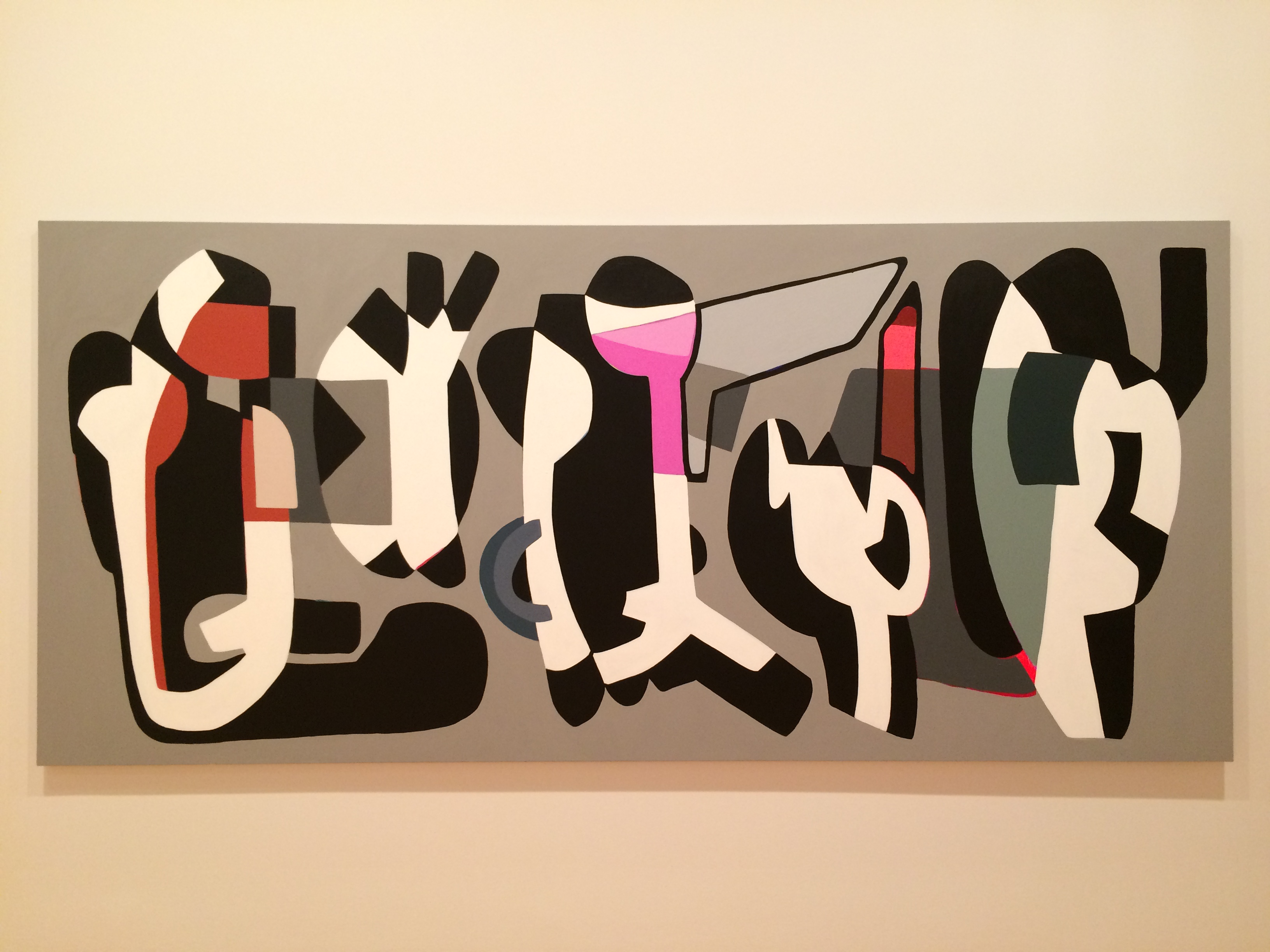
Pozanti employs her own alphabet of 31 shapes named “Instant Paradise” to create paintings and digital animations. Her new, large scale rectangular paintings are the same proportions of a smartphone screen but blown up to almost room sized canvases.
16-09-01

“Sixty Seven” – 2015
Courtesy the artist, Jessica Silverman Gallery San Fransisco and the Aldrich Museum

The paintings are all based on source data that is documented in the curatorial signage. “Sixty Seven” has “Source data: milliseconds it takes for the human brain to form a microexpression”.

Pozanti generates images through a process of selecting and overlapping shapes from her alphabet. The more the images are repeated over time the more recognizable they become. This is similar to the way Deep Learning software operates. All of these canvases were hand painted. Instead of using a computer to create these images, the artist is generating the work in reference to the software.
16-09-02

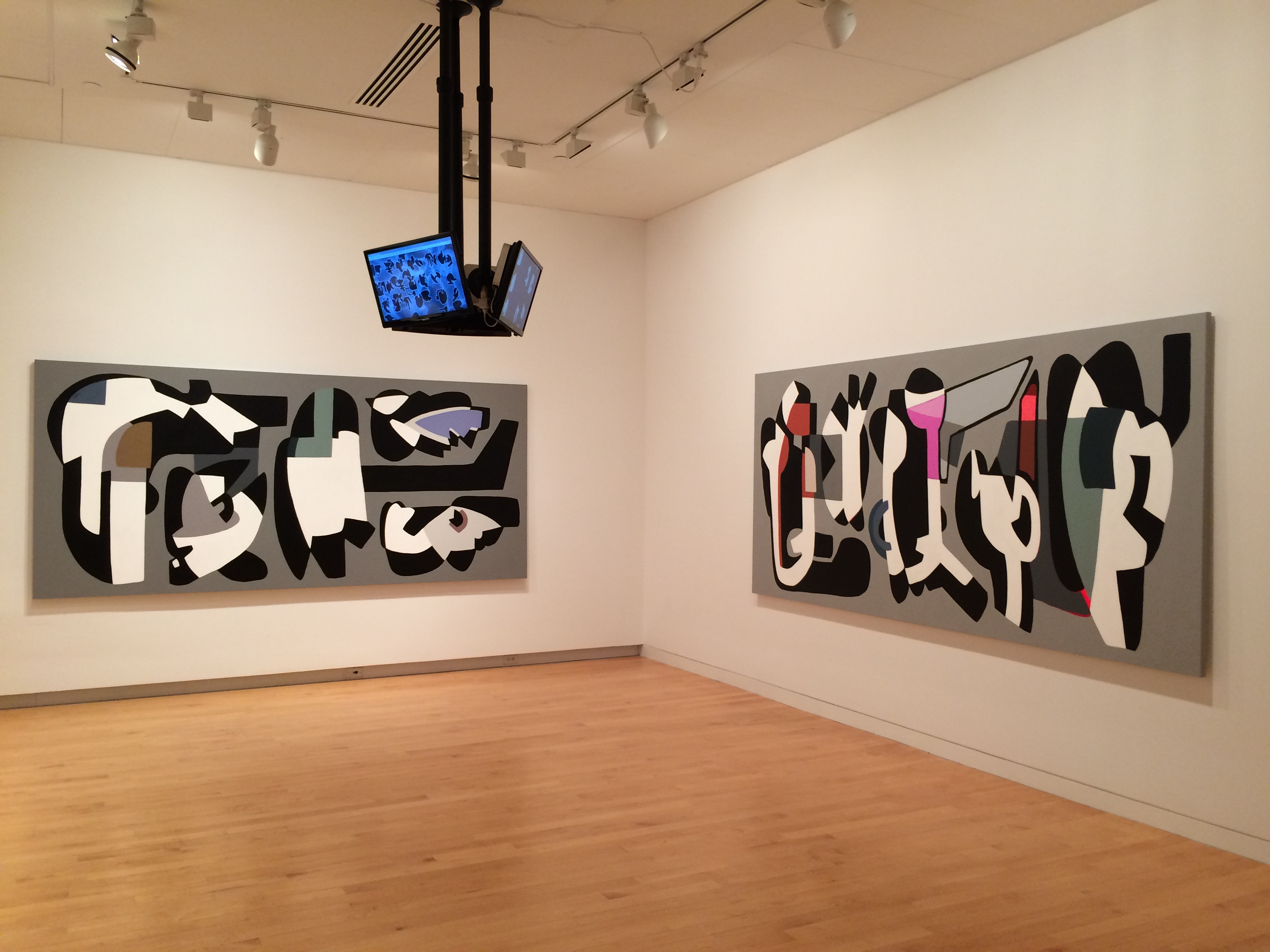
Gallery View

In the center of the gallery, video screens are suspended from the ceiling above eye level. Their placement and size are like an airport terminal or waiting room. Each screen is playing one of Pozanti’s digital videos featuring images generated from the “Instant Paradise” alphabet. The videos have a sound track of abstract poetry developed by assigning the shapes sounds.

Hayal Pozanti’s work relates to mathematics in two ways. The images have been created using algorithmic rules to explore the permutations of possibilities combining 31 distinct shapes. The paintings and videos are also an expression of computer’s ability to mimic human processes, as well as, how humans react to the technology that is now part of everyday life.

Susan Happersett
Sjoerd Hofstra with Karen O’hearn at Rare

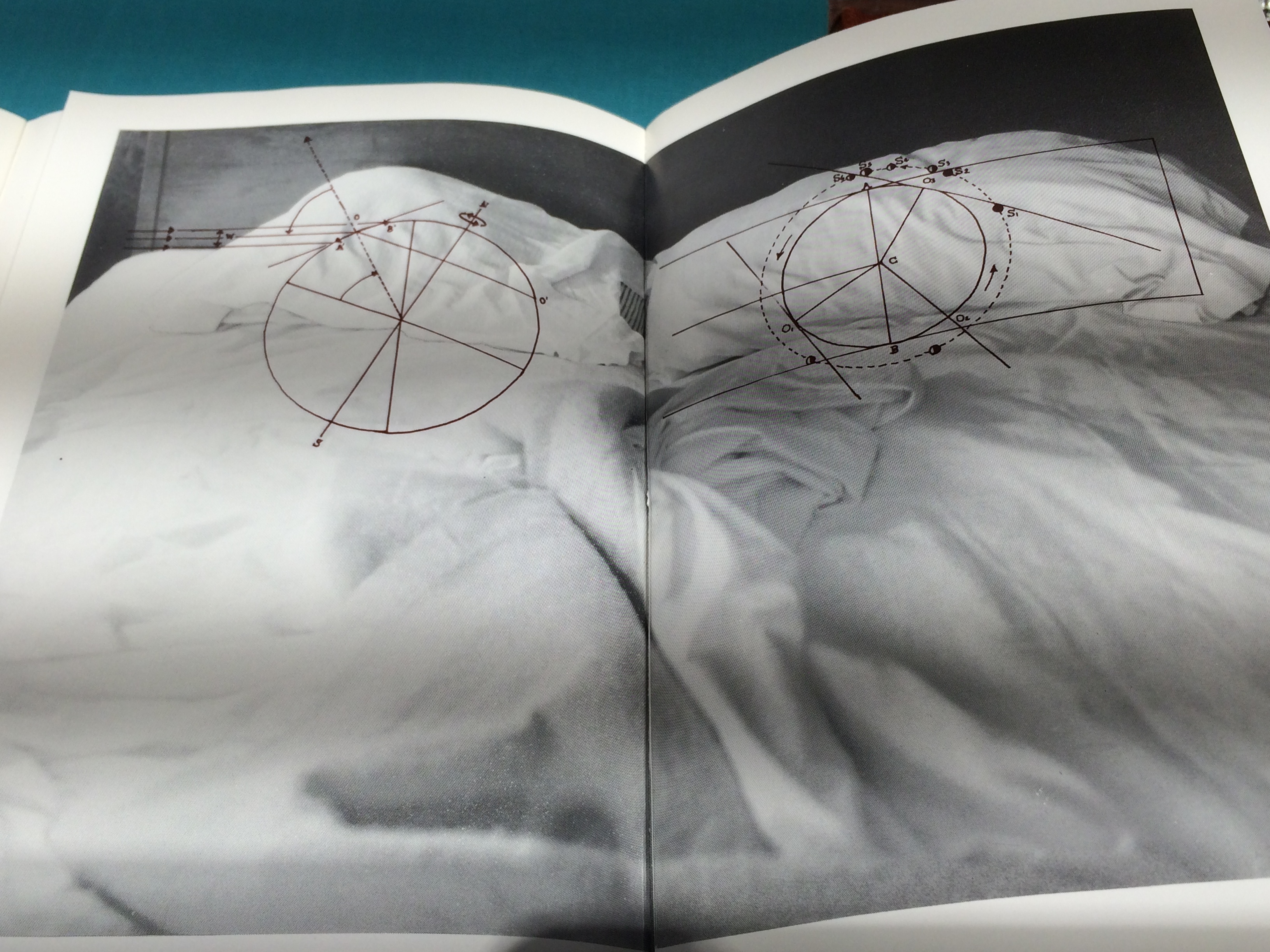
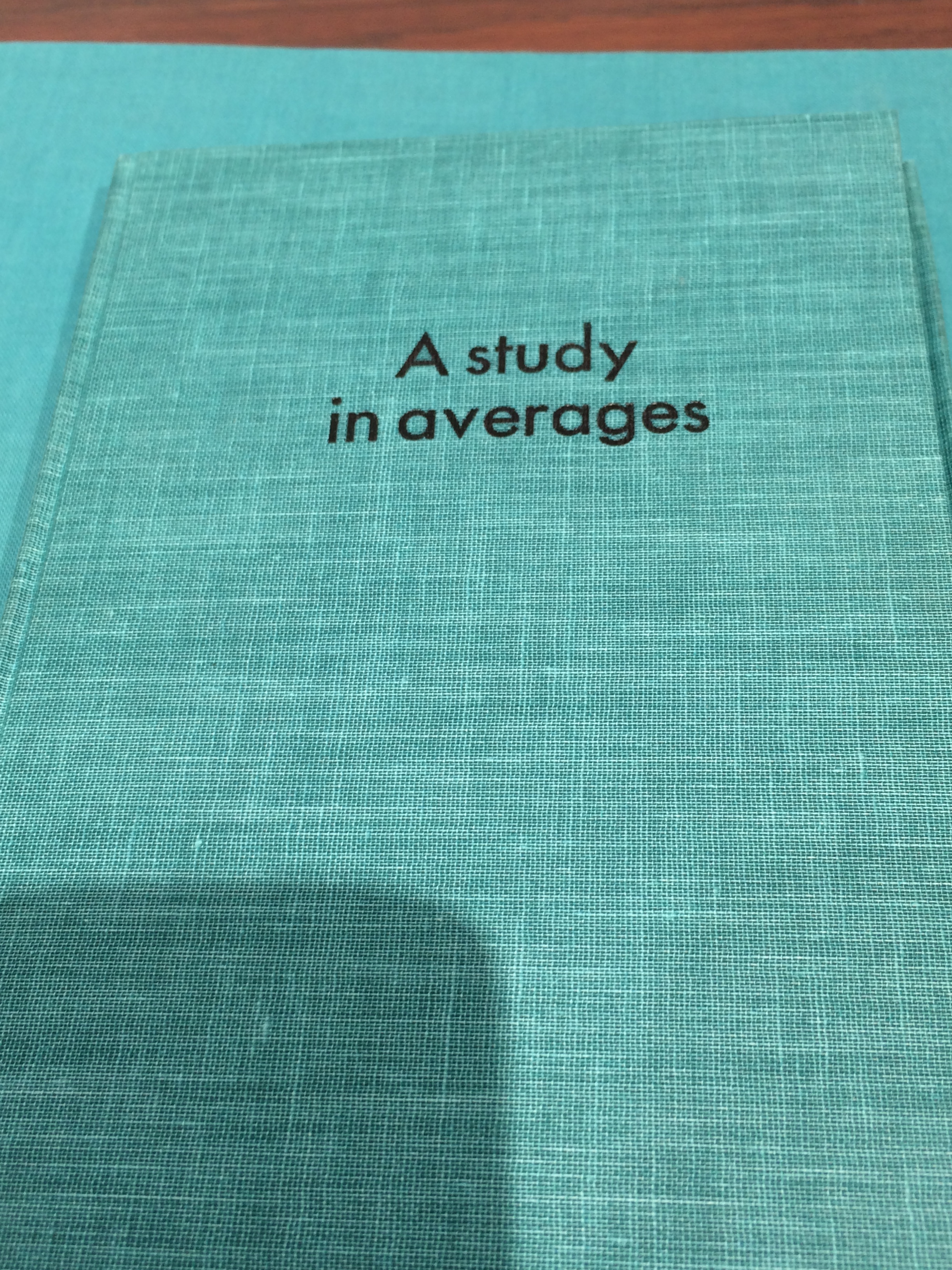
Glenn Horowitz Bookseller’s gallery Rare is currently showing the work of Sjoerd Hofstra with Karen O’hearn. On display are some of their artist’s books, featuring finely engineered kinetic elements. The subject matter of these books is directly mathematical. “A study in Averages” is a schematic treatise on the relationship between averages and society.

16-04-01

16-04-02

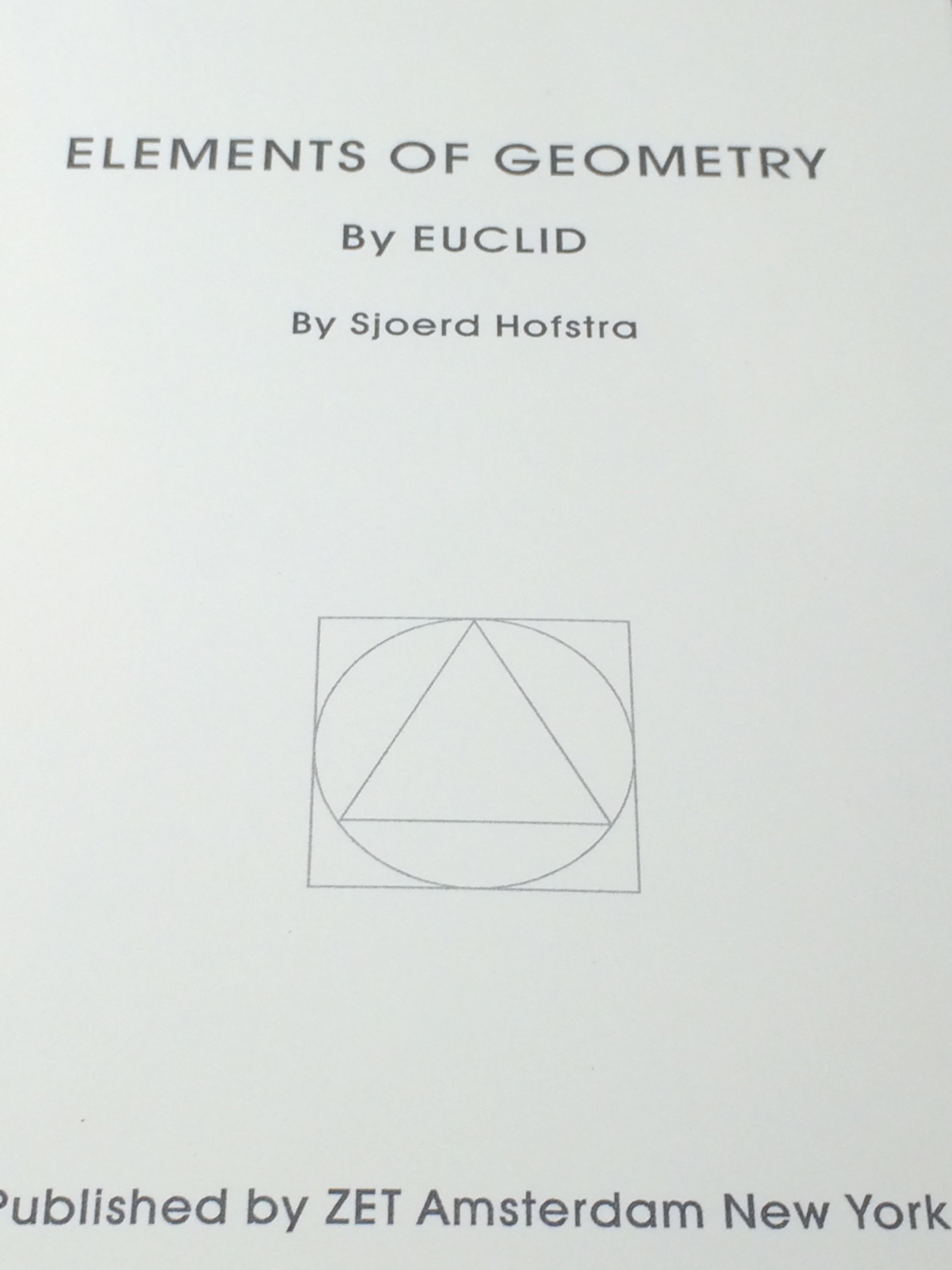
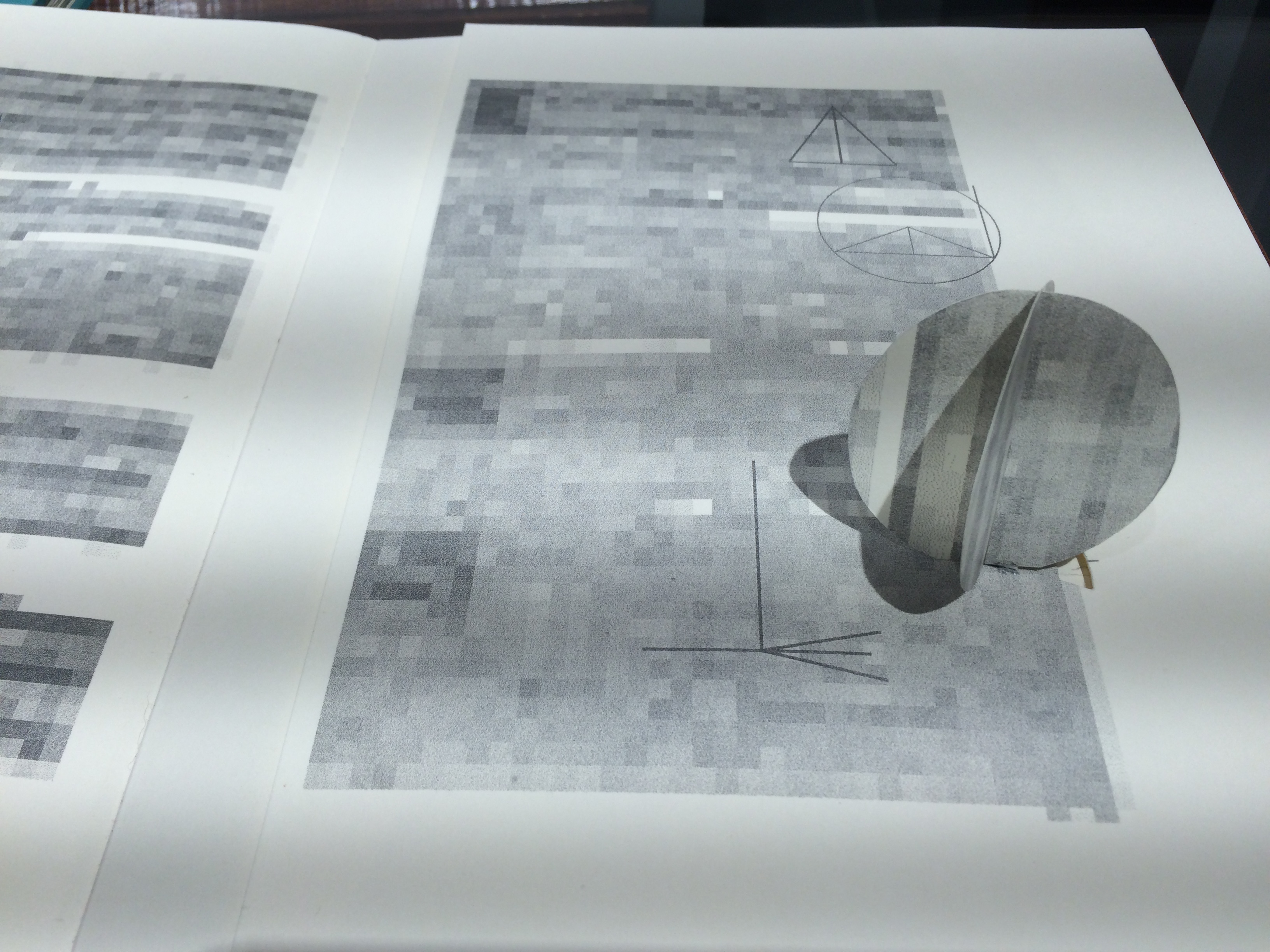
“Elements of Geometry by Euclid” includes pop-ups of the geometric solids. The mathematical texts have been blurred and instructional line drawings have been added.


16-04-04

16-04-03

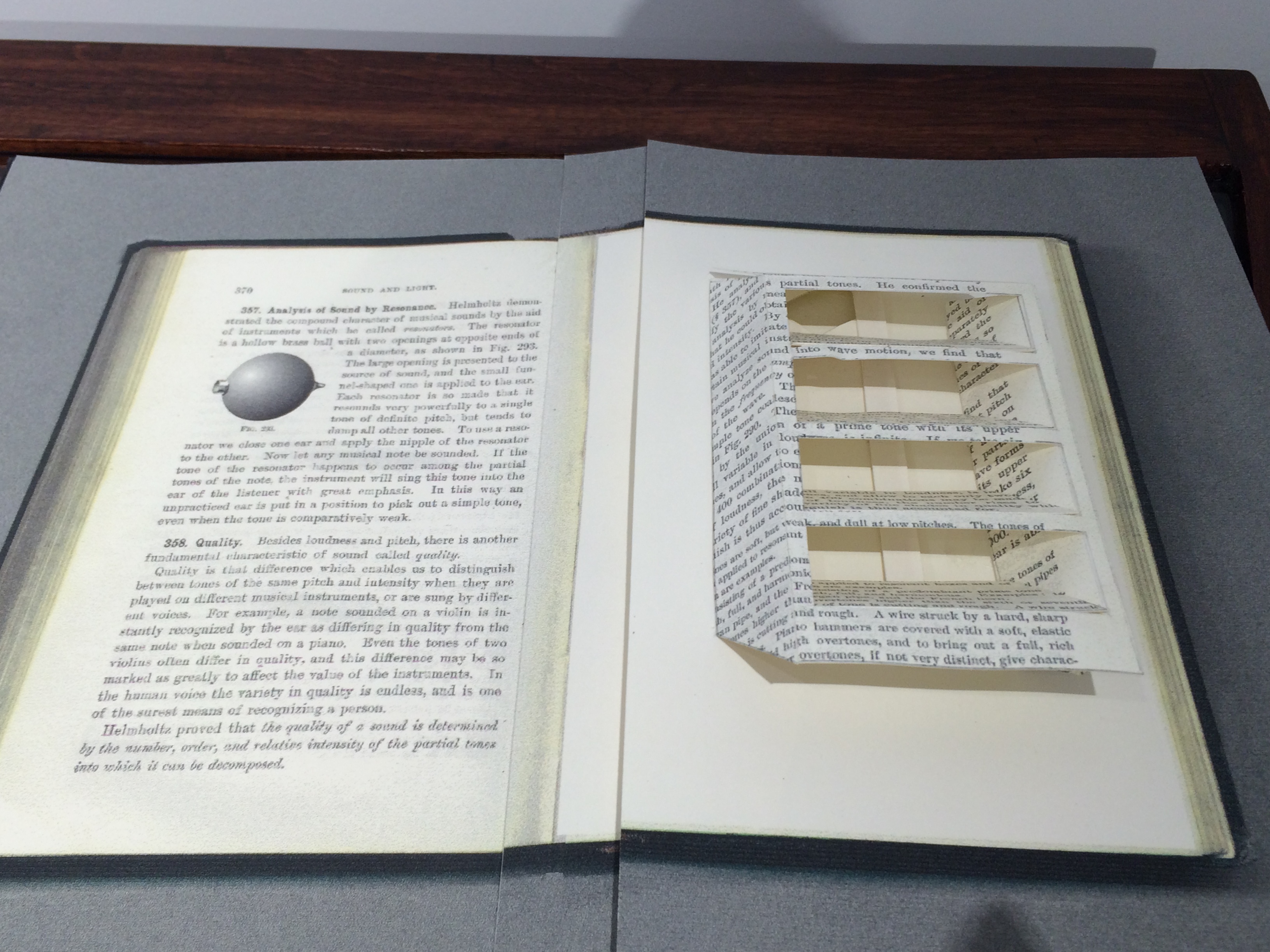
“6 Empty Bookcases” is more architectural, but each of the bookcases presents interesting geometric 3 dimensional properties as it folds off the page.

16-04-05

What I find refreshing about Hofstra’s and O’hearn’s books is the clear unabashed connection to the mathematics. Whether addressing the societal implications of the use of averages, or creating their own interpretation on the historical Euclidean text, or using sophisticated calculations to build their geometric bookcases, the artists embrace mathematics.

I realize how difficult it is to see the true interactive nature of these books through my inadequate photos. The artists have provided a video link so you can see their work in action.

Susan Happersett
Gregory Hayes at Nancy Margolis Gallery

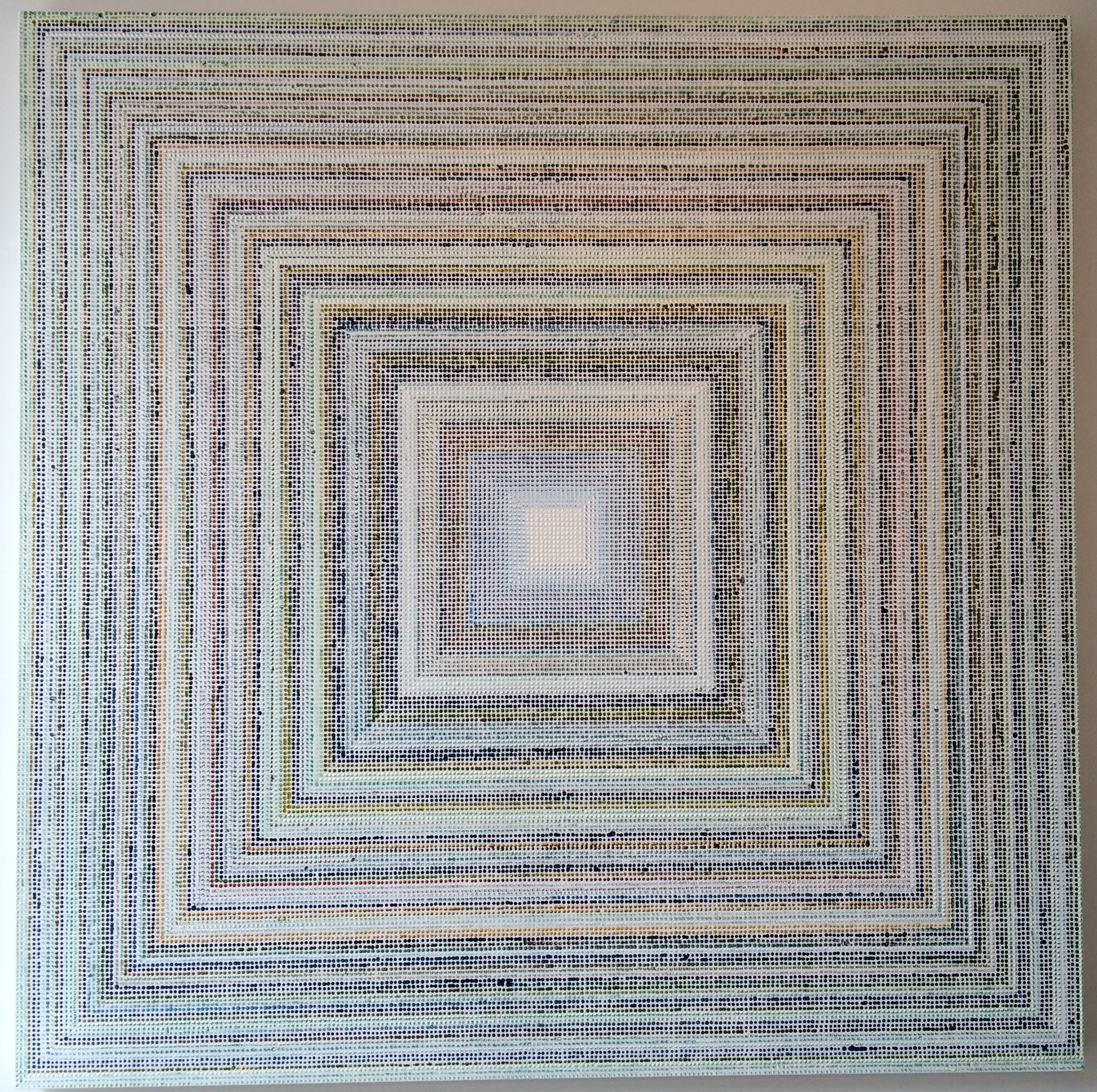
The Nancy Margolis Gallery in Chelsea is currently exhibiting Gregory Hayes’ paintings. These works begin with a graphite grid drawn onto the canvas. The artist places a drop of paint into each grid space. The pigment is applied using a plastic squeeze bottle filled with layers of different colors of acrylic paint.

15-43-2

Untitled (BYR)
Picture courtesy of the artist and the gallery

In “Untitled (BYR)” Hayes uses the square grids to build a work based on concentric squares. The mix of color in the droplet of paint changes to create an order 4 rotational symmetry. These paintings have aesthetic properties on two scales. Although Hayes consciously layers the paint in the squeeze bottles, the micro environment of the swirling colors in the droplets have a free flowing quality. By painstakingly applying drops in each grid space and adjusting the colors using rules the geometric macro environment of the concentric squares is much more rigid. The contrast between these two aesthetic qualities highlights the distinction between looking closely at a small element of the painting and seeing the work in its entirety.

Susan Happersett
Gilbert Hsiao at Select Fair

The Select Art Fair in NYC last week had an emphasis on Performance and Installation Art. I was not sure I would find any work with Mathematical elements besides my own work and the Tessellation prints of Dikko Faust. After the smoke cleared, and I mean that literally – an installation piece featuring mating bigfoot mannequins used a smoke machine during the busiest hours of the show – I was able to find some Math Art. The Transmitter Gallery exhibited the work of Gilbert Hsiao in their booth. I was particularly impressed with The sculpture “Headstone Friends”.
IMG_1861
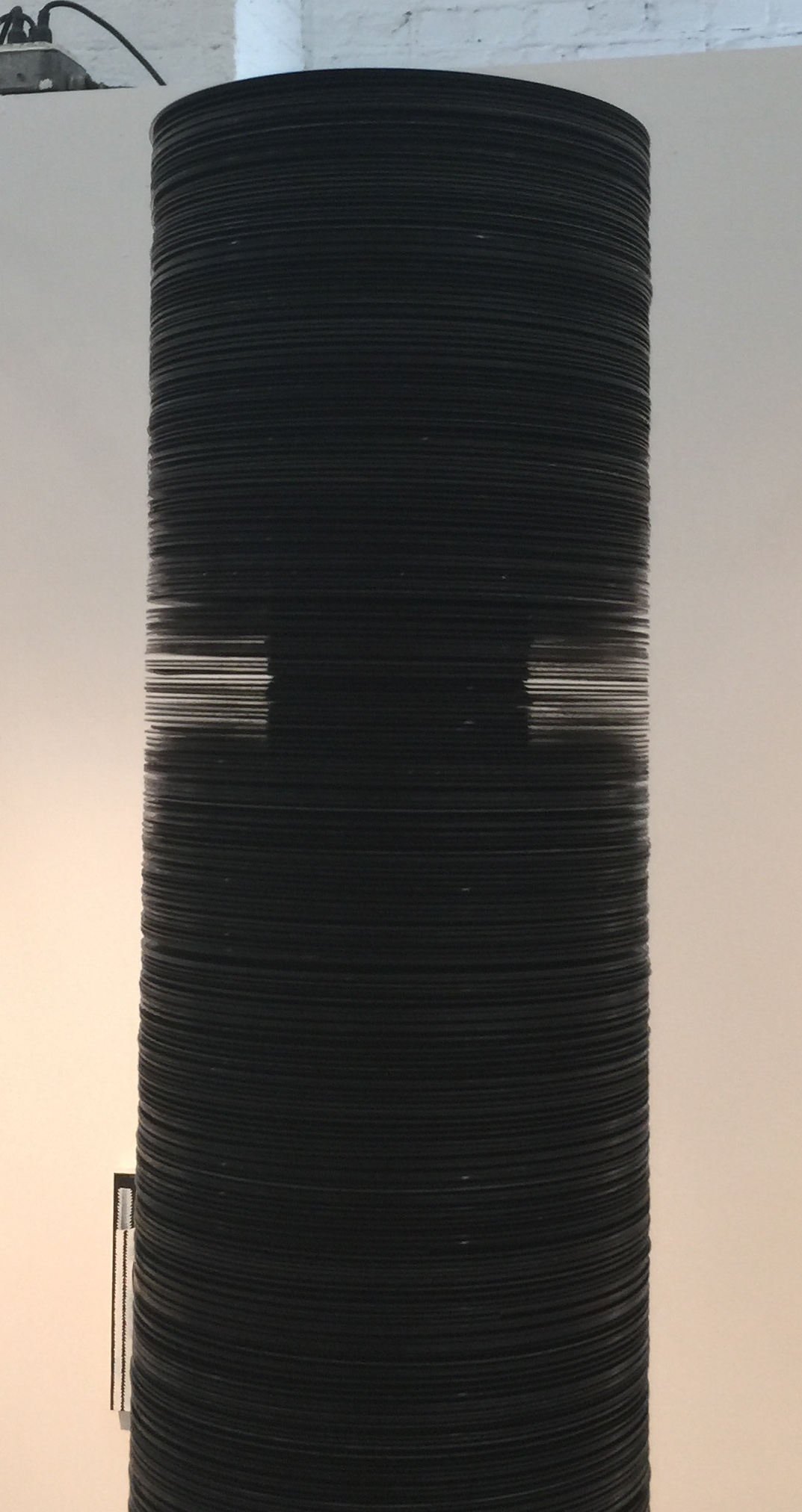
“Headstone Friends” from 2015 is a cylindrical column made up of a stack of vinyl records. The circular discs are all parallel with a uniform sliver of space between each record. There is a smaller solid column steel and concrete column running up through the center of the sculpture. The most amazing aspect of this work is the way the light shines through the records at the viewers sight line. Only when the viewer looks straight between the discs is the light between the vinyl visible. Here is a video demonstrating how the light moves up and down with the sightline.
“Headstone Friends” is an interesting use of circular discs to create a column but it is also about how the viewer’s line of vision behaves like a vector. Hsiao enables the viewer to take an active role in the mathematics.
Susan Happersett
Sarah Stengle – Inspirational Conics

I look at a lot of art and I find quite a bit of work with Mathematical elements, but when I find new art inspired by a book of Mathematical proofs and figures I get really excited. Stengle’s new and ongoing series of drawings is based on Apollonius of Perga’s book “Conic Books I-IV”.  Apolonius of Perga (262BC-109BC) was an ancient Greek geometrist who is famous for his innovated work in the mathematical field of conics. He explored the properties of conic sections and furthered our understanding of ellipses, parabolas, and hyperbolas.

Stengle has been collecting vintage postcards for a year. These postcards serve as the background image for her drawings. The choice of postcards is very important, as the artist looks for older non-glossy cards that can be drawn on. The subject matter on the card must also be fairly uninteresting visually so they can support but not over power Stengle’s mathematical imagery.

Each drawing is based on a proposition from “Conics Books I-IV”. There are three types of cards in this series. Some of the cards feature an accurate figure from a proposition in the book. In this case the book and proposition are written on the back of the card. Some of the other drawings have deviations from the figures in the book, but the aesthetics are interesting. Here the artist uses the work, and states the proposition and the fact there is a error on the back of the card. Finally, there are drawings that are imaginary propositions inspired by a particular figure.

Stengle_Postcard from Perga_Moraine Lake72_imaginary Prop 6Med Low Res

“Perga Moraine Lake 72”

The card “Perga Moraine Lake 72” is the third type of card: it features an imaginary proposition. The artist had started to draw an Apolonius of Perga proof, but stopped at a point when the drawing reached a point of aesthetic completion. From the tip of the cone to its elliptical base, the mathematical figure leads the viewer’s eye from the mountain peaks in the landscape behind the lake to the shoreline.

Stengle_Postcard from _Perga_Book1_Prop2_third_image_2015

“Post Card from Perga, Book 1, Proposition 2 Third Image”

This second Post card from Perga, “Book 1, Proposition 2 Third Image” shows the third of the four figures in the proposition. The background card is an overexposed photo card of a horse . The uneven quality of the card could be due to the fact it was probably made to promote the sale of the horse. This card features a figure drawn directly from the text with no changes. The axis of symmetry of the mathematical figure goes through the center of the animal.

Stengle_Postcard_from Perga_Book1Prop4_Med Low Res

“Lilac Conics Book 1 Proposition 4”

“Lilac Conics, Book 1 proposition 4” is also an accurate representation of the proposition in  Apollonius of Perga’s book. The four conics are lined up along a beach mimicking the points of the masts of the fishermen’s boats.

Using carefully selected appropriated images as the backdrop for her geometric figures, Stengle has created a link between her mathematical subject matter and the world around us. The basis of the Perga post cards is an ancient text and the actual cards are vintage. When combined these elements lead to a sort of suspension of time. This series of work is a wonderful expression of the timeless aesthetics of Apollonius of Perga’s conic geometry.

Susan Happersett

Metro Curates

Every January there are a whole host of Art and Antique Fairs in NYC. One of my favorites is the Metro Curates Show. This event features dealers that together present a broad eclectic selection: Ethnographic Art, 20th century Modernist abstract paintings, folk art, as well as new work by contemporary artists.

15-4-1

Constantine Karron, Untitled, 1940’s
ink on paper, 16 x 13 in.
Picture courtesy of Ricco Maresca Gallery

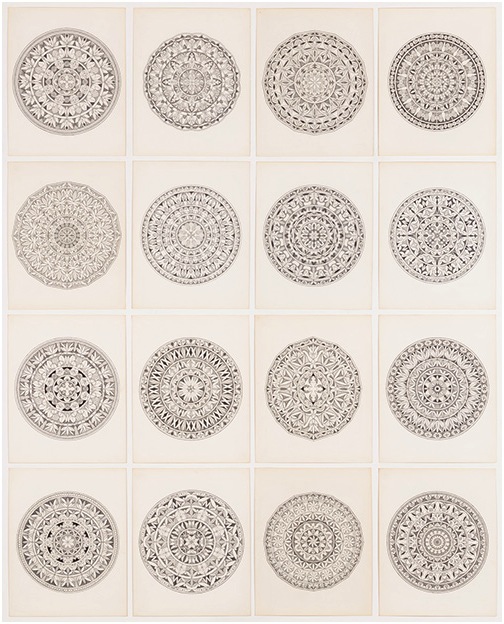
In the Ricco Maresca Gallery booth I found this amazing grid of drawings made in the 1940’s by Constantine Karron. These intricate works were all handmade using basic drafting tools. All but one of the 16 drawings are circles or regular polygons. The elaborate decorations feature rotational symmetries of varying degrees up to 16-fold. The precision and detail in these drawings is amazing. The only work that does not feature a circle or a regular polygon and  has only 2-fold rotational symmetry is the drawing in the third column from the left, and is the third down from the top of the grid. This is a drawing of an irregular 16-sided polygon (hexadecagon) that has both horizontal and vertical lines of reflection symmetry. Ricco Maresca Gallery is displaying and selling these works as a group. Although each of the drawings is very interesting on its own, together they have an even more powerful visual impact.

15-4-2

Annette Cords, “Combined Operations”, 2012
handwoven jacquard tapestry
Picture courtesy of Umbrella Arts

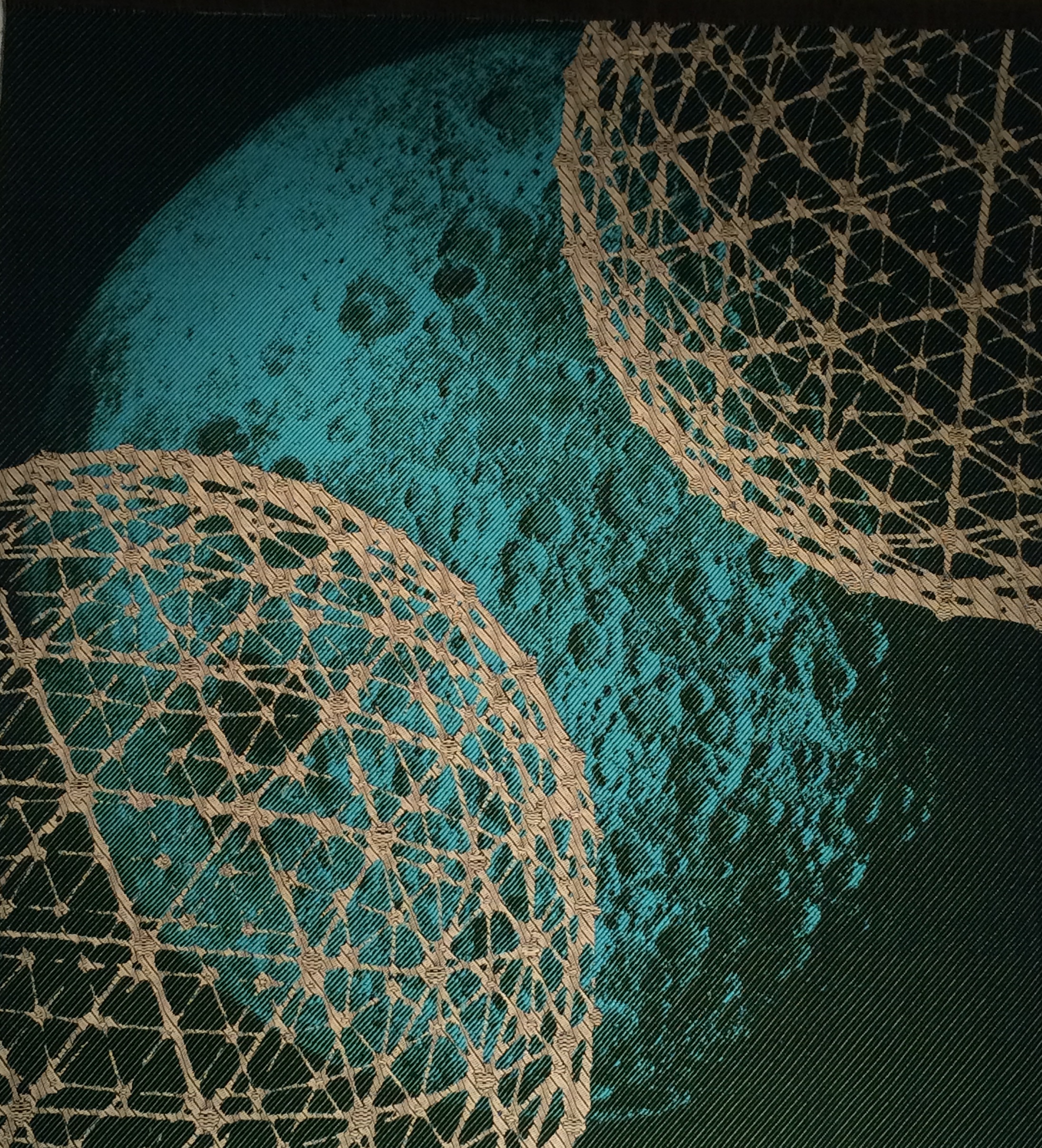
Annette Cords’ handwoven jacquard tapestry “Combined Operations” from 2012 was on display at the Umbrella Arts booth. I was immediately drawn into their space when I saw the geodesic spheres woven into this work. Cords also creates paintings and installations all dealing with systems of information and physics. The geometry of the spheres are quite clear but the jacquard weaving technique gives the lines a nice sketch quality. The lunar background gives the work an ethereal presence.
I spoke with Umbrella Arts gallerist and curator Margaret Bodell about my interest in Art and Mathematics and she gave me a preview of some of the amazing work that will be featured in the next show at their gallery in lower Manhattan.  The exhibition is titled “Off the Grid” and it will take place from February 5th to February 28th. I will definitely be heading downtown to see and review the show. I know already there will be art with interesting Mathematical connections.

Susan

Jan Schoonhoven at David Zwirner

The David Zwirner Gallery’s 20th Street branch in Chelsea is presenting a large show of the work by one of the most influential Dutch artists of the last half of the twentieth century, Jan Schoonhoven. A member of the Nul Groep in Holland, Schoonhoven was connected to the international art movement “ZERO Group”. The artist members of these groups worked to develop a type of art that was more objective then the more emotionally expressive art created after WWII. Schoonhoven established techniques to create monochromatic wall sculptures that relied on clean geometric lines to explore form,light, and shadows.

15-4-1

Jan Schoonhoven – “R70-28” – 1970

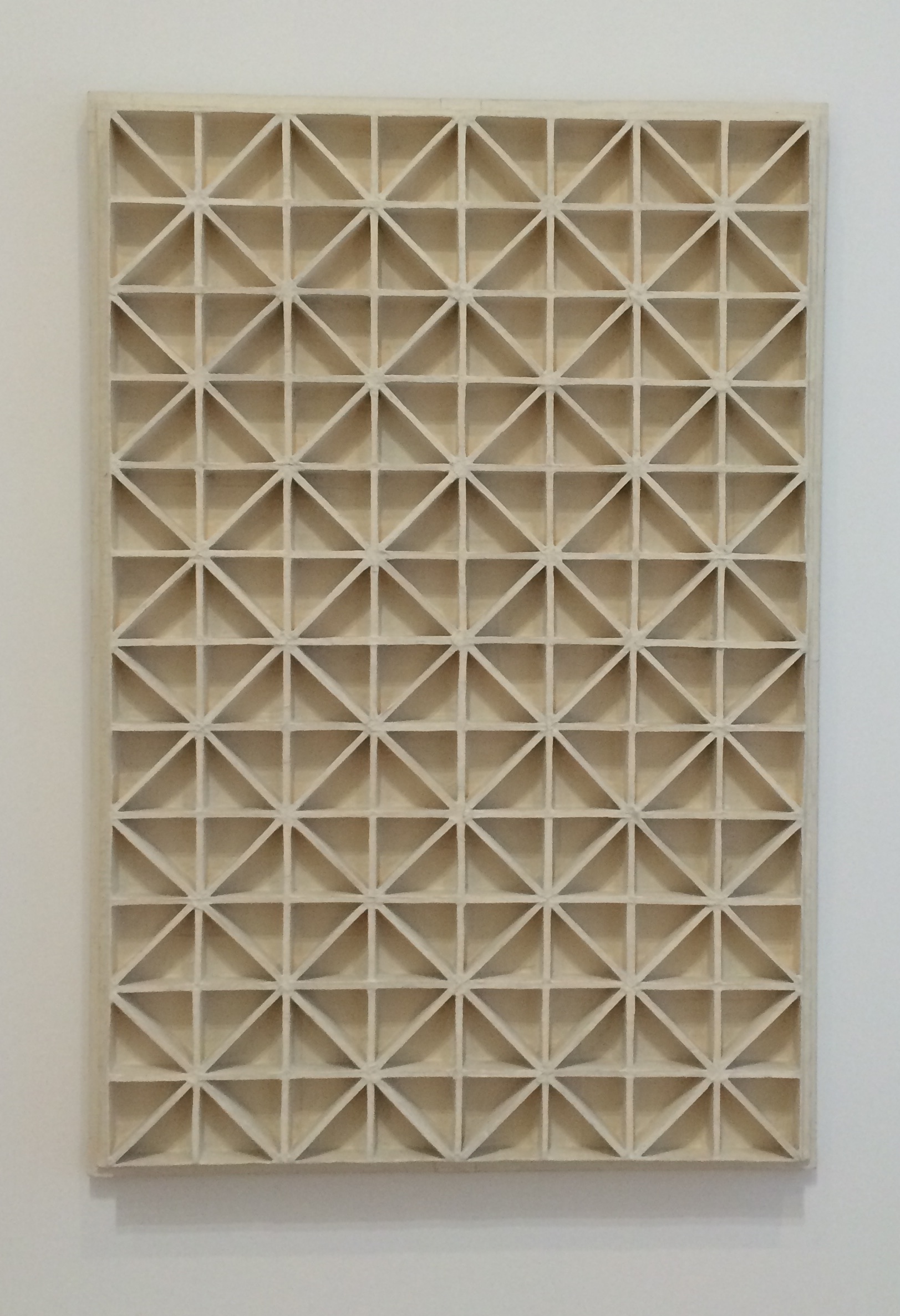
The rectangular grids like the ones seen in “R70-28” from 1970 are probably the types of structures that became most famous. A square relief sculpture with 5 columns with ten rows each. The white walls are the grid lines, creating rectangles with a 1:2 ratio of height to width. The exhibition at David Zwirner is quite inclusive and includes works on paper, earlier geometric work, as well as work featuring more complex geometry.

Schoonhoven used latex paint, paper, cardboard and wood to assemble these sculptures. The hand of the artist has given these 3-D spaces an ageless quality. Although the geometry is all straight edges there is a softness to the lines of these shadow boxes.

15-4-2

Jan Schoonhoven – “R69-33”

The work “R69-33” from 1969 has a rather complex pattern made up of trapezoidal surfaces. They are positioned into rows with horizontal axes of symmetry. The longer side of each trapezoid is closest to the viewer. This work offers a dramatic example of Schoonhoven’s use of shadows.

15-4-3

Jan SChoonhoven – “Diagonalen” – 1967

“Diagonalen” from 1967 is one of my favorite pieces in the show. The grid format is intact but by bisecting each grid square on alternating diagonals the artist has created a lattice of right triangles. One of the most exciting elements of Schoonhoven’s wall sculptures is that they change depending on the angle from which you see the art. As the viewer moves around the gallery the shadows are changing.

All pictures courtesy of the gallery.

Susan Happersett

Dianna Molzan at MOMA

The Museum of of Modern Art is currently hosting an exhibition of the work of 17 diverse artists entitled “The Forever Now, Contemporary Painting in an Atemporal World”. The work is all made in the 21st Century, and the general theme of the show is that this work does not have defining elements that would indicate when the work was produced. The term “atemporal” refers to timelessness, as well as the way the art incorporates ideas from the past. The internet offers contemporary artists access to massive amounts of images and texts about previous generations of  artists and their work. This knowledge is then incorporated into this new 21st century art.

Dianna Molzan has two works in the show that relate to the traditional rectangular dimensions of a stretched canvas paintings. The first, “Untitled 2010”,  features a set of wooden stretcher bars with canvas attached on the two vertical sides. the painted canvas has been slashed with a series of horizontal cuts that creates ribbons of canvas that drape down in curve.

15-2-1

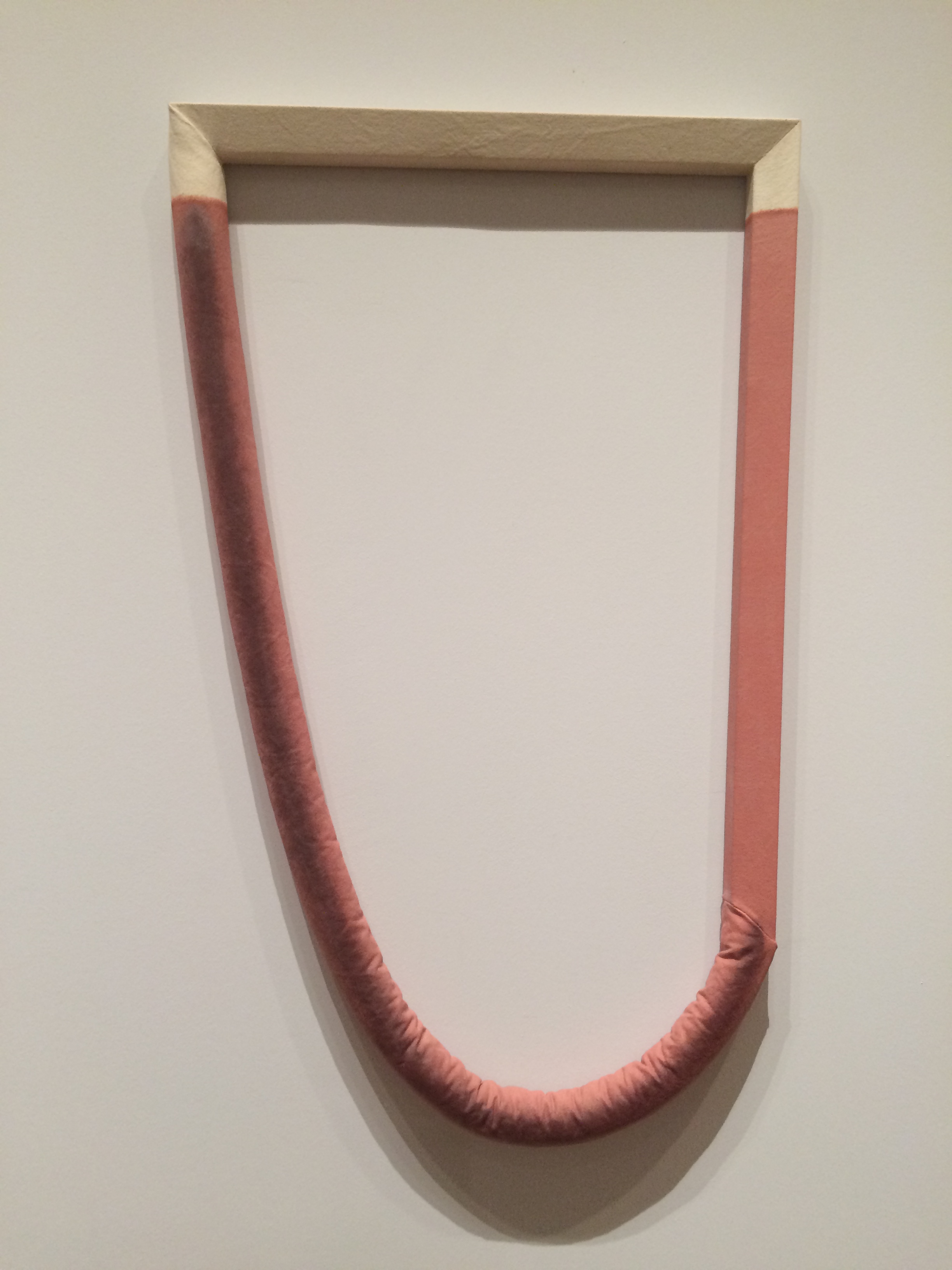
The second painting, “Untitled 2011”,  is also based on a rectangle, but instead of having all four sides made out of wood, the left side of the frame and the bottom edge have been replaced with a stuffed and painted canvas tube. This has created a slack curved line.

15-2-2

Both of these works address the idea of the rectangular perimeter of traditional easel paintings. Molzan has distorted the geometry of the shape by either slashing the canvas or replacing the stretcher bar with a fabric sculptural element.

Pictures courtesy of the museum and the artist.

– Susan Happersett

Central Booking – Art and Science Celebration

I have written about Central Booking before here. It is a Lower Eastside Gallery run by Maddy Rosenberg that specializes in Art & Science-related content, as well as book arts. On Thursday, December 4, there will be a gathering for contributors to their current campaign. This cause is close to my heart, obviously. And, they will be serving chocolate and champagne while you’re checking their new exhibition “Psyched“.

Chocolate (from Central Booking's web site)

Chocolate (from Central Booking’s web site)

The event promises to be a lot of fun. If you are interested go here to make a tax-deductable donation and maybe I will see you there!

Lygia Clark at MOMA

The Museum of Modern Art in NYC is currently hosting a huge retrospective of the work of Lygia Clark (1920-1988). Clark was a member of the Brazilian Constructivist movement. The walls of the first few rooms of the exhibition display the artist’s geometric abstract paintings.  On platforms in the center of the gallery, an assortment of  her hinged metal sculptures are on display. It is these sculptures I would like to discuss. There are a number of excellent reviews of the show online – the Brooklyn Rail is an example – but I would like to focus on the sculptures. Clark created these sculptures so that viewers could manipulate the shapes, creating different
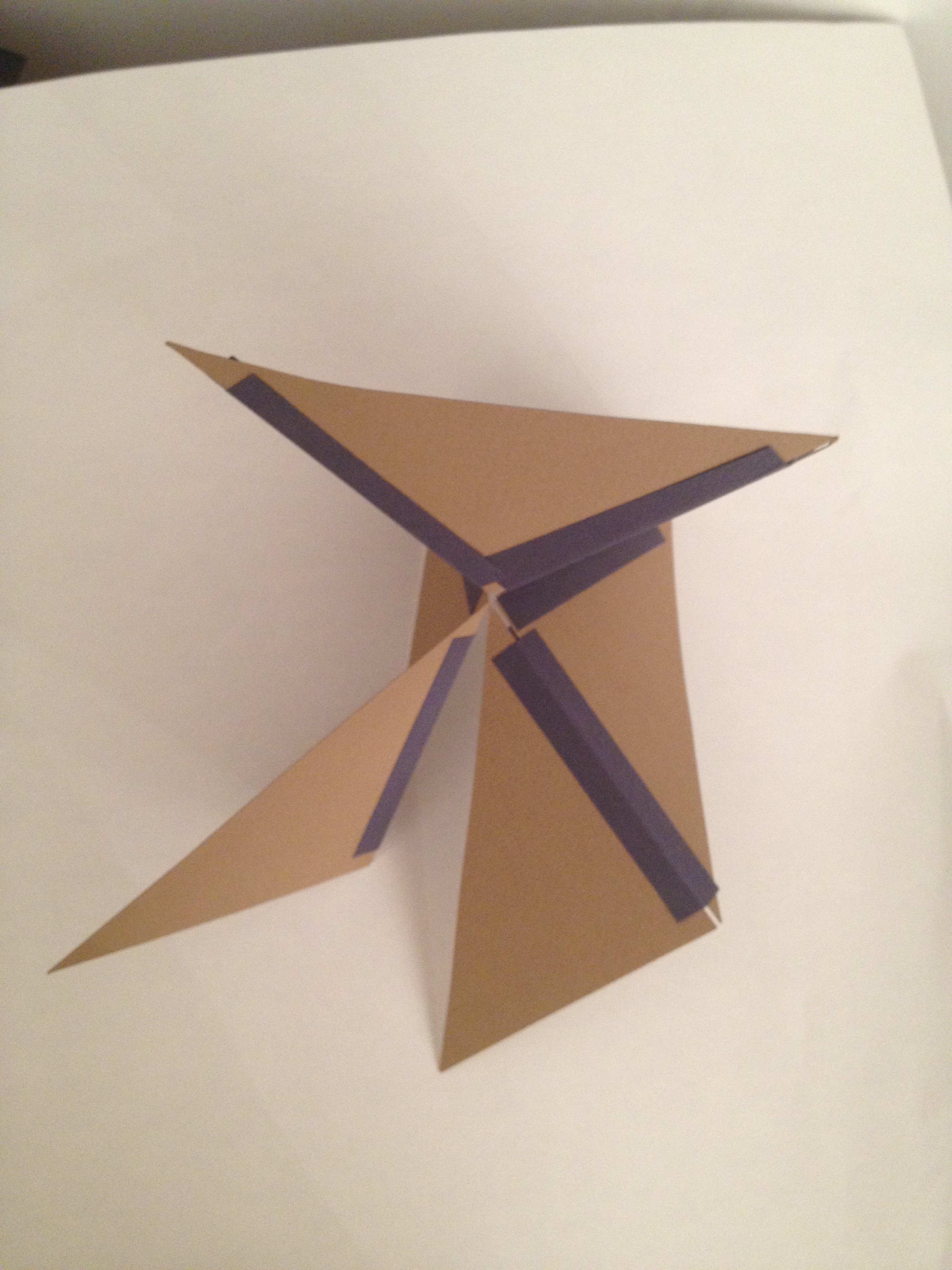
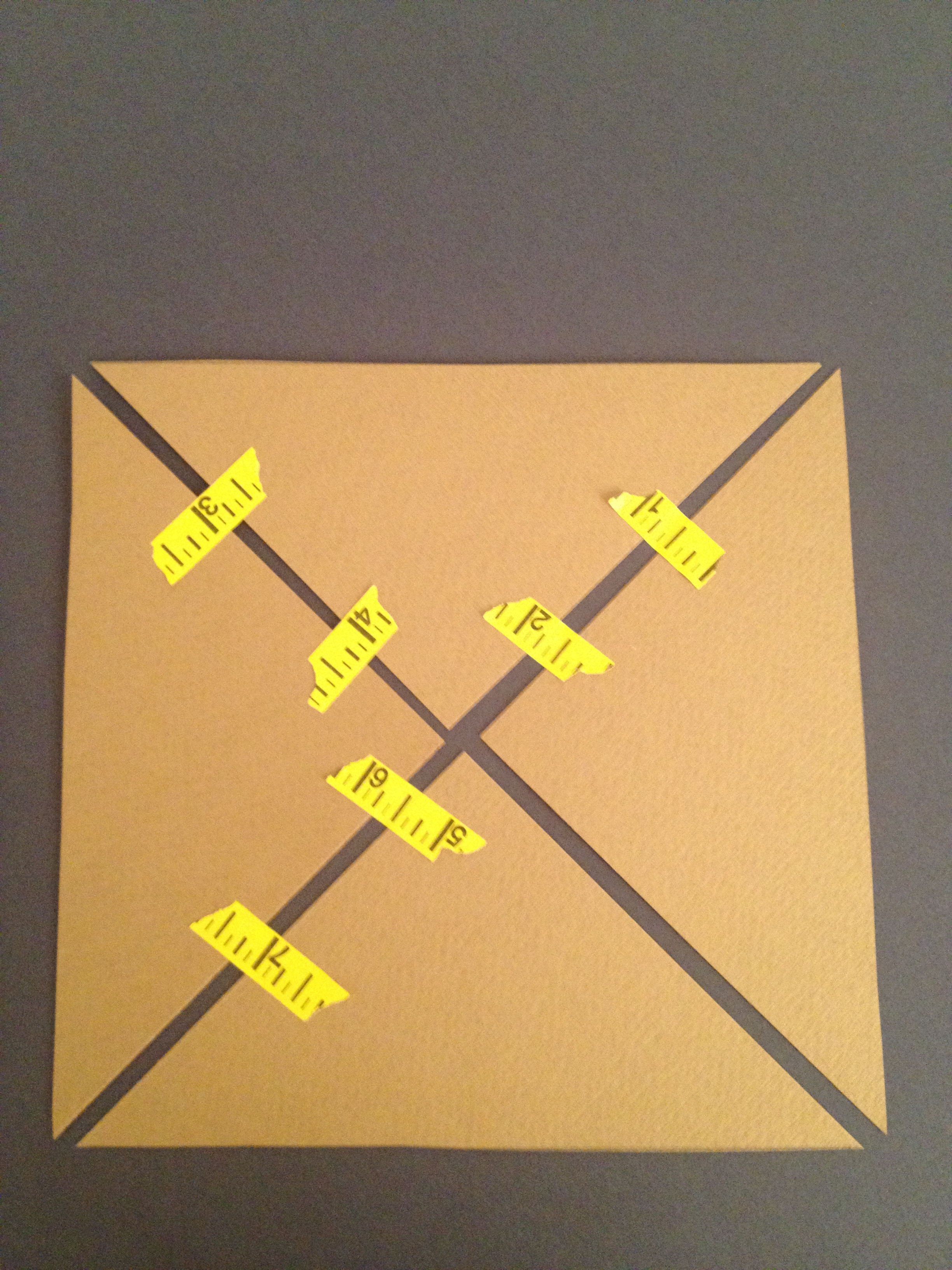
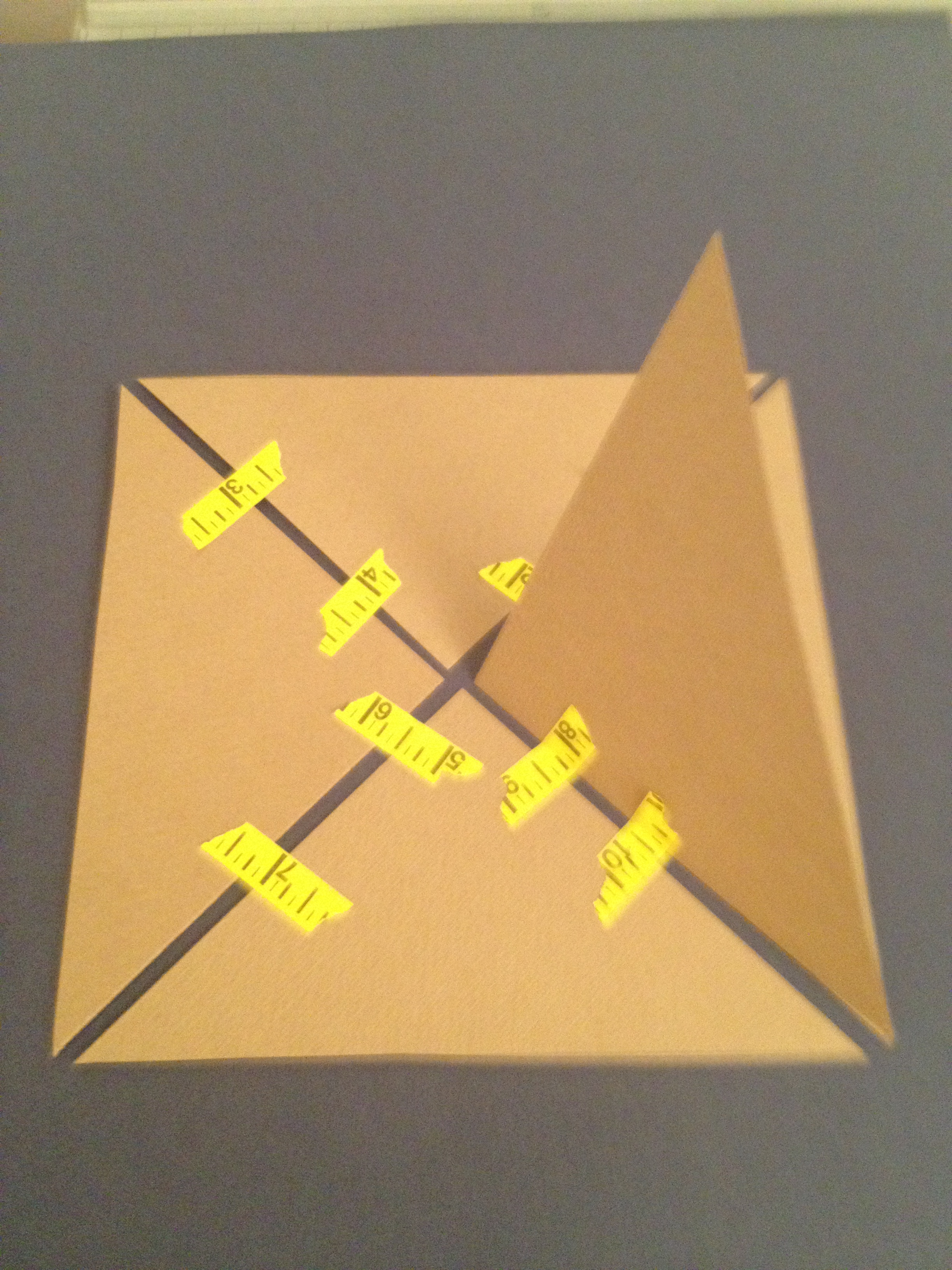
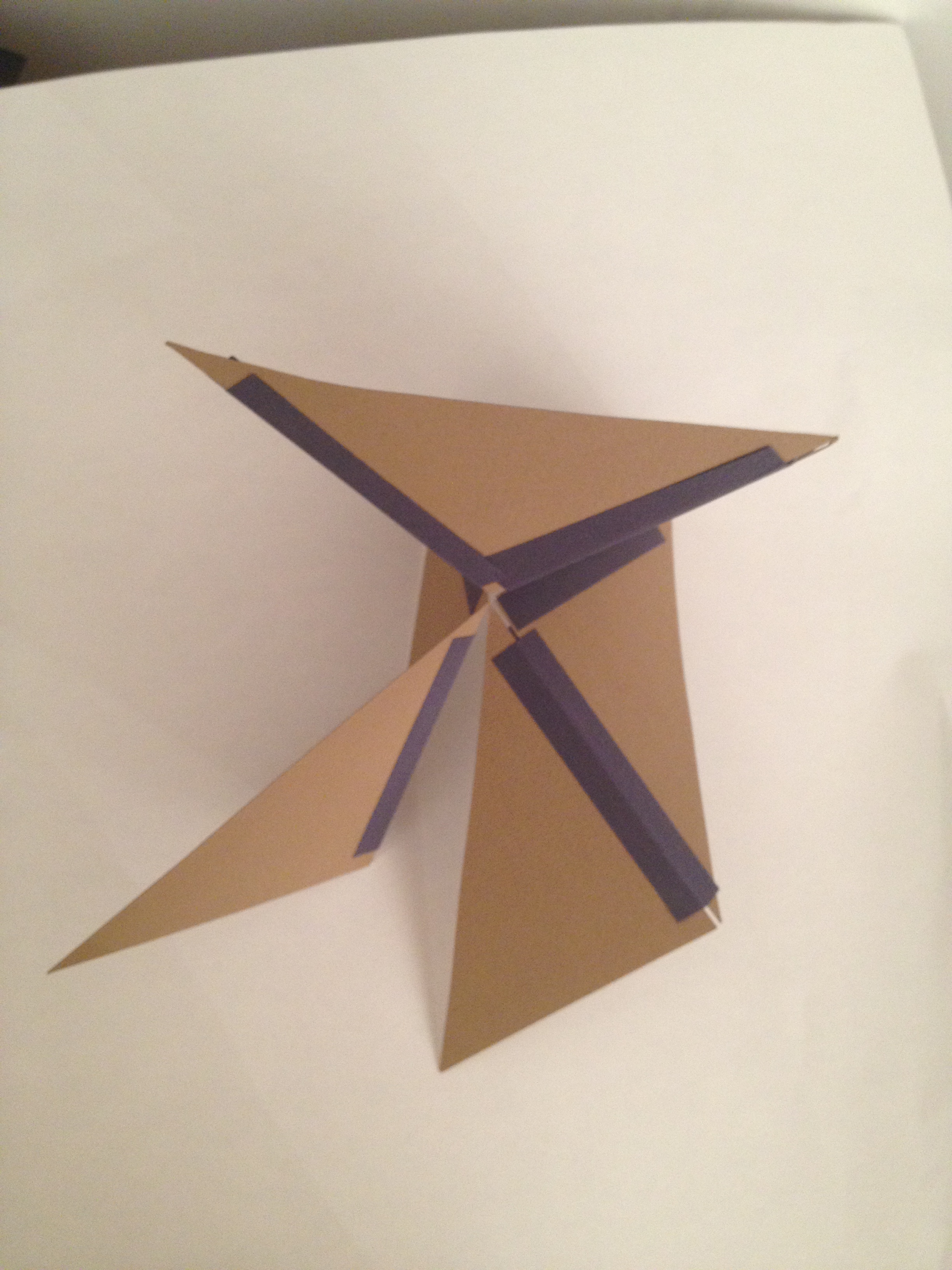
forms, becoming part of the artistic process. At the MOMA show work tables are set up throughout the galleries with reproductions of the sculptures available for the public to participate. Photography is forbidden in these galleries so I decided to reproduce one of Clarks’s more simplistic forms using paperboard and tape and taking photos of my model.

28-1

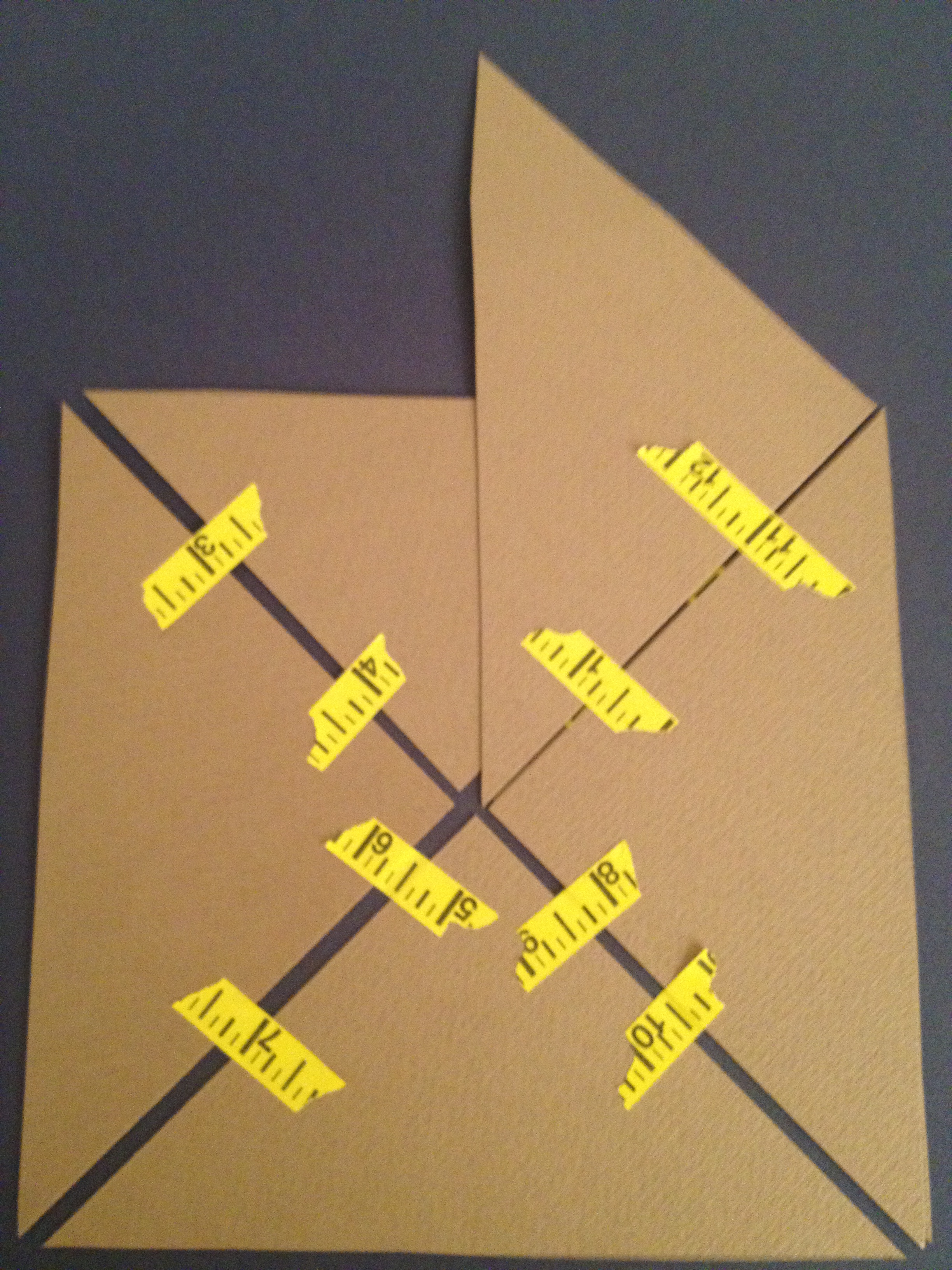
Here is the construction process, in case you want to make one. You will need seven congruent isosceles right triangles.
28-2
Lay out four triangle to form a square and make three hinges leaving two triangles attached on only one side.

28-3

Take a fifth triangle and attache it to one those single attachment triangles so it is on top of the other triangle with one attachment .

28-4

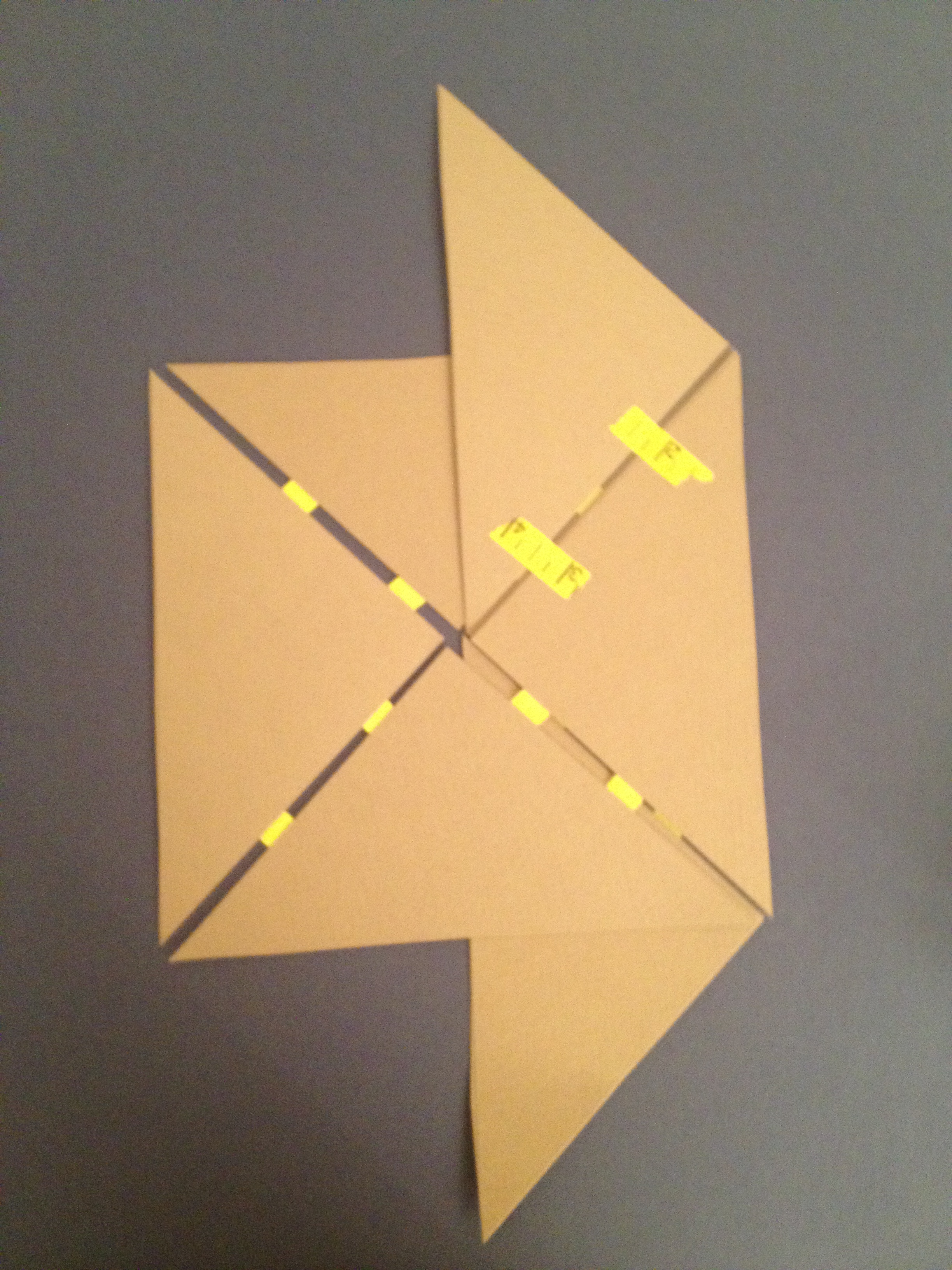
Add the sixth triangle to the fifth so they form a parallelogram.

28-5
Turn the structure over and attach the seventh triangle to the fourth triangle from the original square so you have like a trapezoid. Now you can stand up the structure in many positions.
28-6

— Susan Happersett