College Art Association Conference Math Art Lecture

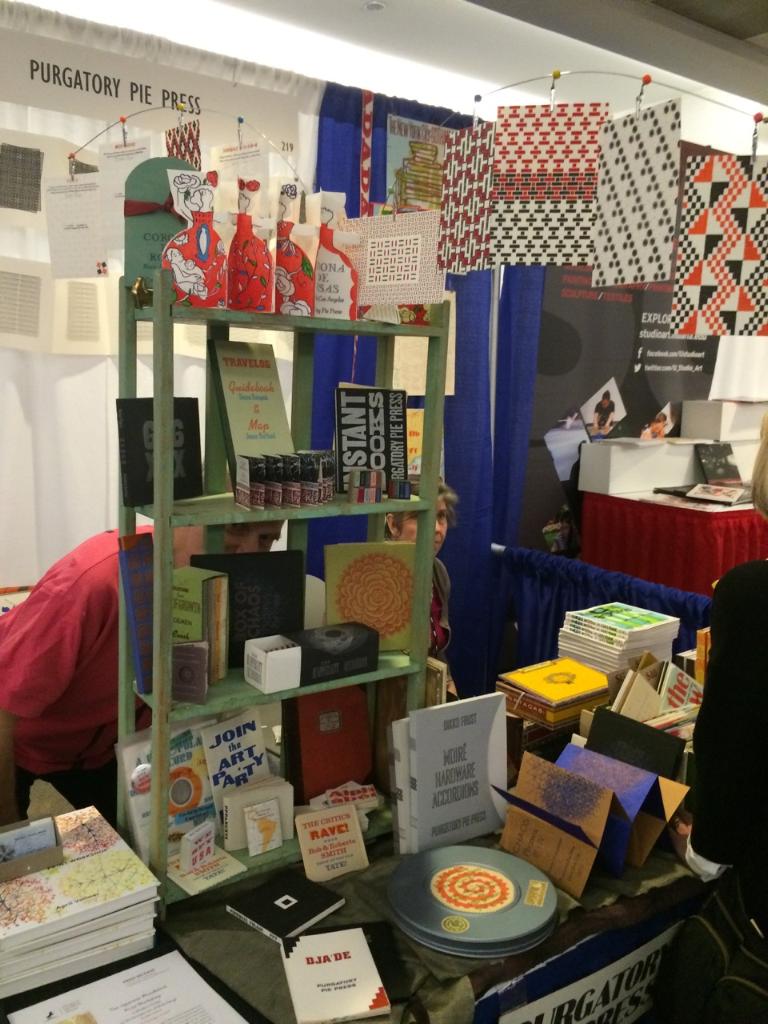
This Saturday, February 18 at 12 Noon EST, I will be speaking about mathematical art at the CAA’s annual conference at the Hilton Midtown in New York. I will be focusing on the works I have made in collaboration with Purgatory Pie press, which will be on display (and for sale).

College Art Association Conference
Hilton Hotel, 1335 6th Ave) at 53rd St
Second Floor – Rhinelander Gallery – Table 219
img_5763

Susan Happersett

Roy Colmer at Lisson Gallery

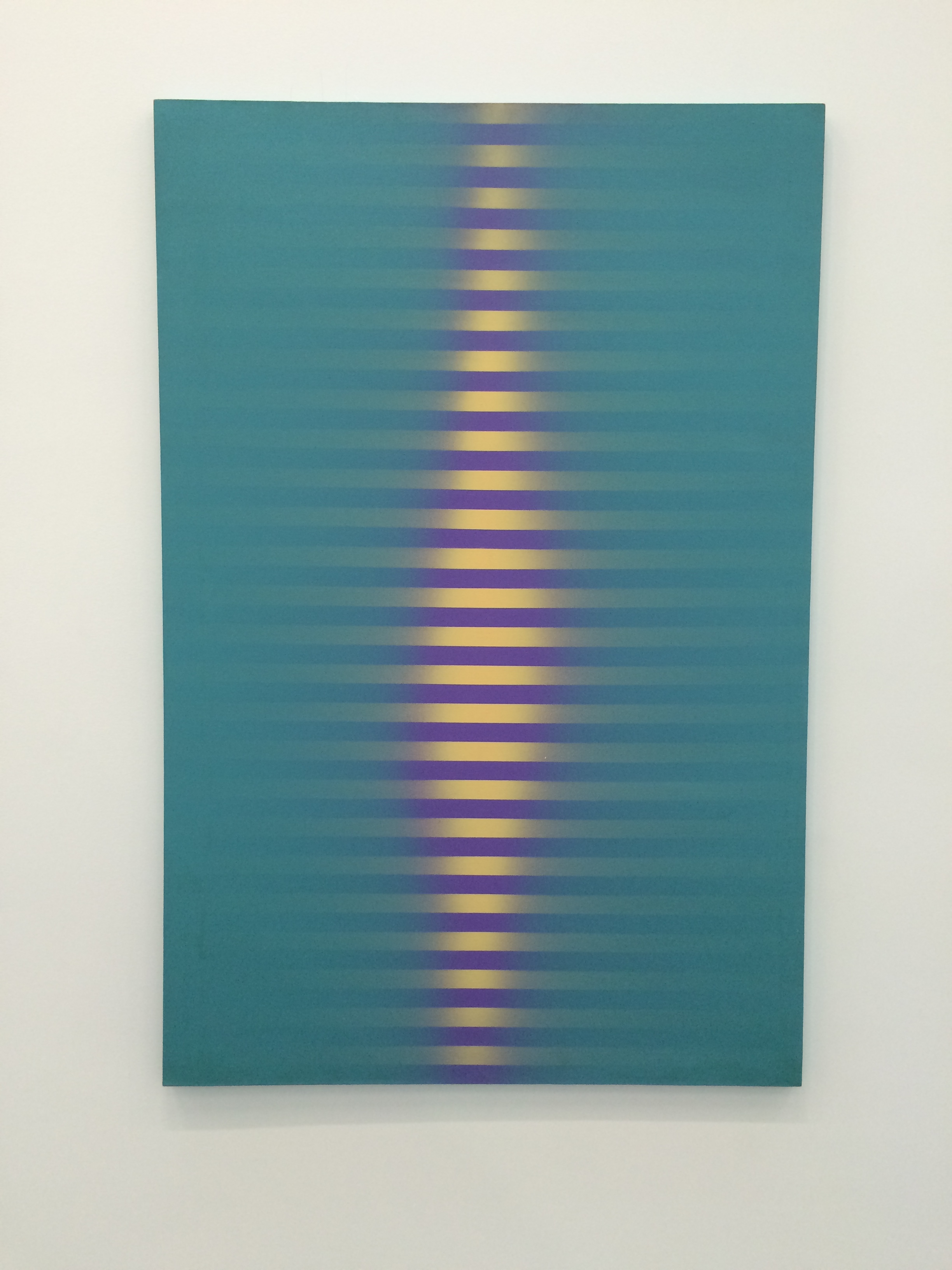
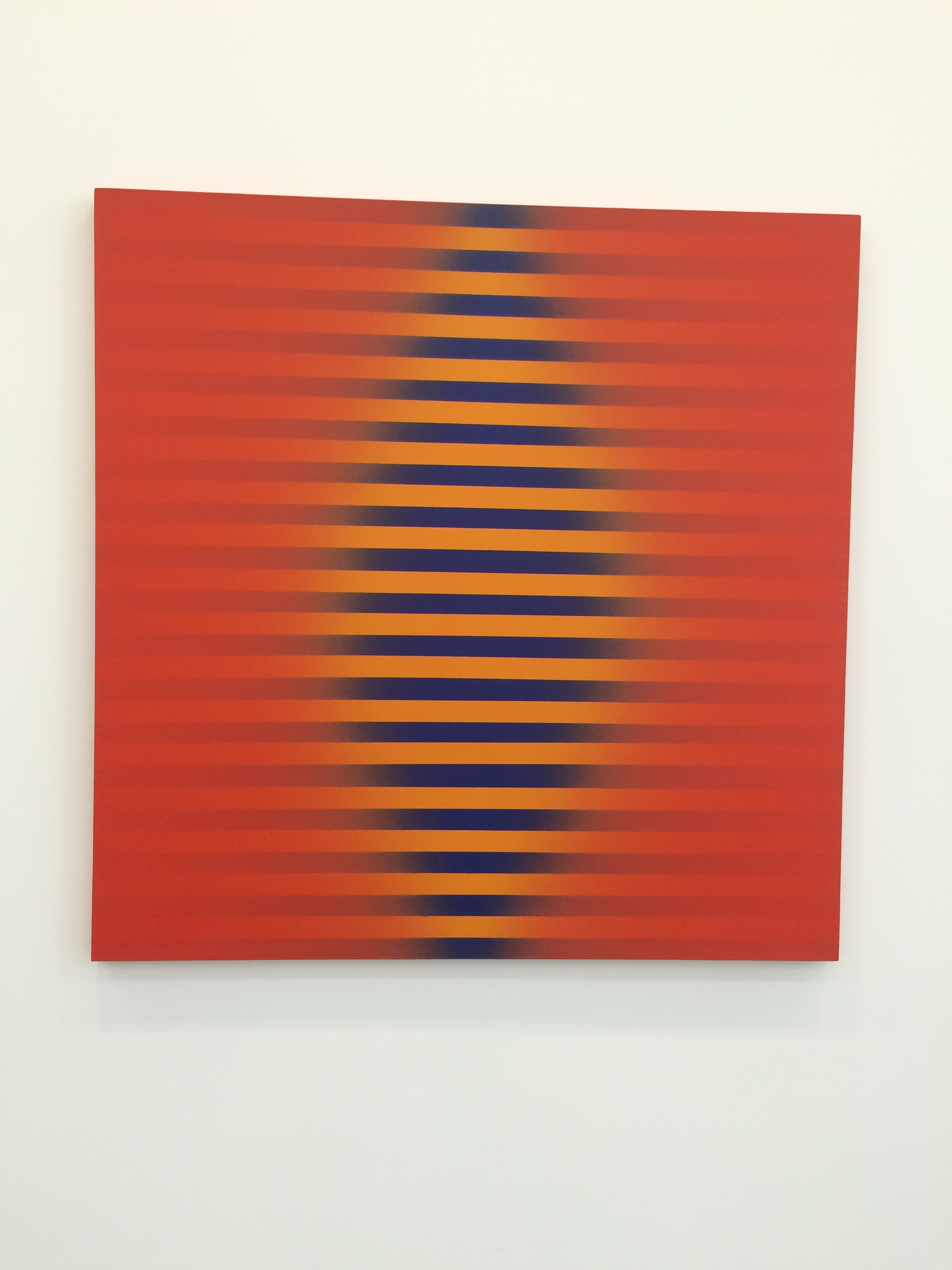
Although Roy Colmer was well known for his photographic work, in the late 1960’s and early 1970’s he produced a series of paintings on canvas. Currently on display at Lisson Gallery, this work was created by using tape to make bright horizontal bands of color, that where then painted over using a spray gun.

17-06-01

Roy Colmer, “Untitled #57”, 1970
Picture courtesy of Lisson Gallery

The practice of spraying a mist of paint applied a gradient of opacities over the hard-edge parallel lines. The resulting optical quality of the work relates to Colmer’s use of – what he referred to as –  “feedback” in his film and video work. These techniques seem to bend and distort the canvas plane altering the nature of the parallel line.

17-06-02

Roy Colmer, “Untitled #133”, 1971
Picture courtesy of Lisson Gallery

Susan Happersett

James Siena at Pace

James Siena artistic practice incorporates the use of rules to create art. I have written about his type writer work, as well as his sculptures, in earlier posts. Obviously I am a fan, and I was very excited to be able to see some of his recent drawings at the Pace Gallery on 24th st. This exhibition features work from three different series; “Manifolds,”, “Wanderers” , and “Nihilism”. All of the drawings are hand-drawn, geometric studies but the the series I feel that  has the most Mathematical implications is “Manifolds”.
James Siena Manifold X, 2015 No. 61220 Format of original photography: digital Photographer: Tom Barratt

James Siena
Manifold X, 2015
No. 61220
Format of original photography: digital
Photographer: Tom Barratt

“Manifold X” from 2015 addresses the artist’s interest in the field of Topology. Topology studies the properties of surfaces allowing them to change through the manipulations of bending growing and shrinking without being cut or broken or having attachments added. In “Manifold X” the orange, yellow and blue surfaces are homeomorphic, they each have nine holes within their shapes . The green surface is different because it ha sixteen holes. The four surface are woven together but each individual shape does not intersect itself.  Siena has managed to take a fairly complex field in mathematics and develop a system of rules to create work that aesthetically beautiful and also expresses his affinity for the subject matter from which it is derived.
Susan Happersett

Dan Walsh at Paula Cooper Gallery

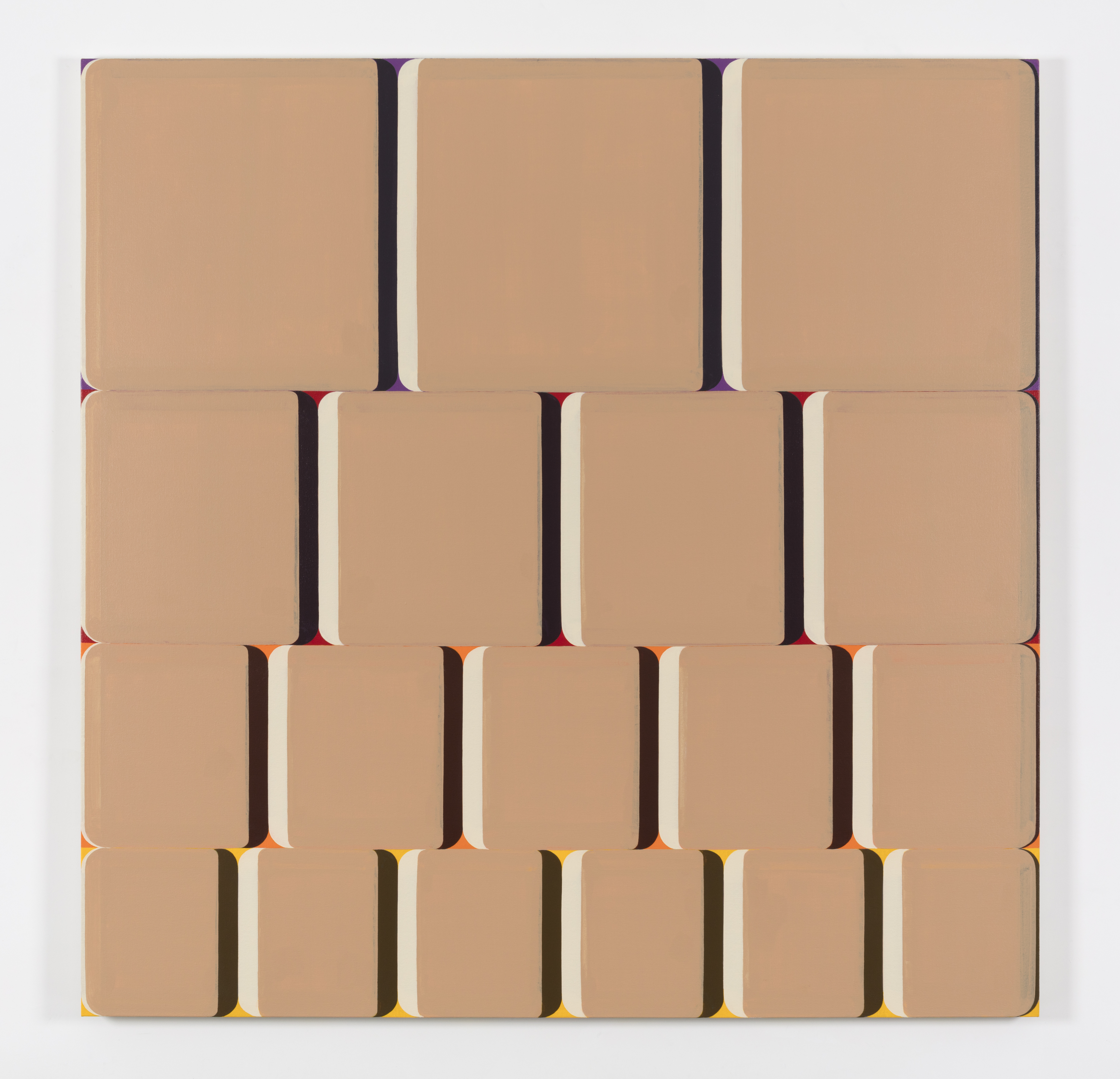
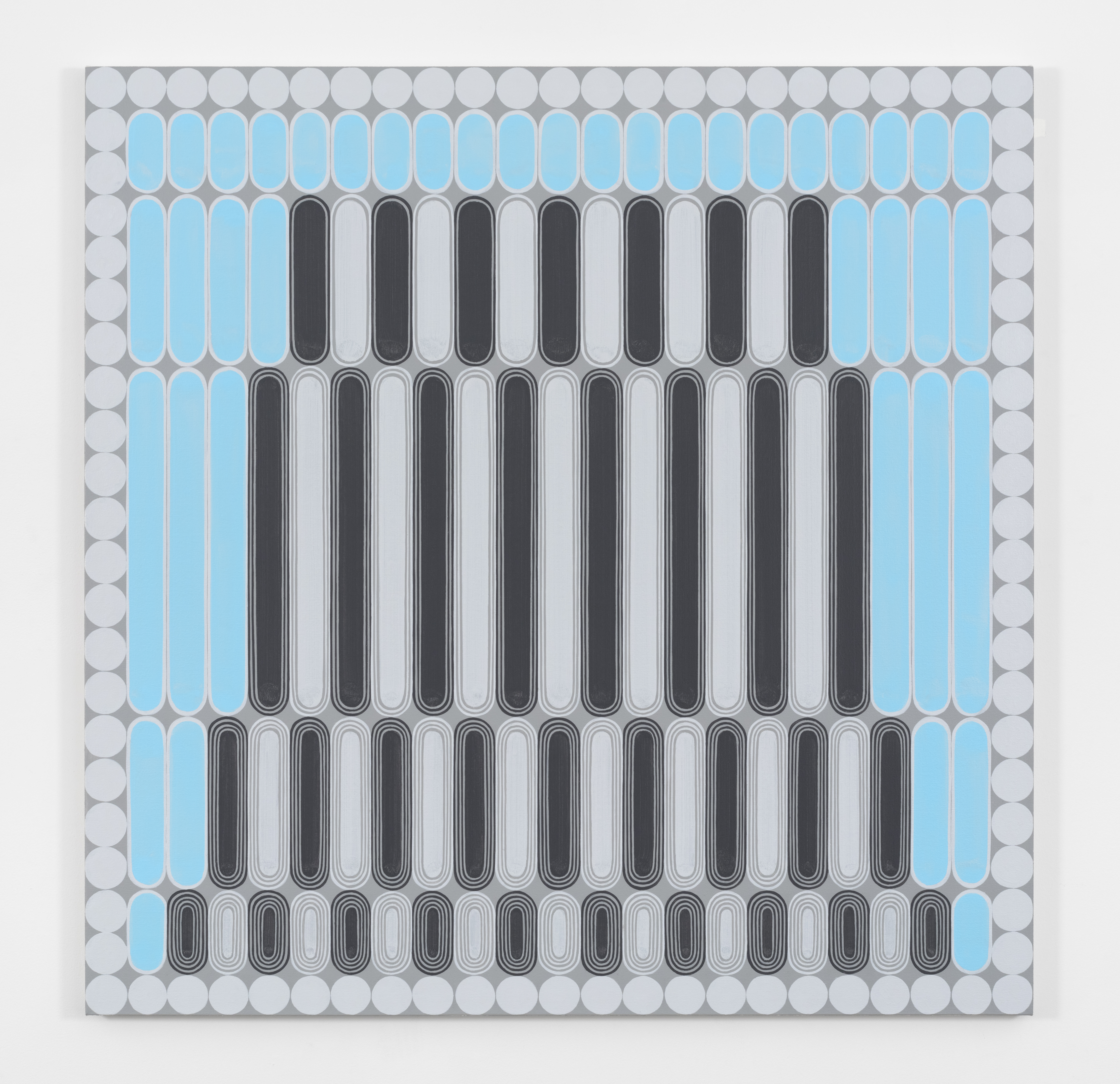
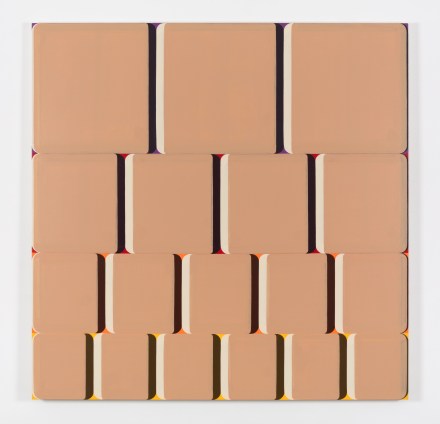
Dan Walsh is known for his large-scale geometric work. I was introduced to his paintings at the 2014 Whitney Biennial. At his solo exhibition at the Paula Cooper gallery I was immediately drawn to his large scale square paintings. Not only do they feature geometry, they also present the theme of counting. In the painting “Fin” from 2016 the canvas is divided in to four horizontal rows of varying widths.  Thickest on the top with 3 sections divided by black and white parenthesis and narrowest on the bottom divided into six segments.
dw-350-ptg_sp

Fin – 2016
[copyright] Dan Walsh. Courtesy Paula Cooper Gallery, New York. Photo: Steven Probert

Since the width of each row is the same the progression 3, 4, 5, 6 segments presents a visual comparison of the fractions 1/3, 1/4, 1/5, 1/6.

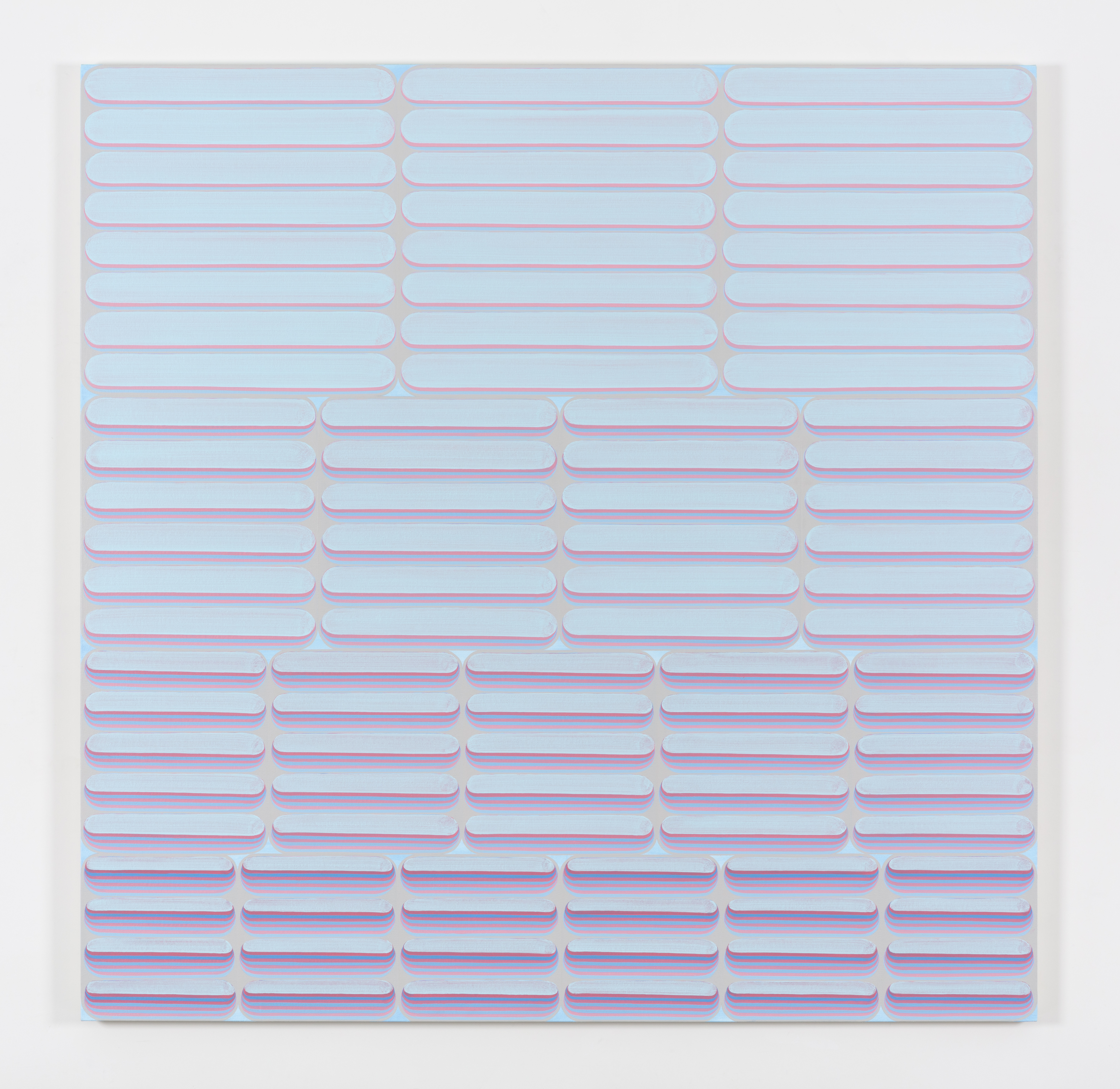
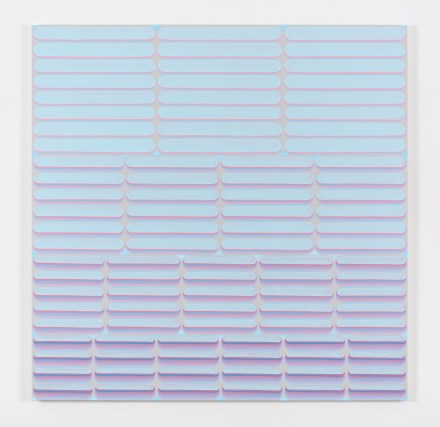
“Debut” from  2016 the artist uses the same 3, 4, 5, 6 divisions in horizontal rows but this time groupings of thin lozenge shapes make up the pattern.
dw-351-ptg_sp

Debut, 2016
[copyright] Dan Walsh. Courtesy Paula Cooper Gallery, New York. Photo: Steven Probert

There is a stack of 8 lozenges in the rows of three, 6 lozenges in the rows of four, 5 in the rows of five across, and 4 in the rows of six. Instead of having all of the shapes the same base color like in “Fin”, Walsh has created a scale with the more intense blues in the bottom row, grounding the picture space, almost like a landscape.

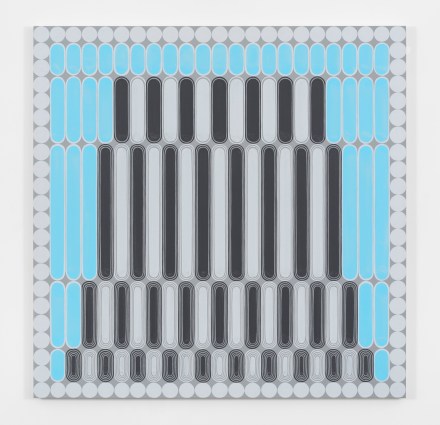
The painting “Circus”, also from 2106, presents a more architectural form. Working once again with rows of varying width this has seems to have more of a subject and background.
dw-355-ptg_sp

Circus, 2016
[copyright] Dan Walsh. Courtesy Paula Cooper Gallery, New York. Photo: Steven Probert

The alternating black and white coloring of the vertical thin lozenge-like strips create a tower. The rows grow from 13 to 15 to 17 to 19. Each row gaining one strip on both the left and the right sides.

Dan Walsh’s painting style is both precise and systematic, but his choice of numerical subject matter that everyone can relate to creates a joyful imagery.

Susan Happersett
“Coral Crochet Reef: Toxic Seas” at the Museum of Arts and Design

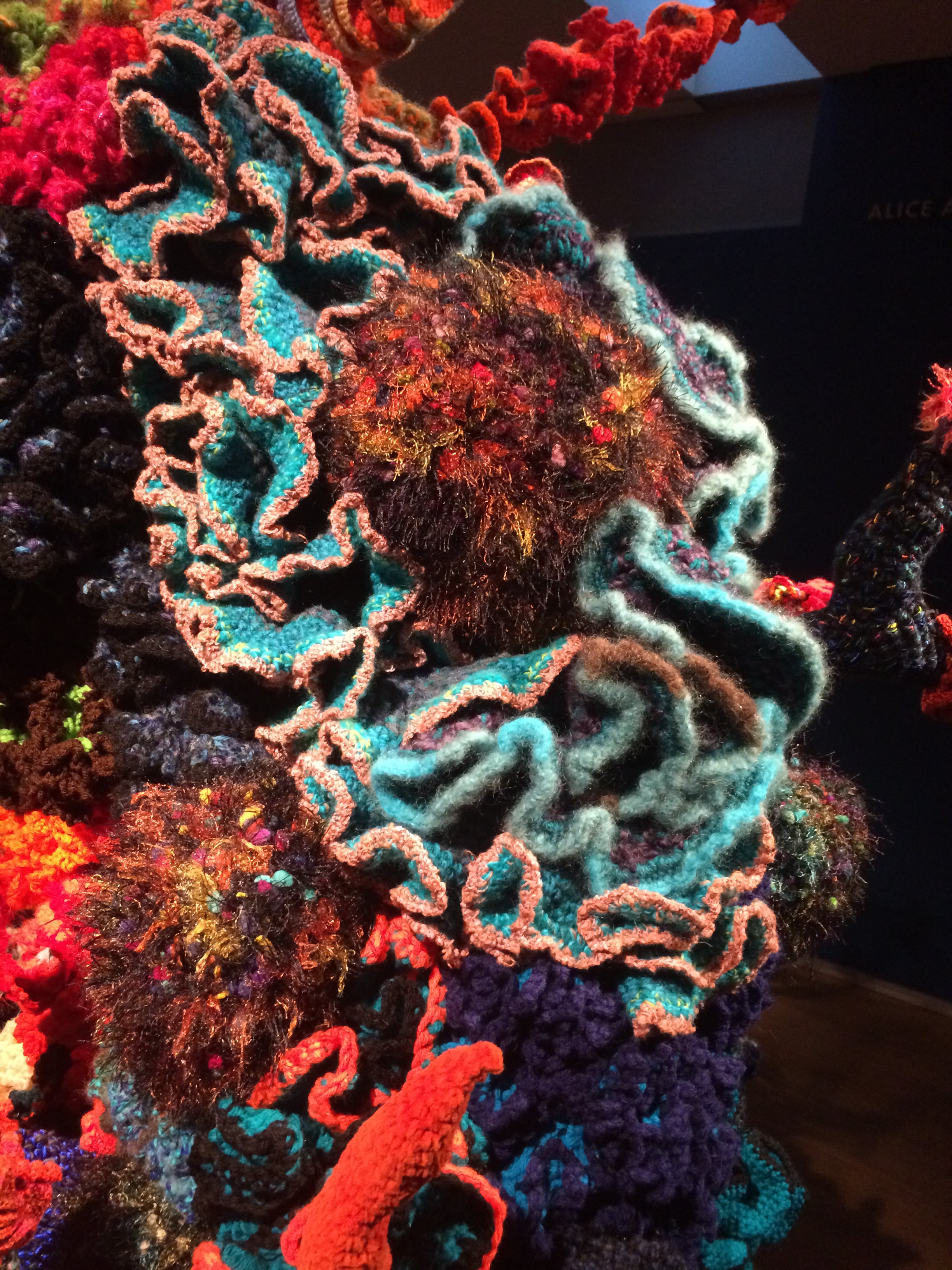
To celebrate tenth anniversary of the “Crochet Coral Reef” project The MAD museum in NYC is featuring an impressive installation. The project is the work of Margaret and Christine Wertheim through the organization they founded; The Institute for Figuring. By utilizing the properties of the crocheting to create hyperbolic surfaces, they have created textile art that represents the complicated structures of coral. The first artist to create hyperbolic forms through this method is Cornell Mathematician Daina Taimina in 1997. The Wertheims elaborated on these geometries to create the organic forms now on display.

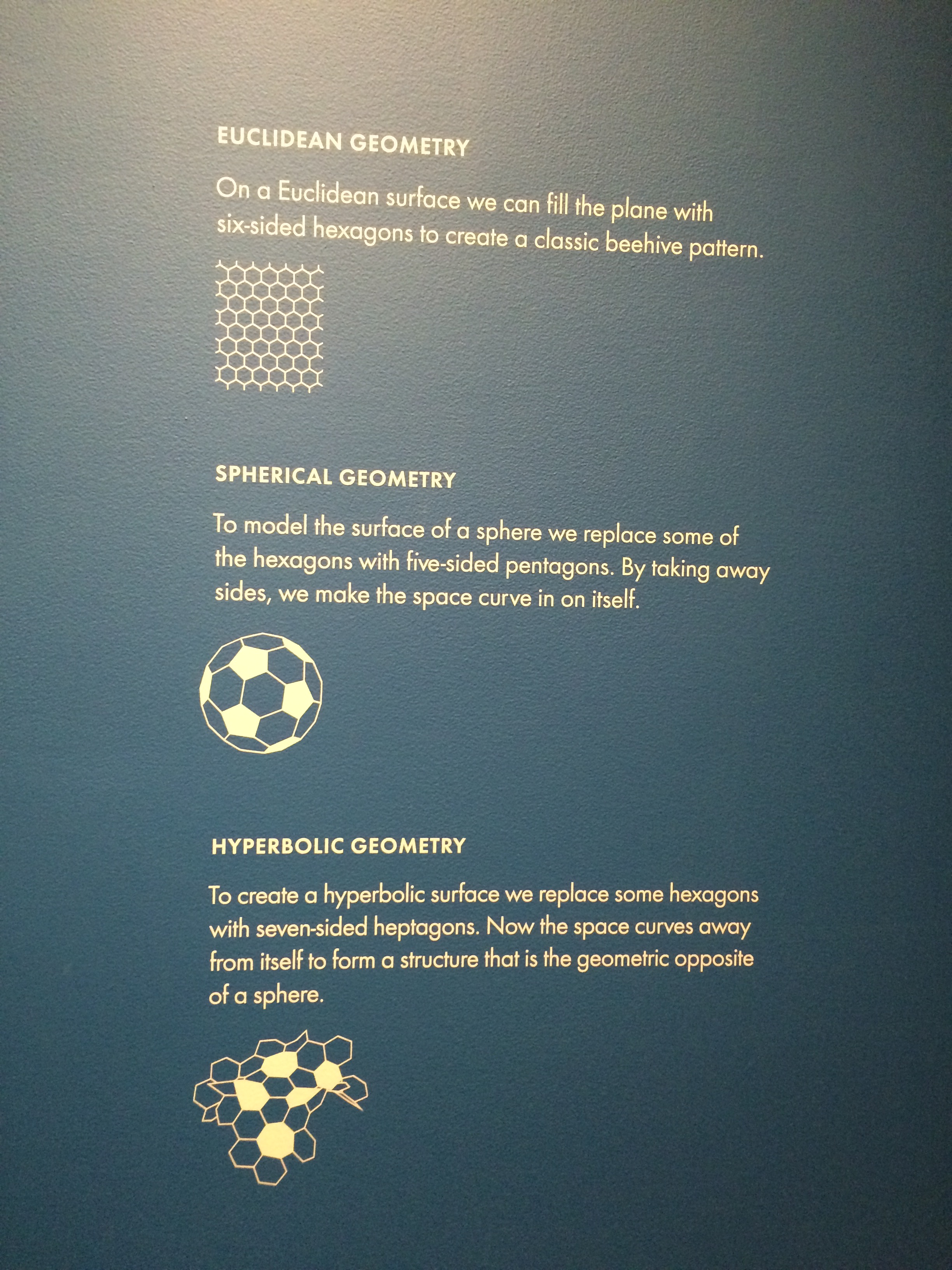
The wall texts at the Museum offer nice explanations of Euclidean, Spherical and Hyperbolic geometry.

blog-1

Some of the sculptures in the show are monumental in size, constructed with a multitude of forms.

blog-2

“Coral Forest-Eryali” 2007-14 Christine Wertheim and Margaret Wertheim, with Shari Portet, Marianne Midelburg, Heather McCarren, Una Morrison, Evelyn Hardin, Beverly Griffith, Helle Jorgensen, Anna Mayer and Christina Simons.

blog-3

Detail

The installations are very grand and beautiful but they also address numerous topics: the mathematical properties found in marine biology and the concept of “woman’s work” through the arduous communal effort to create these impressive structures. The most important topic, however, is the urgent need to inform the public of the dire situation of the world’s coral reefs. The warming earth, combined with water pollution from plastic trash, are endangering the living reefs.

Even so, wishing everyone a happy and healthy New Year!

Susan Happersett

Francisco Castro-Leñero at the Howard Scott Gallery

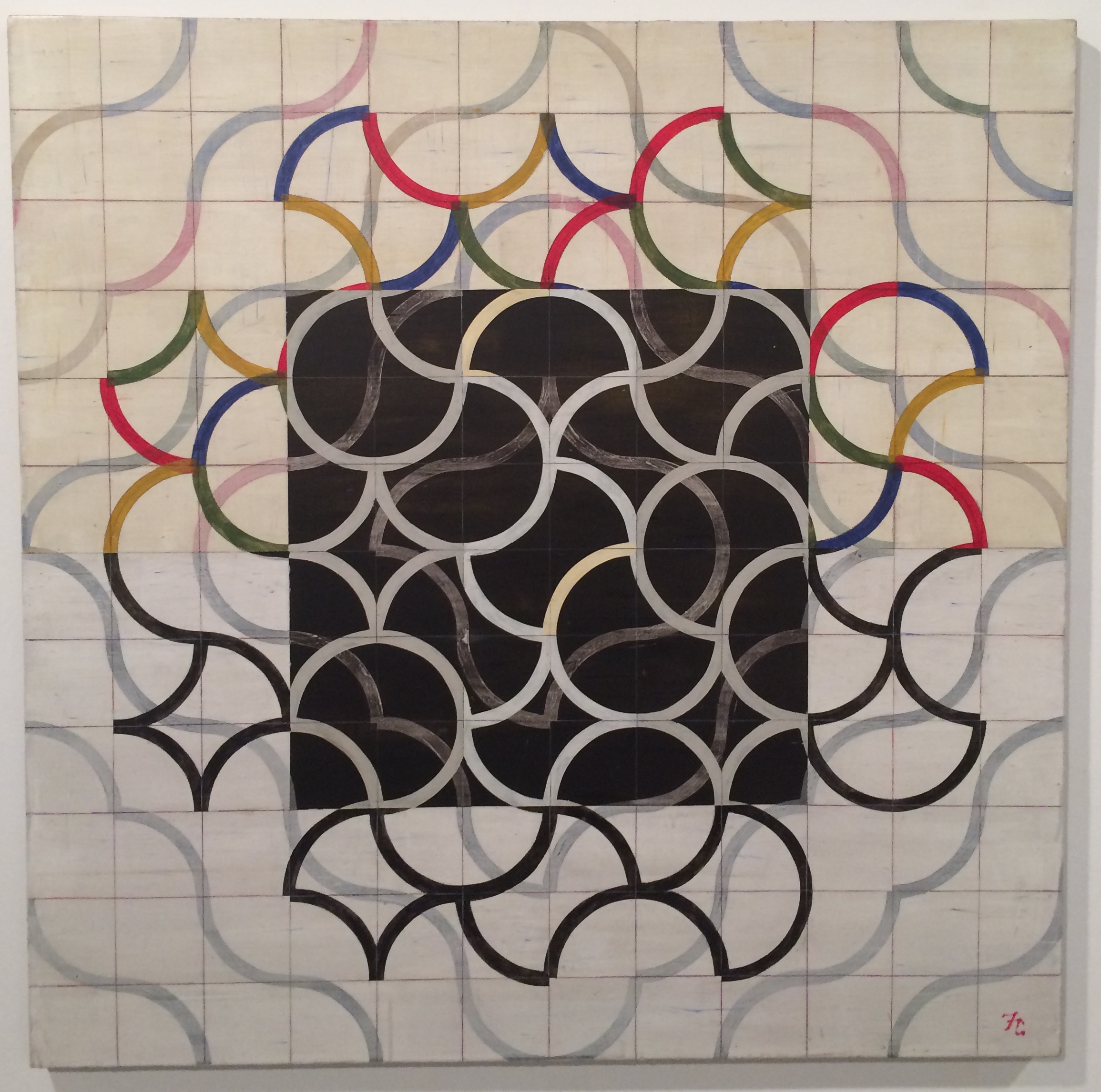
Renowned Mexican painter Francisco Castro-Leñero has a long history of abstract geometric themes. His current exhibition at the Howard Scott Gallery features a brilliant selection of painting created between 2004 and today.

16-39-01

Francisco Castro-Leñero – “Mandala (tres tiempos)” – 2016
Picture courtesy of the artist and the gallery

“Mandala (tres tiempos)”, which was painted this year, uses a 12 by 12 square grid format. The length of the side of the squares become the length of each of the radii used to create circular arcs, with the centers of the circles located at the corner of  grid squares. The arcs have measurements of 90 degrees, 180 degrees, or 270 degrees. This technique allows Castro-Leñero to create undulating ribbons. The outer rows and columns of the painting have a white background with colored arcs on the left side and black and grey arcs on the left. The 6 by 6 grid at the center of the canvas features a a black background with white and grey arcs. This center square reinforces the contrast between the linear and curvi-linear geometry, as well as positive and negative space. By mapping a vocabulary of squares and circles, and displaying a virtuosity of color Castro-Leñero’s paintings build intricate geometric structures.

Susan Happersett

Happy Halloween with Chris Watson’s Tessellation Art

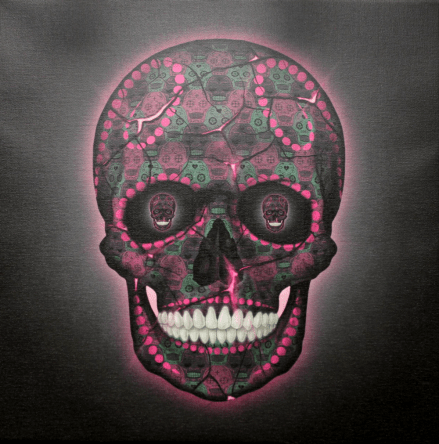
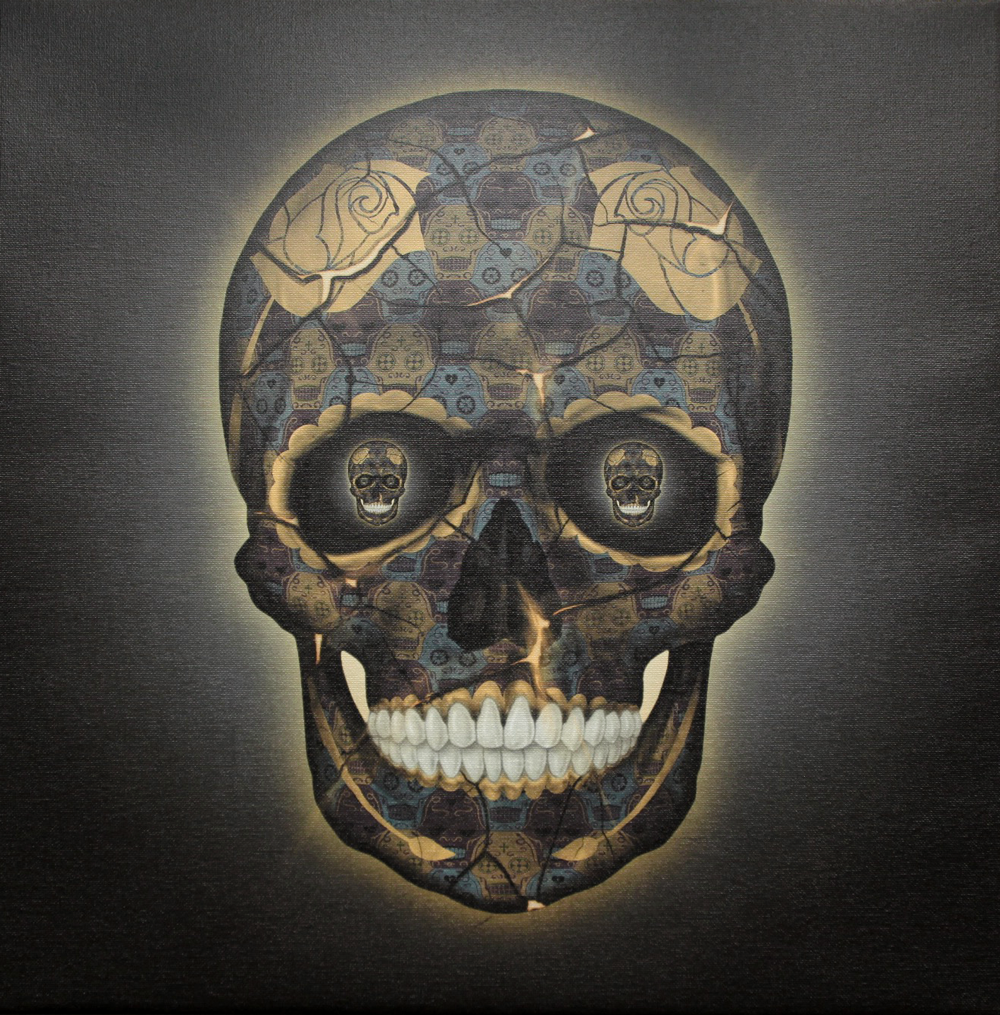
For Halloween, today a contribution by Chris Watson. His latest Tesselation Art release is his Skull Series. It is a new triptych digital artwork composition inspired by M. C. Escher’s work in tessellation and infinity.
16-38-02
A tessellating skull pattern is wrapped around a human skull. The eyes of the skull are scaled down versions of the entire image. This is then repeated infinitely. As TA fans will know, M. C. Escher is widely recognised as the father of tessellation. Both the theme of infinity and the use of skulls were commonly featured in his artwork. The tessellating skulls are decorated as calaveras – also known as sugar skulls. These are used in the Mexican celebration of the Day of the Dead (Día de los Muertos). Each of the three main skulls in the triptych have a unique decoration and color scheme.
16-38-01
The behind the scenes gives an animated time-lapse overview of the entire design and development process in just 3 minutes.

The write-up on this great piece of Tesselation Art can be found here. You can purchase your own day of the dead Tesselation skull print here.

Happy Halloween,

Susan Happersett

Katia Santibanez at Morgan Lehman

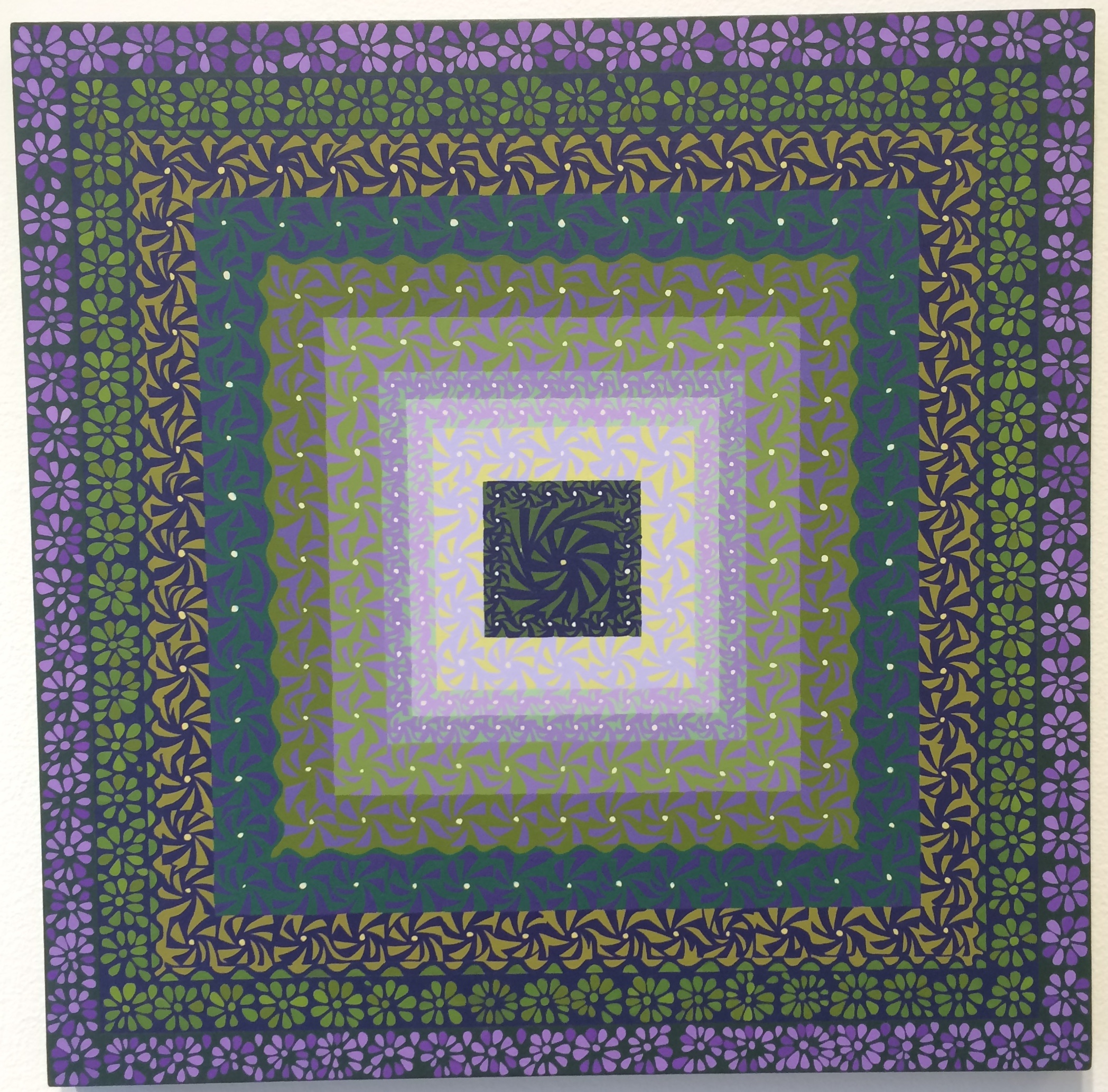
“The Visible and The Invisible”, Katia Santibanez’s new exhibition at the Morgan Lehman gallery, features the artist’s abstract paintings. Embracing patterns found in nature, these works incorporate a variety of geometry, symmetry, and repetition. One painting in particular, “Sleeping Memories”,  incorporates themes from two different twentieth century art movements.

16-37-01

Katia Santibanez, “Sleeping Memories”, 2016
Picture courtesy of the artist and the gallery

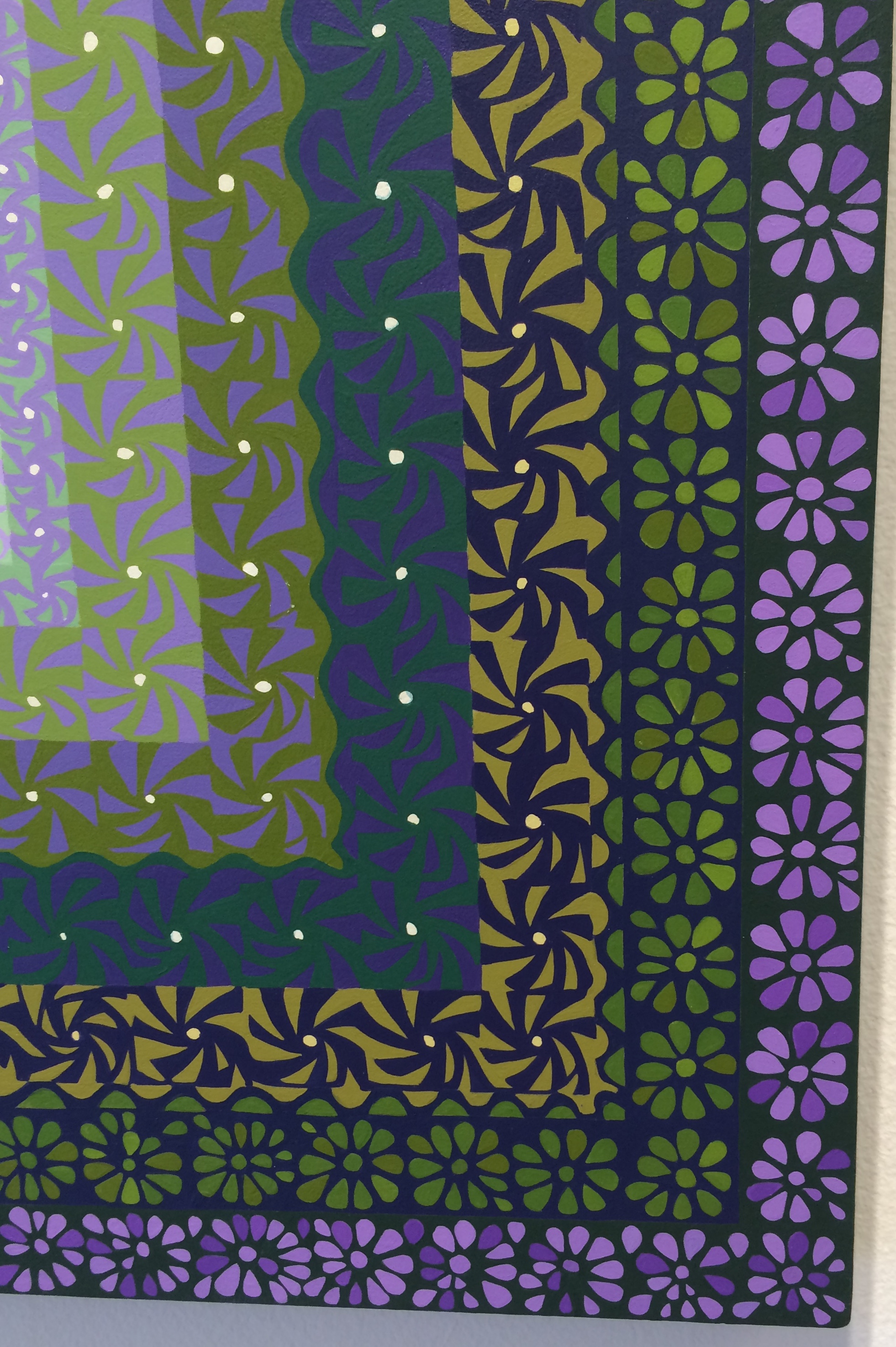
Using concentric squares, this work references the practices of the Hard Edge paintings of the 1960’s. The geometric abstractions of Frank Stella immediately come to mind. But this is just part of the story. Santibanez has incorporated detailed strips of patterns of flora, reminiscent of the Pattern and Decoration Movement of the 1970’s. Robert Kushner and Miriam Shapiro often incorporated floral and plant inspired patterns in their work.

16-37-02

Katia Santibanez, “Sleeping Memories”, 2016 (detail)
Picture courtesy of the artist and the gallery

“Sleeping Memories” is an excellent example of work with a Mathematical structure that has been enhanced through the use of less rigid patterning to define the geometric space.

Susan Happersett

Sara VanDerBeek at Metro Pictures

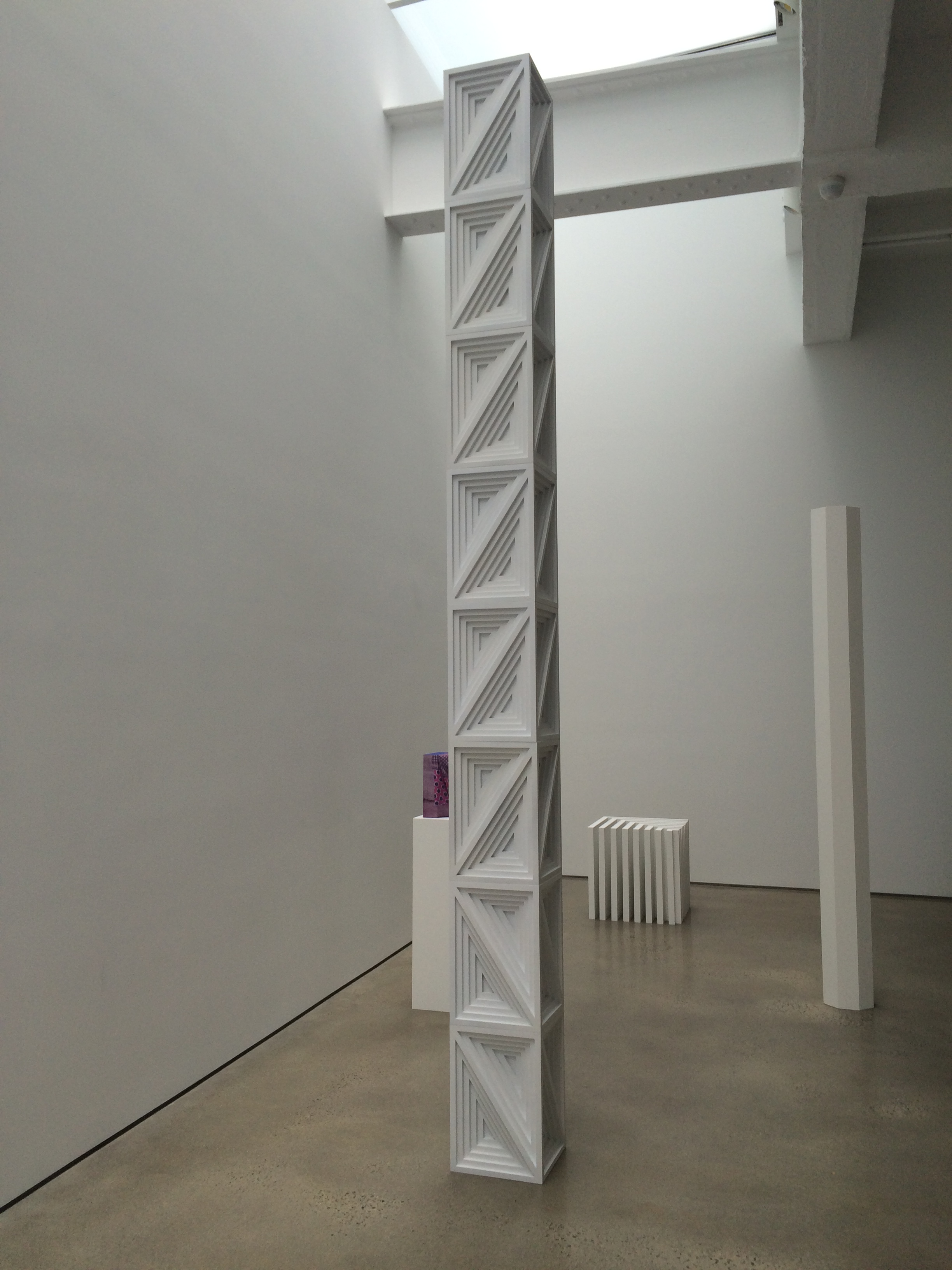
“Pieced Quits, Wrapped Forms” is Sara VanDerBeek’s current solo exhibition at Metro Pictures Gallery. There is a variety of work on display, including large abstract photographs and monochrome sculptures, all with geometric themes based of quilts, Pre-Columbian patterning, and modern textile arts.

16-36-01

Sara VanDerBeek, “XXXVII”, 2013, acrylic on wood
Picture courtesy of the gallery and the artist

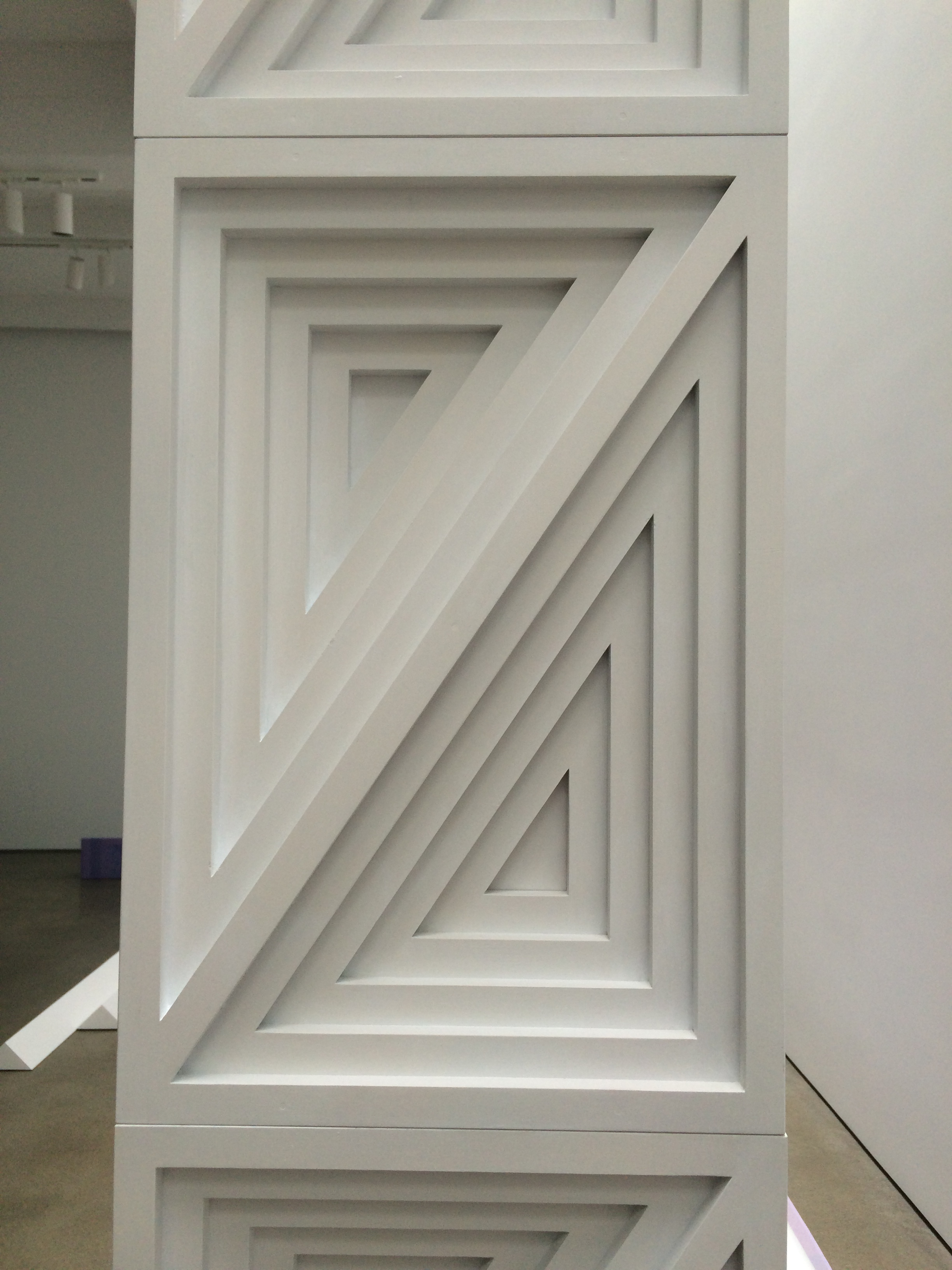
The totem pole-like structure “XXXVII” is a stacked tower of eight rectangular prisms or cuboids. By painting the entire structure white, the artist allows the viewer to focus on the patterns and shadows on each side of the prisms. Each rectangular side has a width to height ratio of 2:3. Bisecting the rectangle along the diagonal, order 2 rotational symmetry is achieved and two right triangles are formed. There is a series of consecutively smaller but similar triangles, that form a step-like pattern into the prism.

16-36-02

Sara VanDerBeek, “XXXVII”, 2013, acrylic on wood (detail)
Picture courtesy of the gallery and the artist

VanDerBeek has successfully taken the geometric basis from textile patterning and distilled it to its purest form, presenting these ideas in a contemporary visual dialog.

Susan Happersett

Victor Victor Vasarely at Maxwell Davidson Gallery

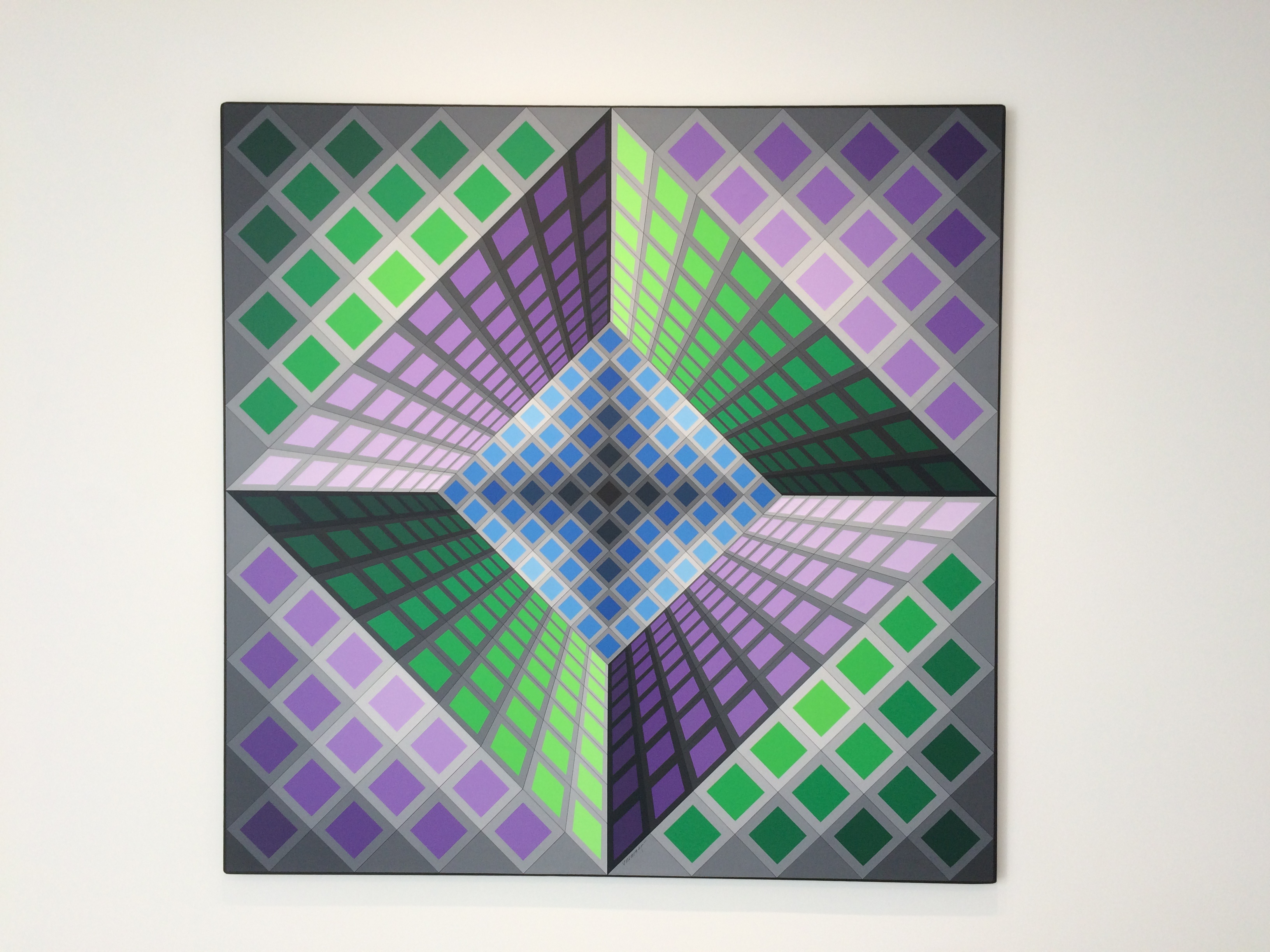
Victor Vasarely was the founder of the Optic Art or Op Art movement. His studies at the Budapest location of Bauhaus education in the 1920’s influenced Vasarely style of geometric abstraction. The paintings in the “Analog” exhibition at Maxwell Davidson Gallery demonstrate Vasarely’s ability to visually bend and stretch the plane of the 2-D canvas into 3-D space. The images seem to bounce and vibrate off the canvas.
16-33-01

The acrylic painting “PHOBOS” from 1979 uses the distortion of squares to create what looks like a square-shaped hole in the center of the canvas that is angled at a 90-degree turn from the edges of the canvas. The four isosceles right triangles in the corners of the canvas feature a pattern made up of purple or green squares. The four isosceles trapezoids have been filled in with distorted representations of squares creating the perspective of falling inward or protruding outward. The central square contains a grid of squares that again flattens out the plane.

Vasarely was the master of painting exacting geometric formations, but the most impressive element to this work is the exciting sense of space and movement. This is the first gallery show of Victor Vasarely’s paintings in many years It was very exciting to see a great selection of these geometric masterpieces all in one location.

Susan Happersett