A Million

I never planned to use this blog to discuss my political leanings but …
16-03-01

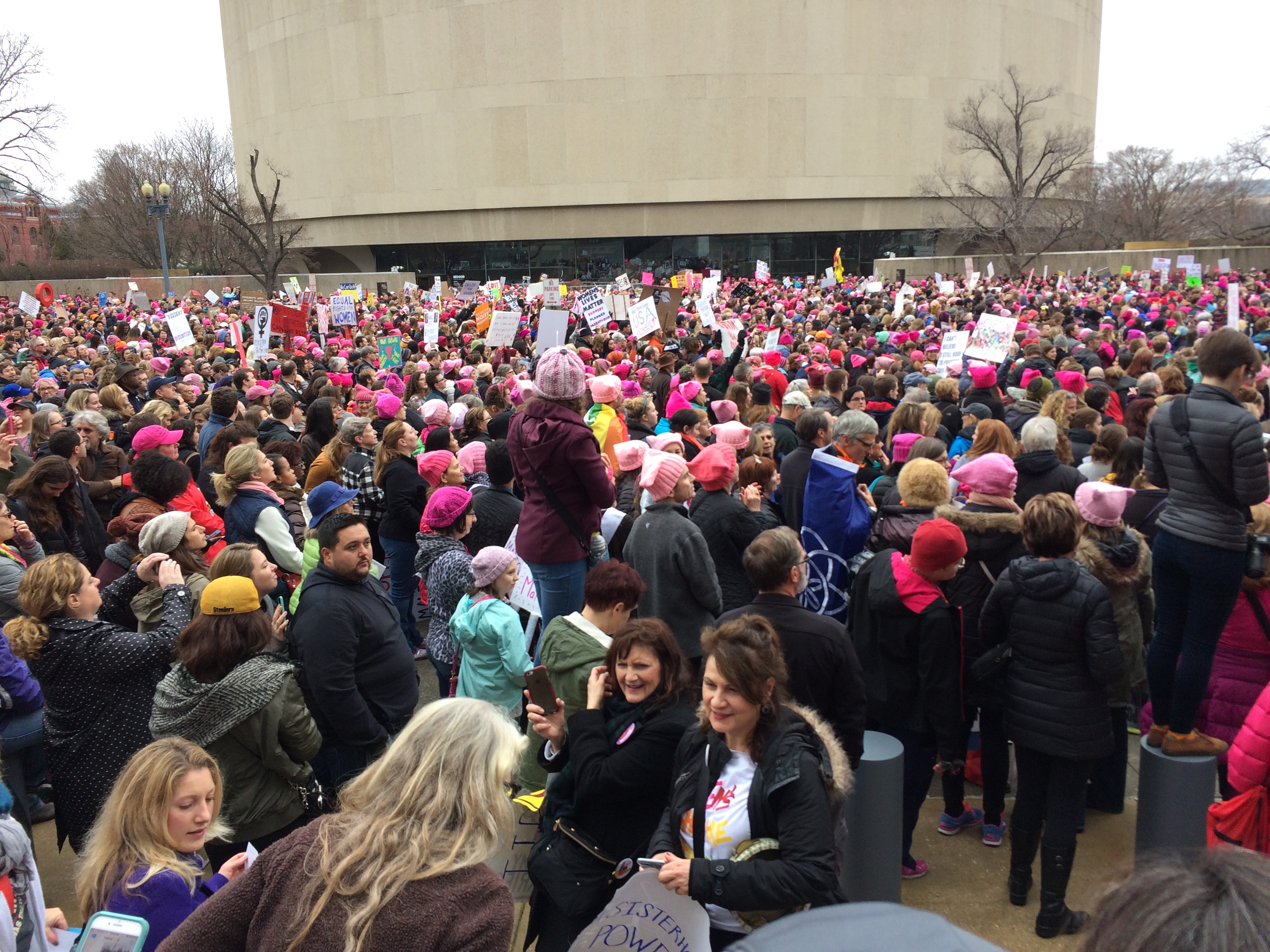
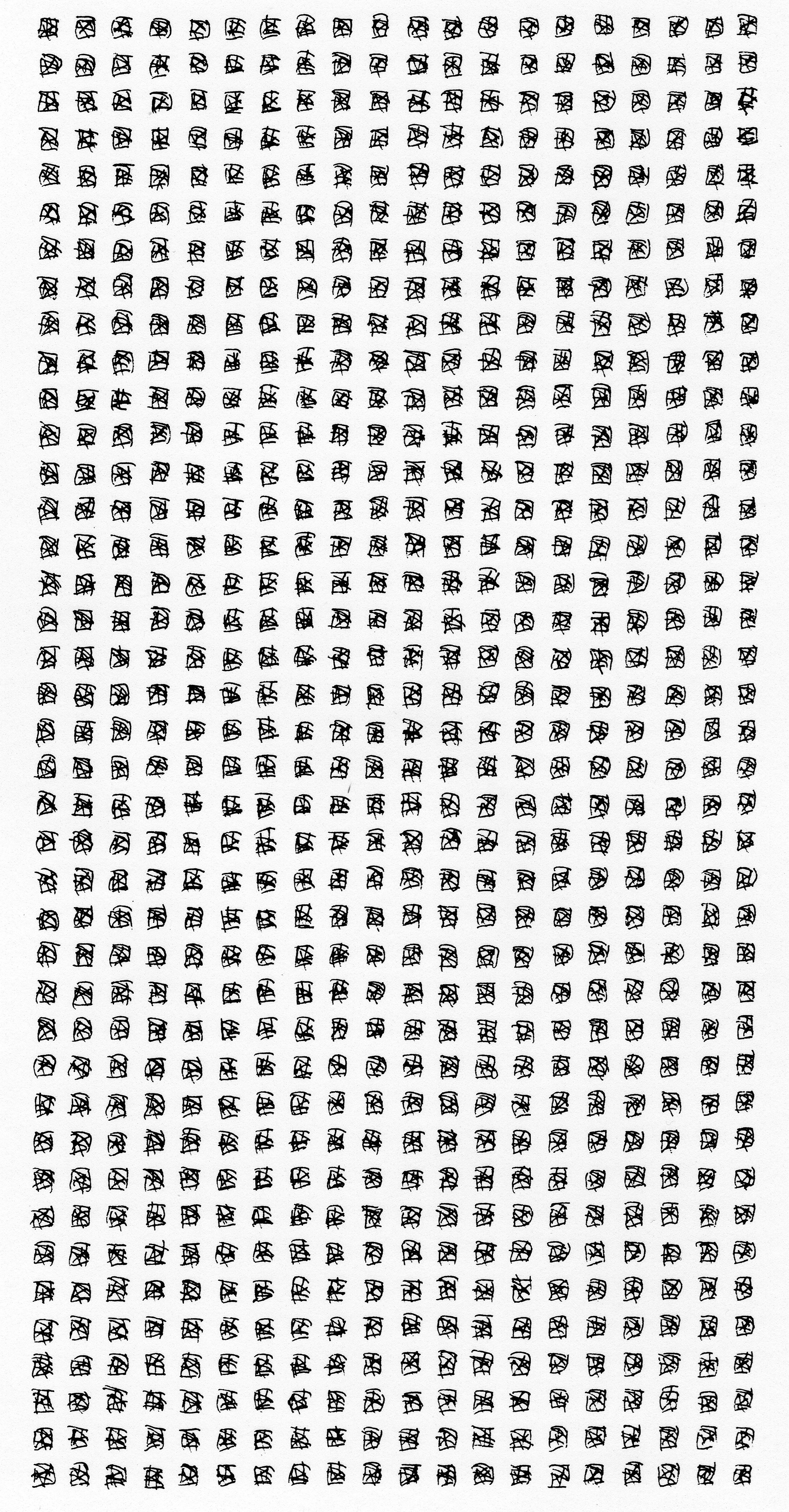
My sister Laura and I participated in the Woman’s March in Washington this past weekend. The size of the crowd was of a magnitude I have never experienced before. Anyone who has seen my work knows i have a predisposition for counting. Years ago, I developed a system of creating counted mark-making drawings. One project – from 1999 – titled “A Million Markings for the Millennium features 125 prints, each with a 40 by 20 square grid. Each grid square contains 10 markings. The number one million is thrown around freely in rhetoric and dialog, causing it to loose its gravitas. This work is my visual answer to the question “Just How many is a million?”
EPSON MFP image

Standing on Indepence Avenue on Jan 21 I was overwhelmed by the sea of people all walking together. The societal effects of very large number was palatable. I had not planned on discussing these emotions in this forum but when the concept of counting becomes an issue with regards the Presidential inauguration crowd, I could not stop myself.

Artists, even Math artists, do not work in a bubble (although I have attempted to crawl under a rock for the last two months). Objective counting and measuring has become a source of political existential angst. There is really no such thing as “alternative accuracy”. Sometimes numbers speak louder than words.

I guess I will always be a Nasty Number Geek

Susan Happersett
Carmen Herrera at the Whitney

The Whitney Museum is currently presenting “Carmen Herrera: Lines of Sight”. This outstanding exhibition examines work from 1948-1978. Born in Cuba and educated in Havana, New York and Paris, Herrera developed a distinctive hard-edge geometric style. This is a large show and would require more than one blog post to discuss in fill. I have decided to limit this post to paintings Herrera created in NY after she returned from studying in Paris (1952-1965).

16-35-01

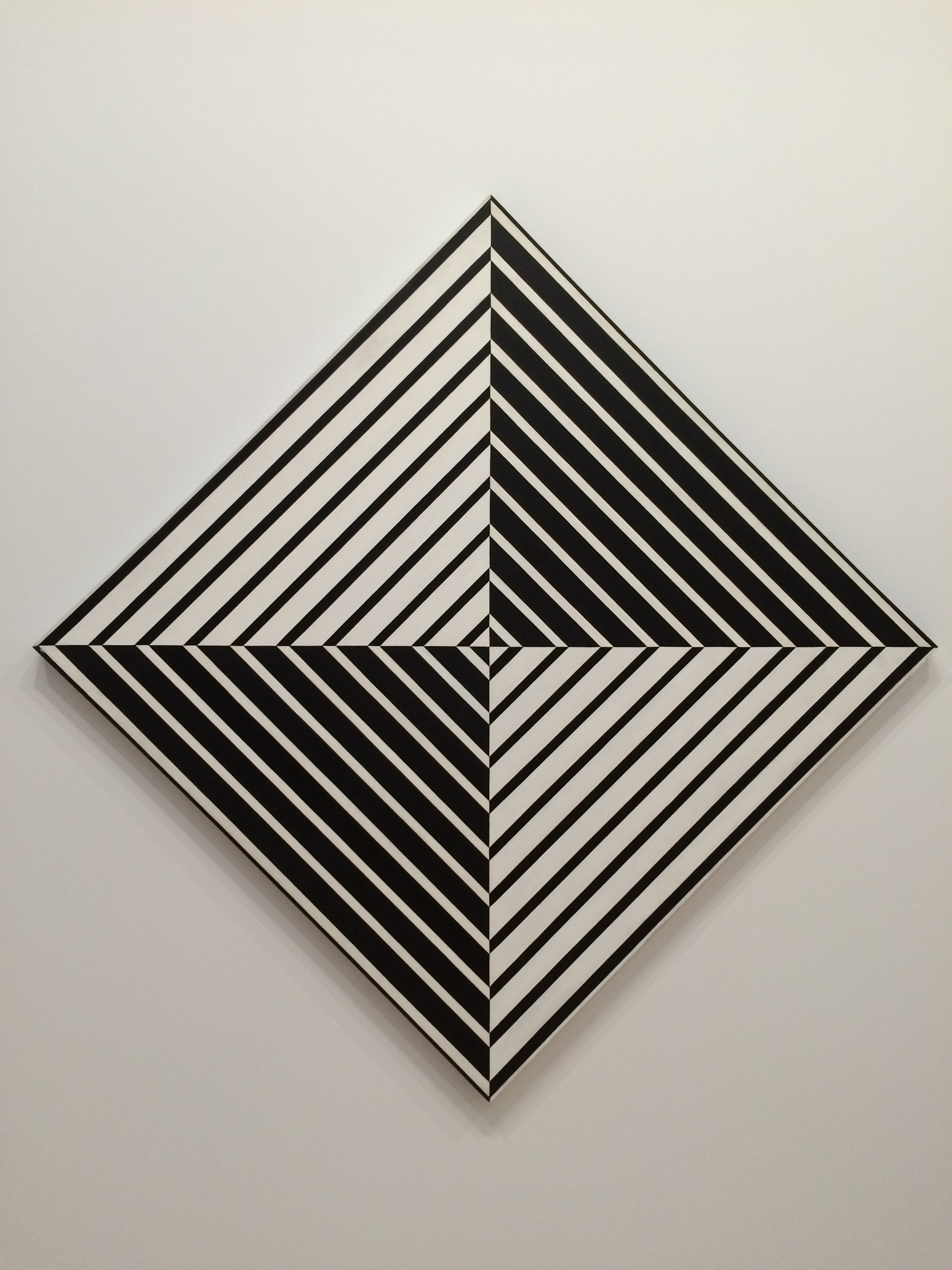
“Black and White”, 1962
Picture courtesy of the Whitney Museum

“Black and White” from 1962 is an excellent example from this time period. The shape of the actual canvas is an important element in the architecture of the work. By rotating the square there are no horizontal or vertical lines, this immediately disrupts the visual experience. Herrera limited her color pallet to two colors creating a dynamic tension of positive and negative space. In this work the thicker white strips are the same width as the thicker black strips but in the gallery there is an optical illusion where the white seems wider. The alternating of black and white parallel lines on the isosceles right triangles creates an order-2 rotational symmetry.

16-35-02

“Horizontal”, 1965
Picture courtesy of the Whitney Museum

“Horizontal” from 1965 also features two colors and a square. This painting again relies on the shape of the canvas to define its structure, but in this case a circular format. The thin horizontal wedges amplify the push and pull of the red and blue triangles and circle segments, formed by the edge of the canvas (arc) and the sides of the squares (chords).

“Lines of Sight” is a long overdue solo museum exhibition for Carmen Herrera It is a welcome opportunity to appreciate the artist’s exciting use of geometry.

Susan Happersett

Anila Quayyum Agha at The Peabody Essex Museum

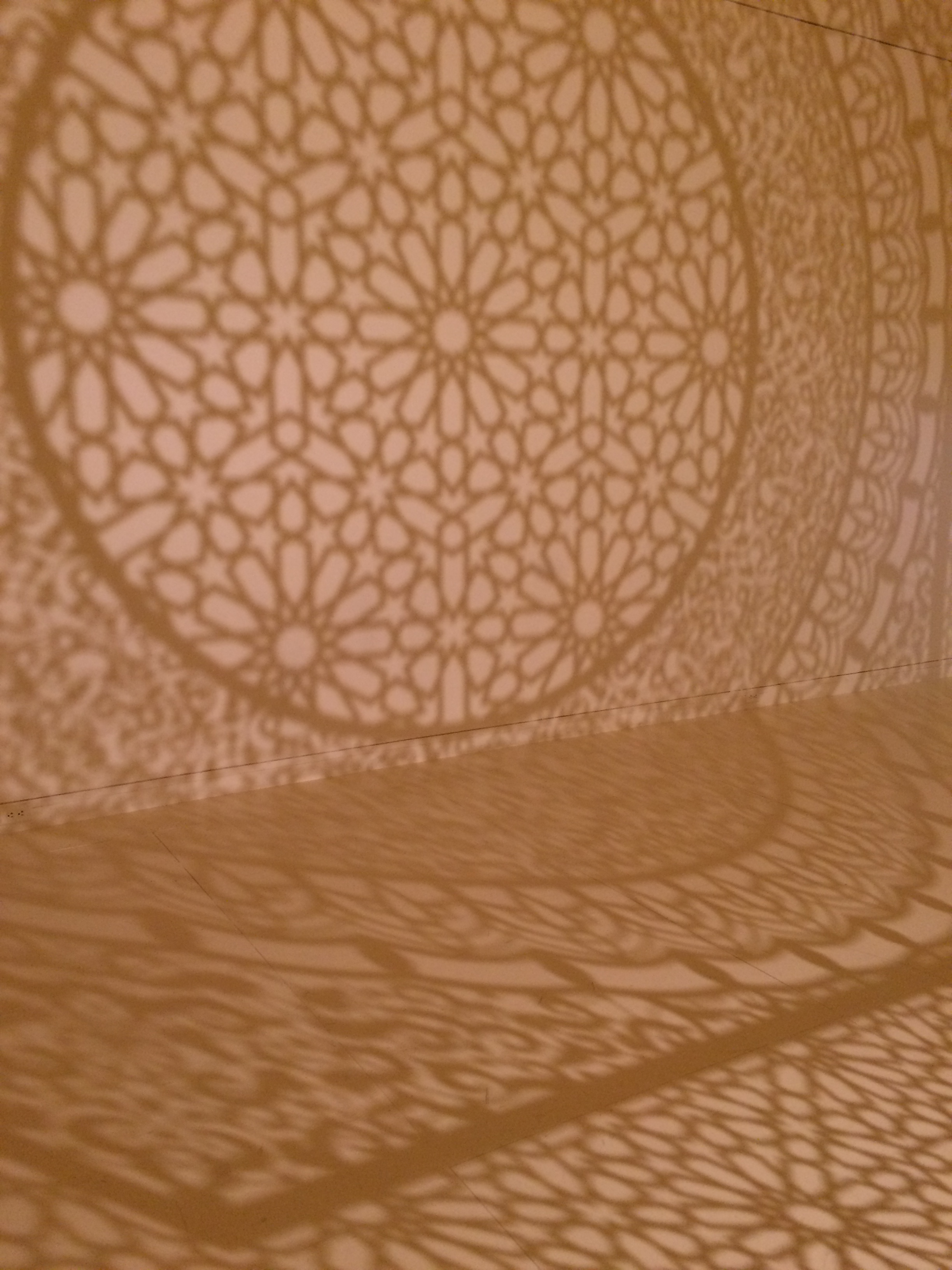
Anila Quayyum Agha’s installation titled “Intersections” is inspired by the intricate decorative elements she encountered in religious buildings as a child in Pakistan. The work consists of a laser cut steel cube lit from within. The lines of the lattice work on the cube are projected unto the painted walls, floor and ceiling of the gallery.

16-30-01
The open work design is based on the geometric properties of Islamic patterning. Each side of the cube features a figure with 8-fold rotational symmetry inscribed with in a circle.

16-30-02
These symmetries get disrupted in the projection onto the gallery surfaces. Especially along the lines where the walls and floor meet. The geometry on the cube is precise but the shadows must bend to fit within the boundaries of the gallery.

Susan Happersett

Math Art in Finland

Last week the Bridges organization held their annual conference in Jyväskylä, Finland. This international conference features lectures and workshops that highlight the connections between mathematics, music, art, architecture, education and culture. My favorite part of the five day event is the art exhibition. This year there was a wide range of styles, techniques and mediums on display. it is difficult to select only a few for this blog but I will try.

16-28-01

Sharol Nau

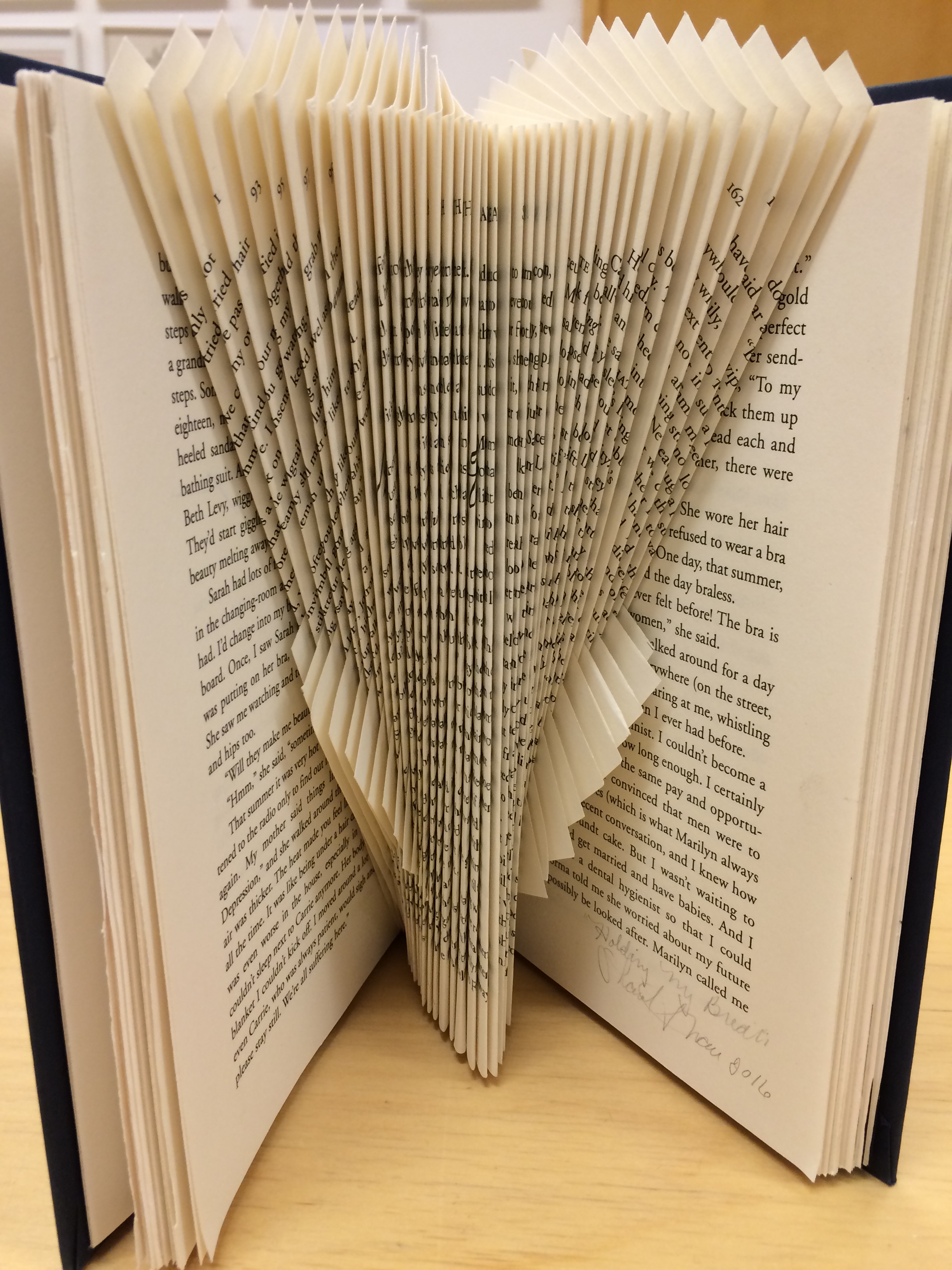
Sharol Nau repurposes unwanted hard cover books to create sculptures that contain parabolas. A parabola is a curve with reflective symmetry, in which each point on the curve is the same distance from a fixed focus point and a fixed line. The artist  carefully measures and folds each page to the common focus point. The resulting portable sculpture preserves the exterior shape of the book but creates a new visual story for the interior.


16-28-02

Nithikul Nimkulrat – “Black & White Striped Knots” – Knotted paper – 2015

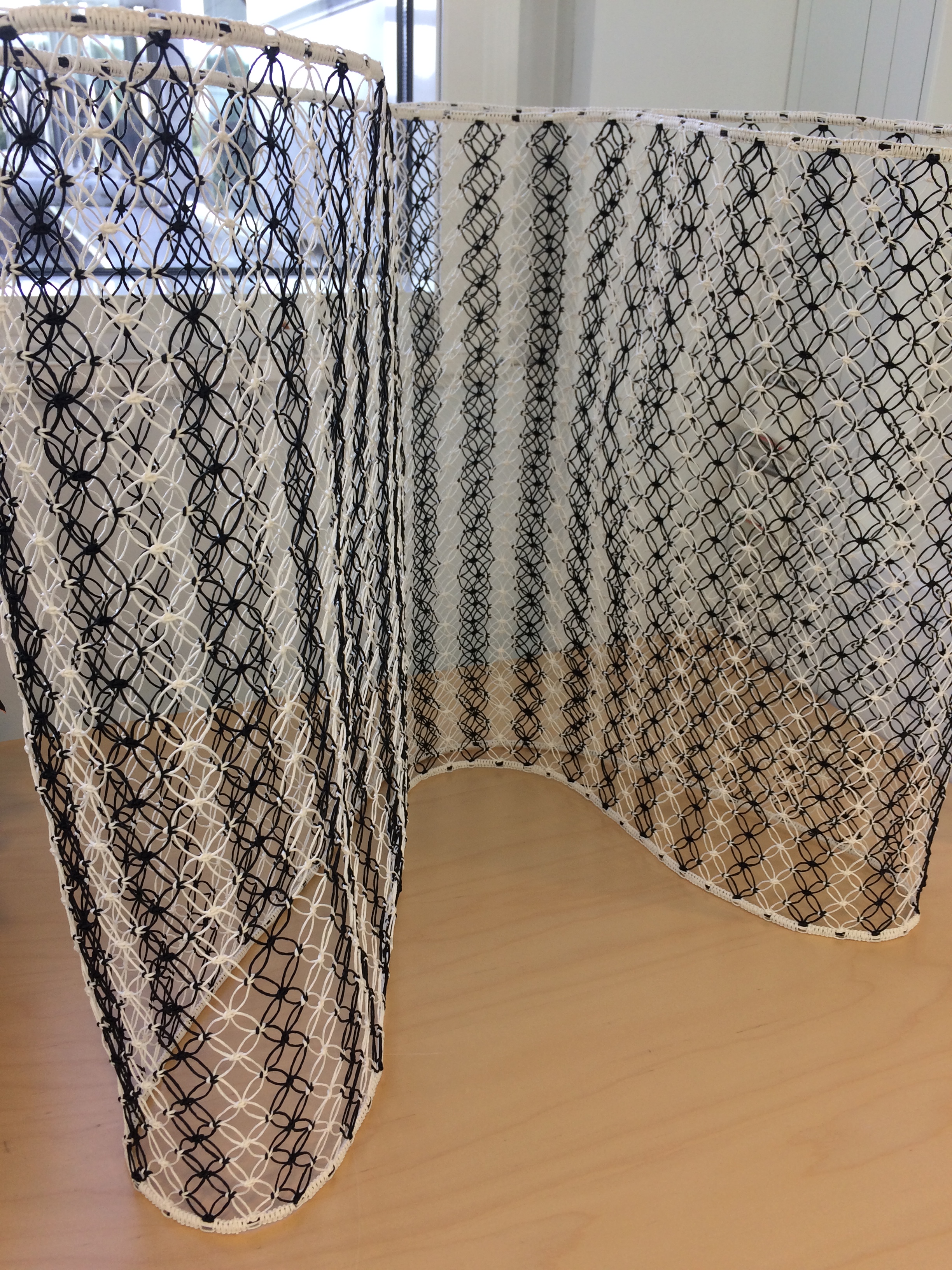
Nithikul Nimkulrat hand-knots sculptures using paper string. Inspired by mathematical knot diagrams, the artist employs two colors of string to better indicate the positions of each stand within the knot structures.”Black & White Striped Knots”examines properties of knotted textiles.

16-28-03

Nithikul Nimkulrat – “Black & White Striped Knots” – Knotted paper – 2015 (Detail)

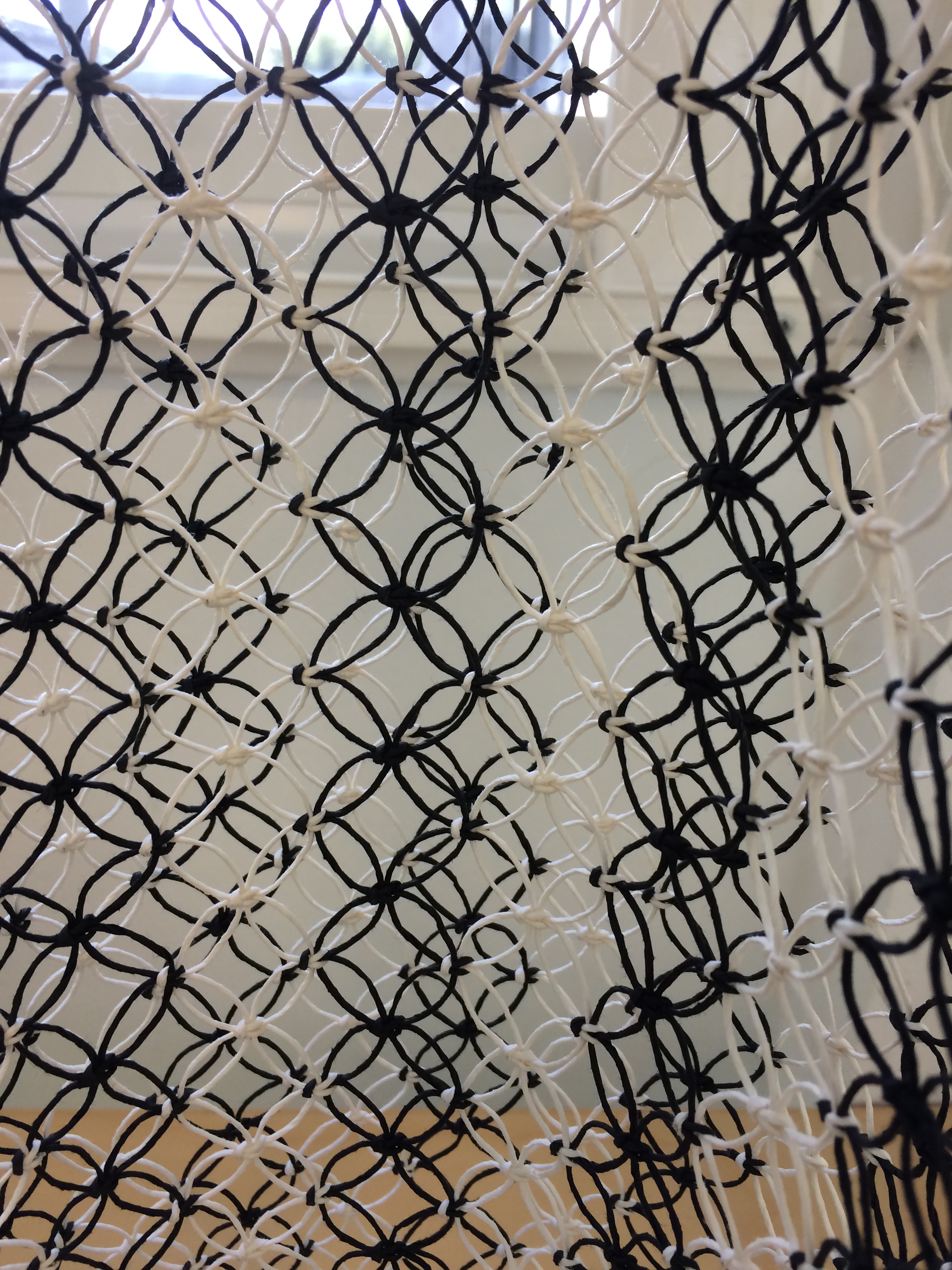
Looking closely at the work, the circular patterns emerge. Overlapping circles cross to form four equal arcs. This creates a series of monotone circles with the arcs of adjacent circles forming a pattern with order-4 rotational symmetry. Nimkulrat’s intricate structure is a wonderful exploration of the mathematical possibilities in textile and fiber art.

Susan Happersett

“But a Storm is Blowing from Paradise” at The Guggenheim

I am always looking for exhibitions that reference the sociological implications of Mathematics in art. As I walked into this exhibition at the Guggenheim and read the introductory wall text I was immediately intrigued.  Here is a portion of that text written by Sara Raza, (UBS MAP Curator, Middle East and North Africa):

But a Storm is blowing from Paradise: Contemporary Art of the Middle East and North Africa, which is presented on Tower Levels 4 and 5, focuses on geometry as a tool for the illumination of creative historical and philosophical inquiry. While rooted in the mathematical “thinking sciences” geometry is used here as a conduit for theories around logic and the origin of meaning.

The artists in this exhibition have referenced social issues through a geometric perspective.

16-26-01

This  2011 stainless steel and rubber installation by Nadia Kaabi-Linke titled “Flying Carpets” is based on the rectangular dimensions of carpets used by illegal street vendors to display and quickly carry away the wares they are selling to tourists in Venice Italy. Many of the vendors came from Africa and the Middle East and have traveled to Europe for a better, safer life. The title alludes to this exotic notion of travel on a Flying Carpet. Although the visual aesthetic is a complex geometric abstraction, it is merely the vehicle to express the plight of refugees.

Susan Happersett


Fibonacci on Mulberry Street

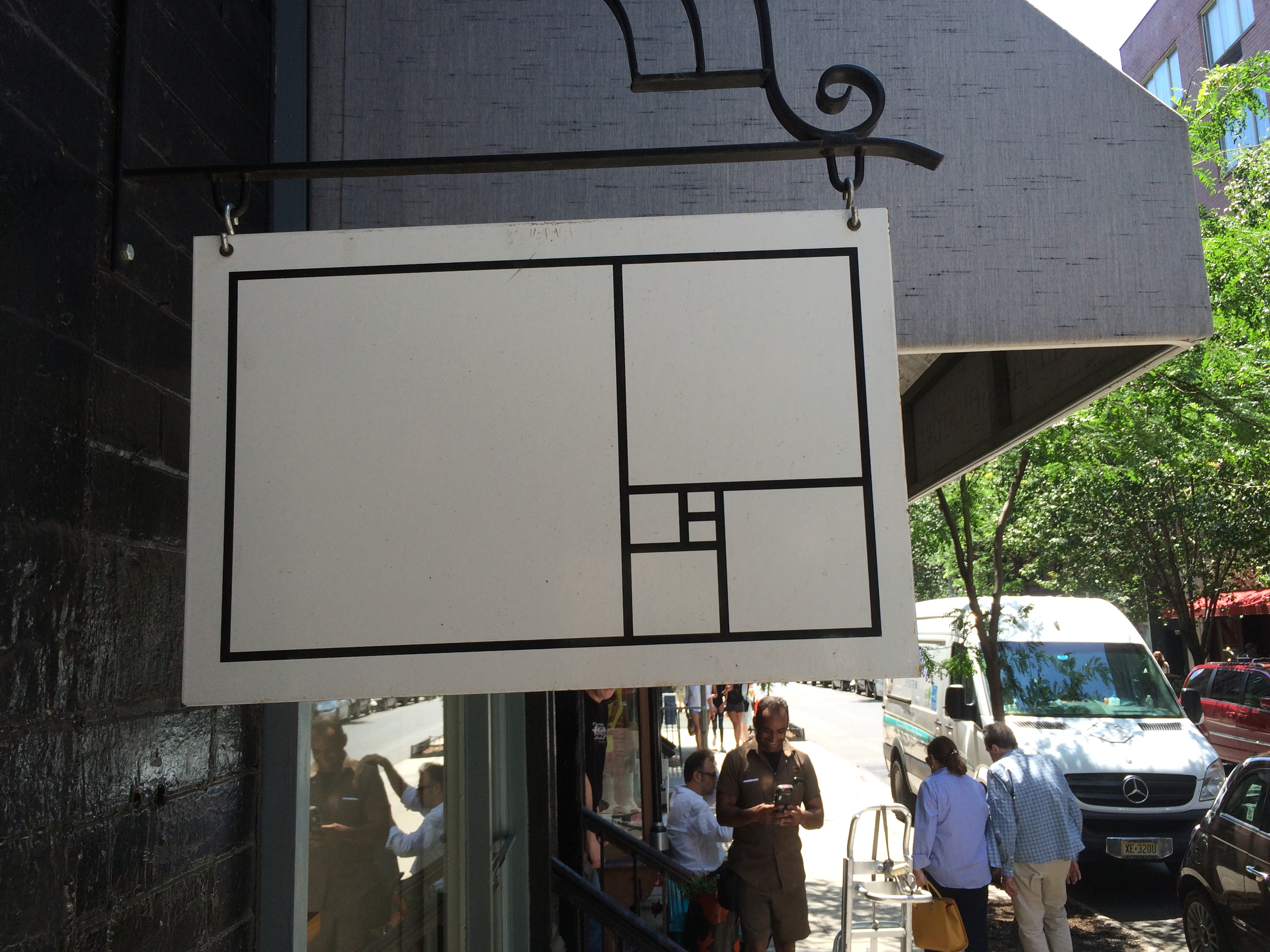
Walking down Mulberry street I spotted this great sign in front of The Picture Room McNally Jackson Store.

16-24-01The sign is the work of Benjamin Critton. It features a series of squares whose sides increase based on the Fibonacci Sequence. The first two squares are the same size. The third square has sides twice the side of the first. The fourth has sides three times as long as the first. This continues until the 7th square has sides 13 times longer than the first. They all are spiraled into a neat Fibonacci rectangle with sides in an 8:13 ratio.

Susan Happersett

Doreen McCarthy – More Topologist’s Pool Toys at LMAK Gallery

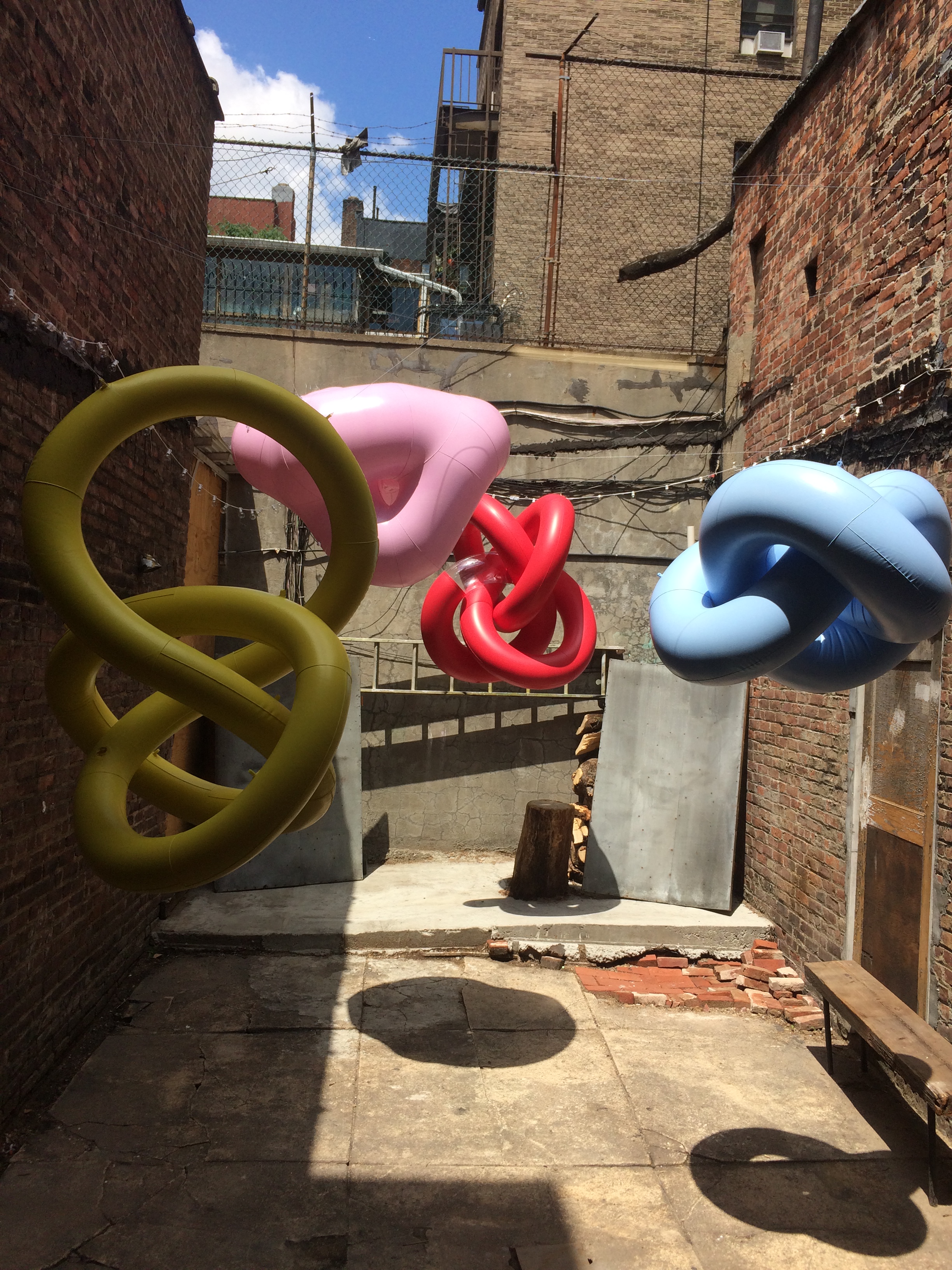
A quick update on a post from last Summer.

16-23-1I was thrilled when I looked into the garden of the c and saw a whole collection of Doreen McCarthy’s wonderful sculptures. I think they are even more fun and unexpected outside. The shadows on the pavement provide a changing 2-D projection of the 3-D forms.
They will be up until September 25th so there is plenty of time to go to the Lower East side and enjoy this playful  installation.

Susan Happersett

Judith Braun at McKenzie Fine Art Gallery

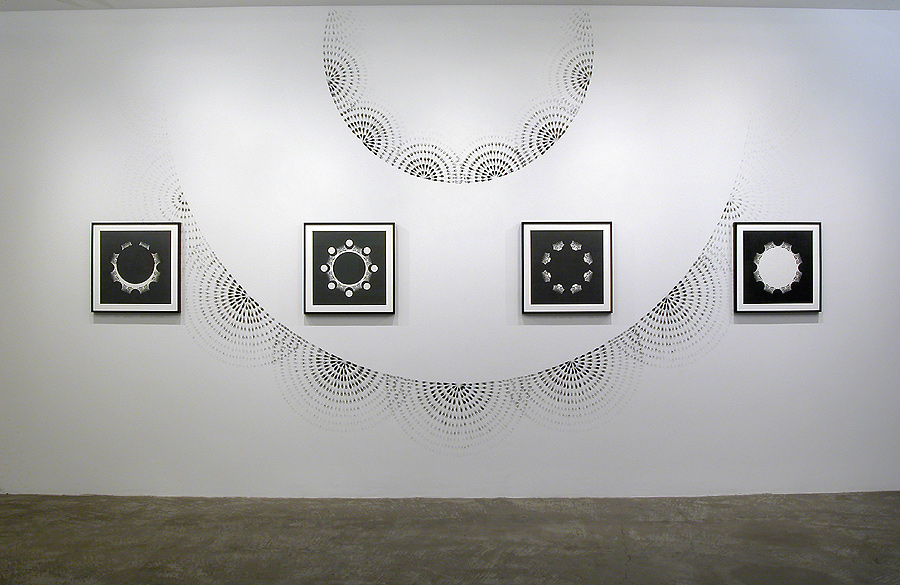
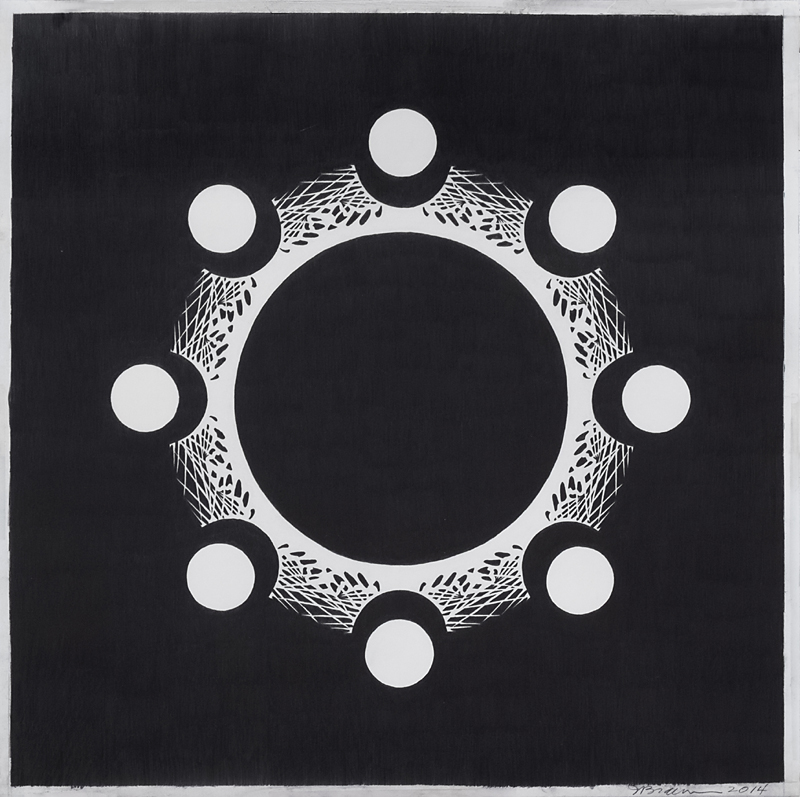
Homeostasis is the current solo exhibition of Judith Braun’s charcoal and graphite drawings at McKenzie Fine Art Gallery. This work is all part Braun’s series titled “Symmetrical Procedures”, a long term commitment to the exploration of symmetry. Since 2003 the artist has been creating abstract drawings that use the rich gray scale attainable through the use carbon based materials. On one wall of the gallery there is a particularly intriguing installation. Four square framed drawings are presented within a large wall drawing.
16-14-01

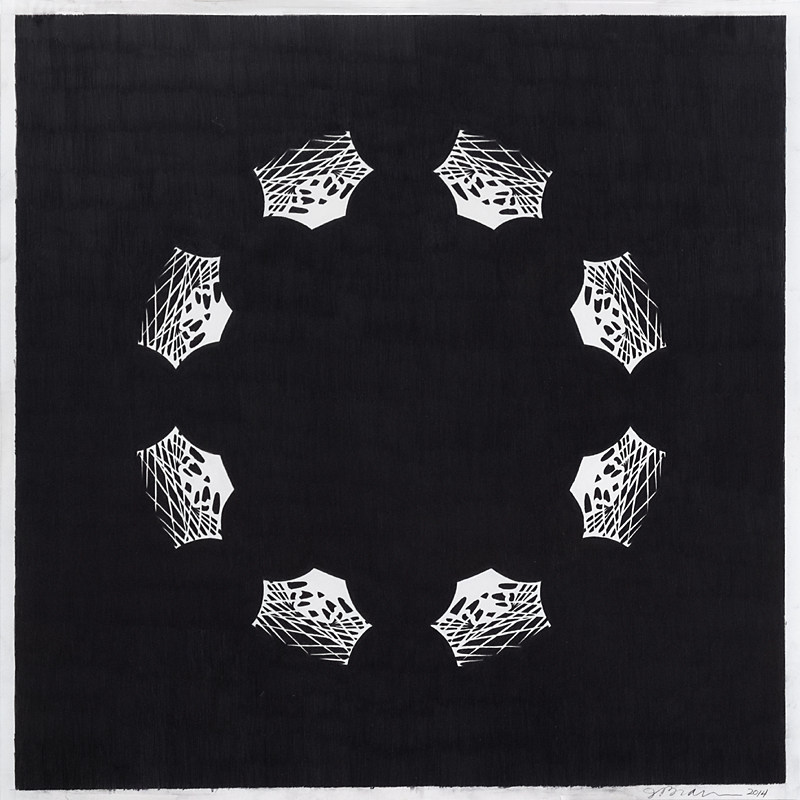
Each of the four squares contains a circular figures with order-8 rotational symmetry. Here are two examples:

16-14-02

“Symmetrical Procedure” NE-21-3, 2014, Graphite on Dura-lar
Picture courtesy of the gallery

16-14-04

“Symmetrical Procedure” NE-21-4, 2014, Graphite on Dura-lar
Picture courtesy of the gallery

In these examples there is a secondary symmetry, each of the eight lace-like elements around the central circle possess reflection symmetry. The intricate use of positive and negative space in this work demonstrates the complexity and richness that can be achieved with just black and white.

The wall drawing, in contrast, uses the gray scale to allow the large circles to fade away into the top of the wall. There is an allusion to the underlying symmetry of the forms, but it is incomplete. The lower of the two circles has the semi-circles forming on the exterior. The upper circle has the semi- circles going into the interior. This is a great demonstration of convex and concave curves. The marks of this drawing are the artist finger print, created by the artist pressing her charcoal covered finger directly on to the wall to create varying shades of grey. This tactile method creates an emotional connection to the viewer, adding another more human element to the exhibition.

McKenzie Fine Art Gallery is at 55 Orchard Street. Judith Braun’s exhibition is up through April 24.

Susan Happersett

“Incomplete Cubes” at Mike Weiss Gallery

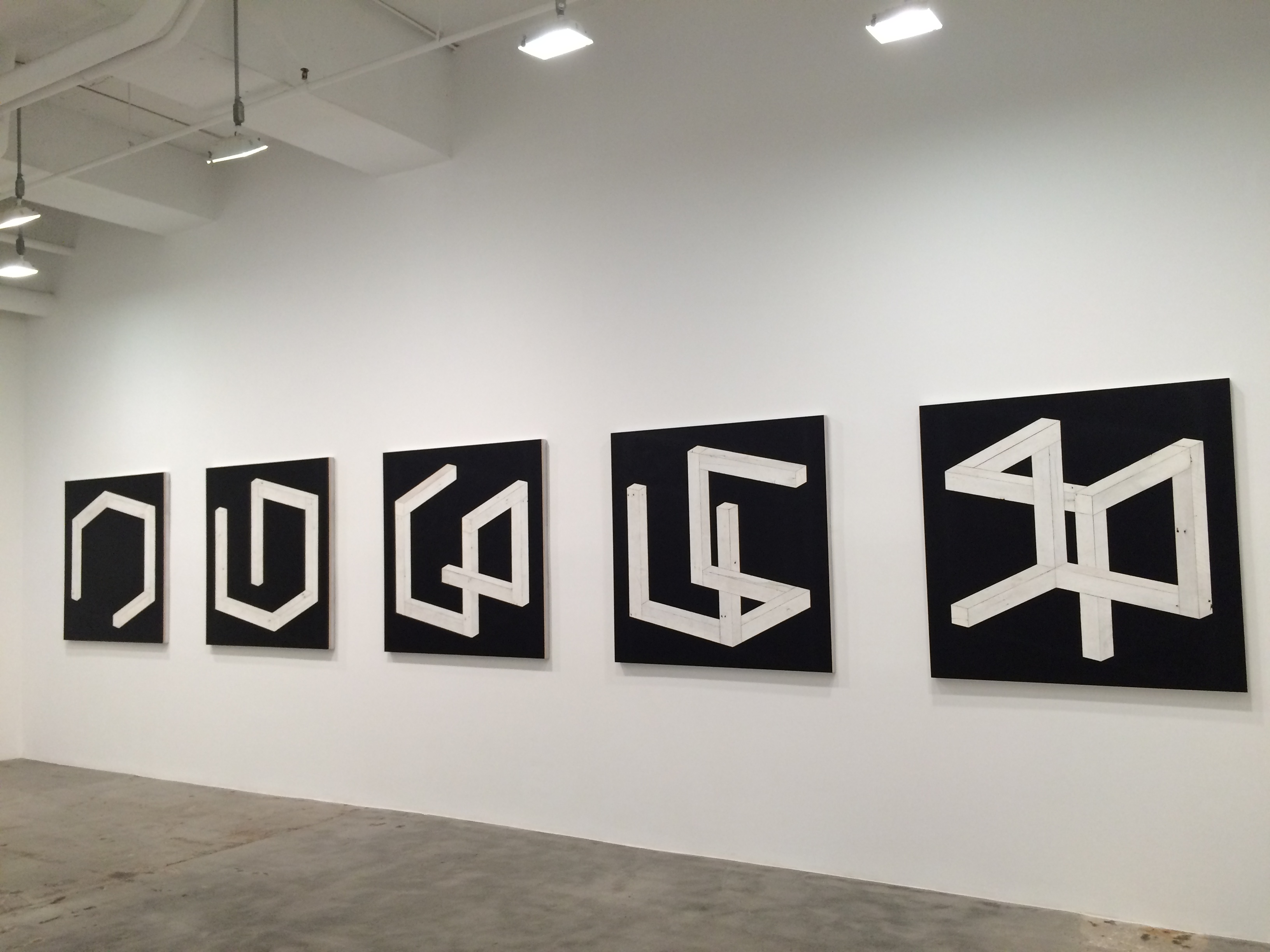
“Objects and Everyday Goods” a group show at the Mike Weiss Gallery includes a series of five of Michael Zelehoski‘s “Incomplete Cube” re-purposed wood and ply wood paintings.

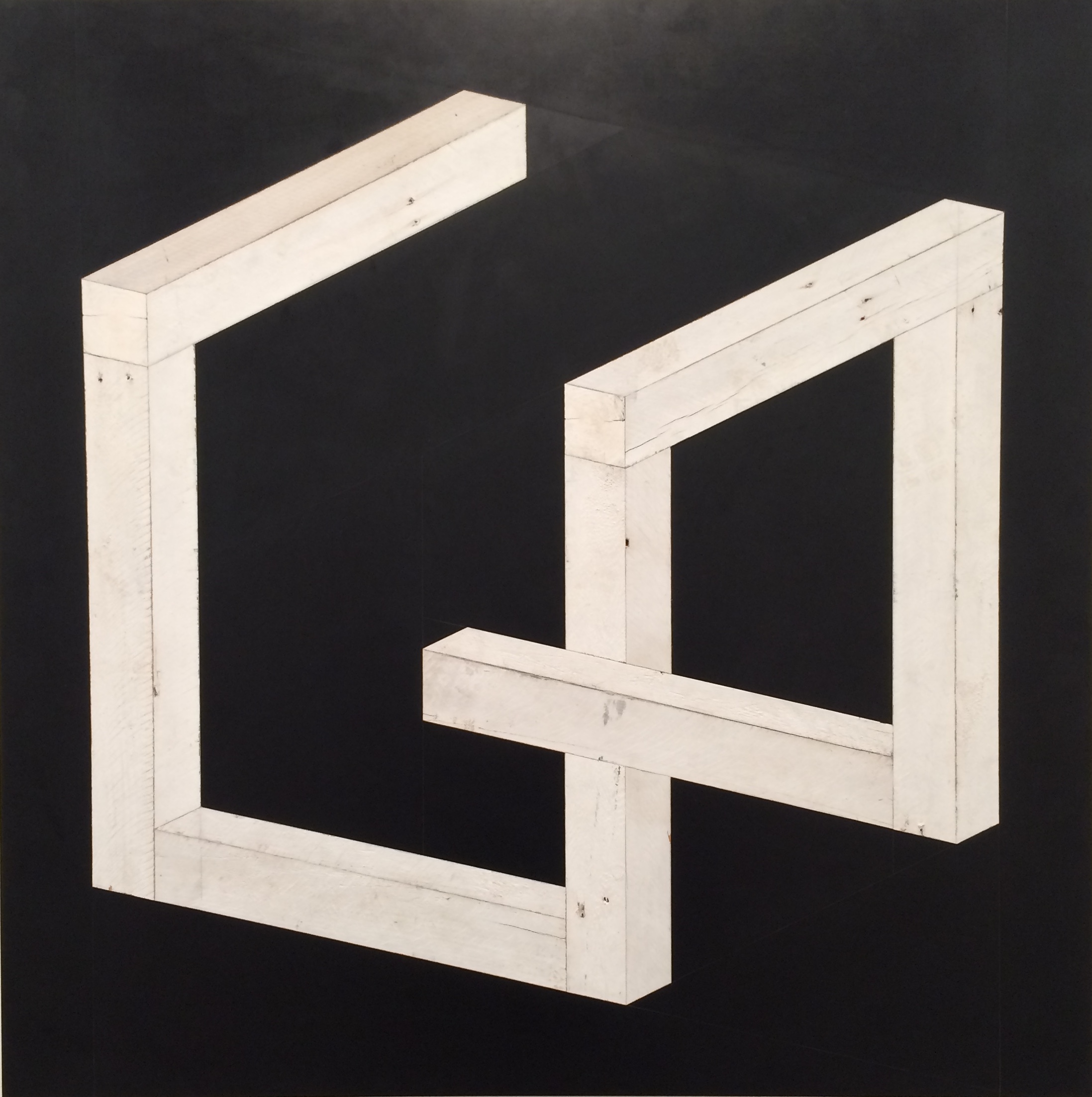
16-12-01The subject matter, the title as well as the materials, immediately reminded me of Sol Lewitt’s 1974 installation “Incomplete Open Cubes”. But these paintings have an extra element of complexity. The 2-D paintings acquire their perception of depth without the use of shading. Instead foreshortening and lines are used to illustrate which elements of each cube is in the foreground or the background.
16-12-02
In this middle painting the center horizontal leg seems to be cutting across the front of the figure but it is attached to the vertical leg at the right of the image that seems to be in the background. So this is not really a cube. if all of the angles in the form are 90 degrees it is actually an impossible figure. What I found so interesting about this work is the way it appears to directly reference historically important work but up on closer inspection there is an unexpected twist that takes the work into a more complex geometry.

Susan

Atoms and Bytes at Bellevue Arts Museum in Washington State

The Bellevue Arts Museum in Washington State is currently presenting “Atoms and Bytes – Redefining Craft in the Digital Age”. This exhibition addresses art, crafts, and design that utilize new technologies and software to create objects. Digital interfaces and equipment once found only in laboratories now are available to a more general public. Most of  work on display has been created using tools like computer-aided design, additive layer manufacturing ( 3-D printing), and computer numerical control, which is a process that enables a machine to cut into a solid to create a new shape. There is also work  created using constantly updated web based data in the galleries.

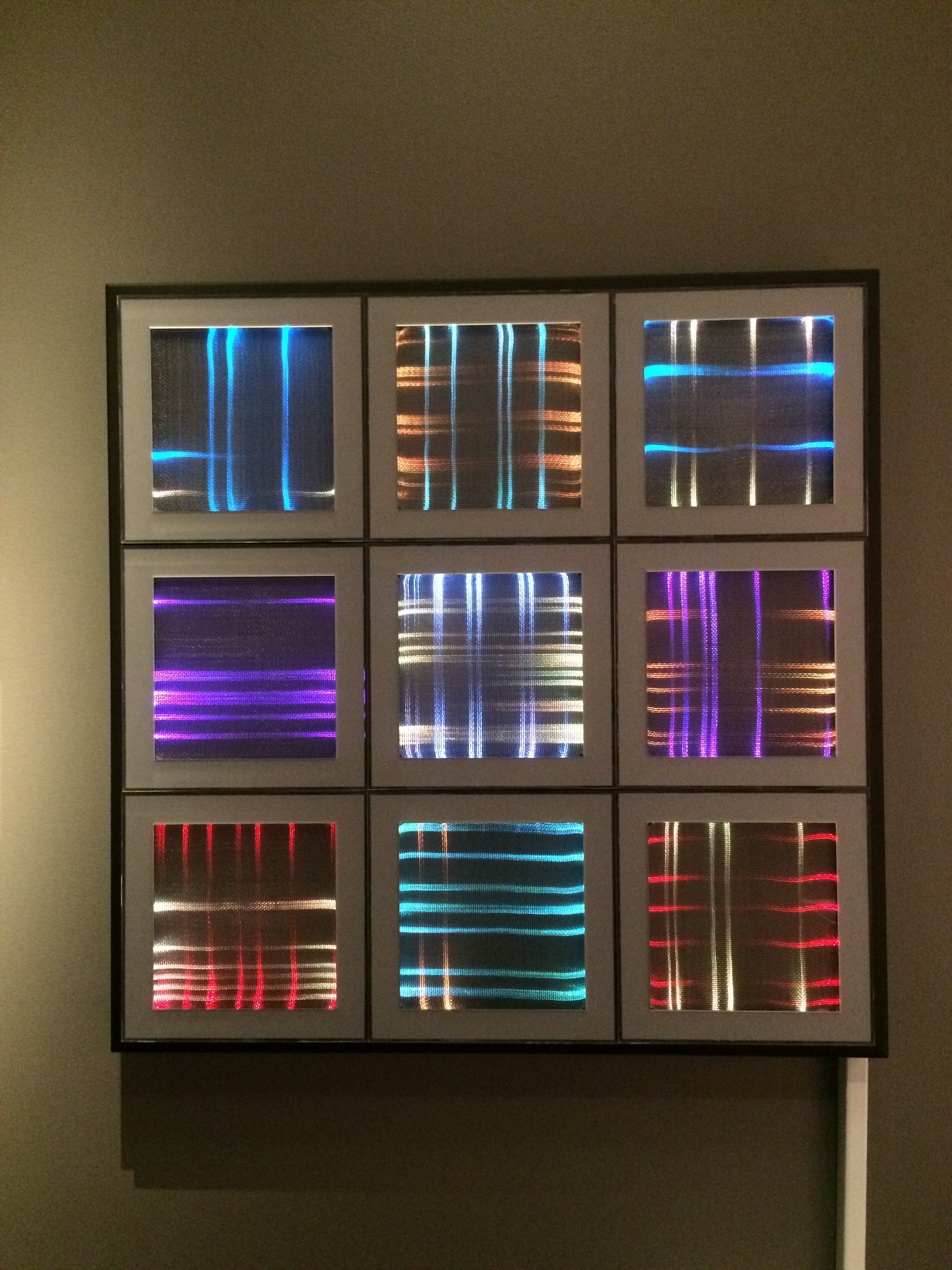
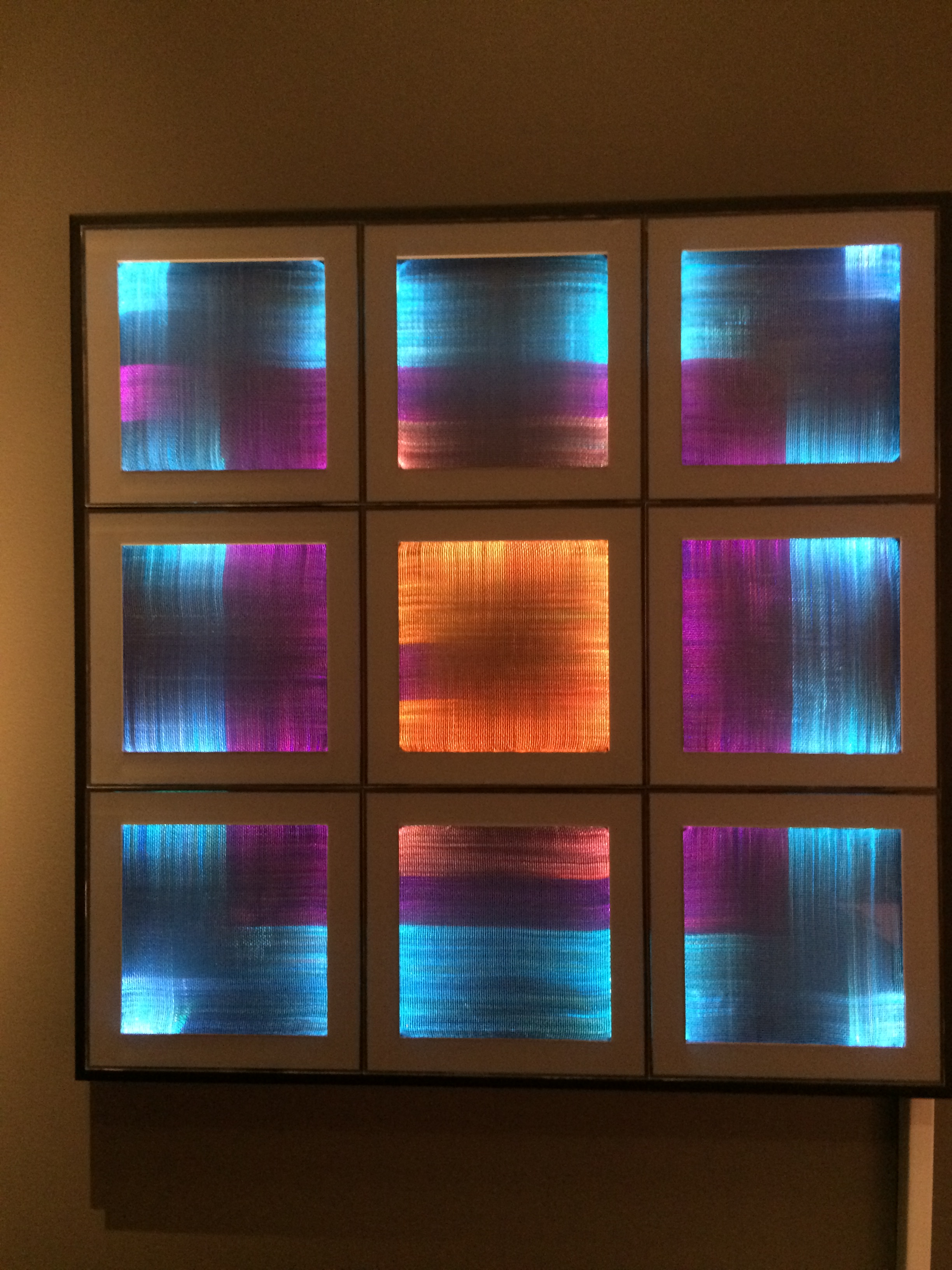
“50 Different Minds (Homage to Josef and Anni Albers)” by LigoranoReese is hand-woven from fiber optic threads. The patterns are determined by software that provides real-time web based data on air traffic at the nine busiest airport in the US. The colors are based on Josef Albers’ color theory and change in response to responses from viewers that use color words in their tweets.

16-11-01

16-11-02
LigoranoReese have woven together technology and the sociological implications of this technology to create an deceptively beautiful tapestry.

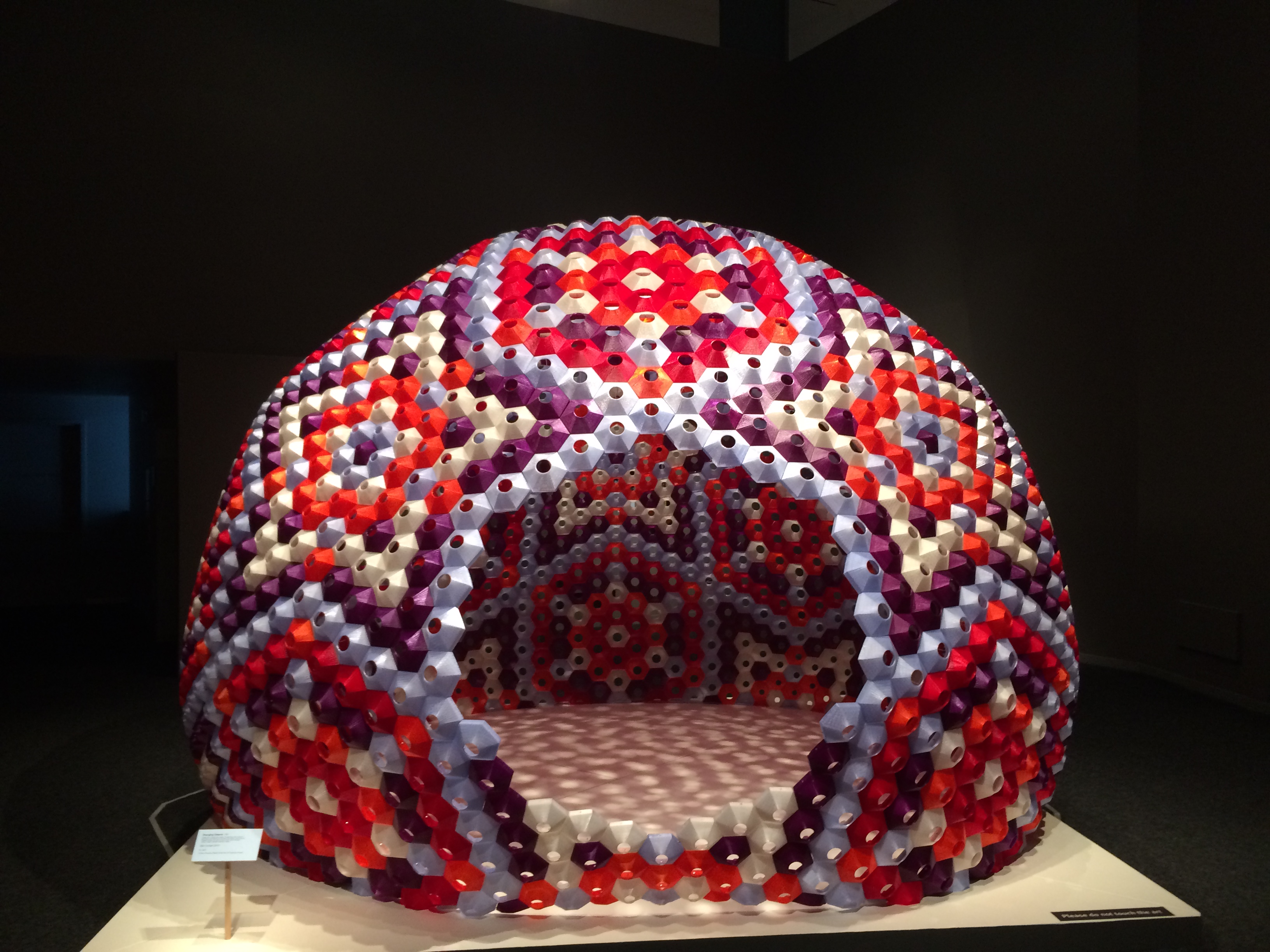
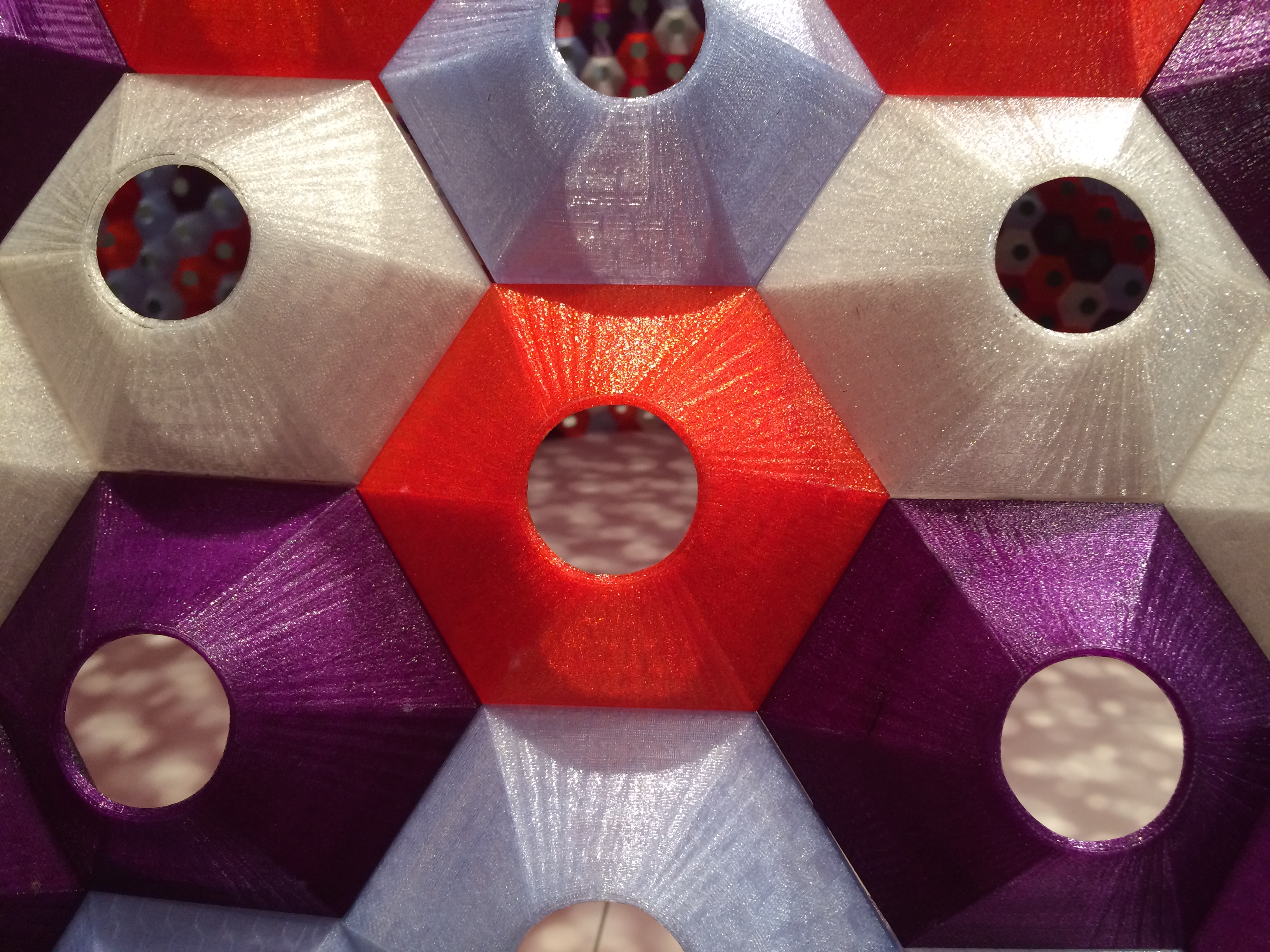
“Emerging Objects”, a design collaborative, uses small PLA plastic elements to build a structure that acts as a room. “Star Lounge” is composed of a multitude of PLA plastic hexagons. Some keep their shape as a regular hexagon, some are slightly misshaped to form this large domed igloo like form.

16-11-03

16-11-04

“Atoms and Bytes” presented the a broad selection of work intersecting the boundaries of crafts, design and art. The exhibition approached these objects on two fronts. The technical properties of actual the production were explained with an overview of educational wall texts. Individual signage addressed the cultural inspiration or implications of the items on display. This was one of the most technologically based, well documented, educational shows I have seen.

Susan Happersett